

German Bookstore Award 2018 goes to Chemnitz
Susanne Meysick & Klaus Kowalke
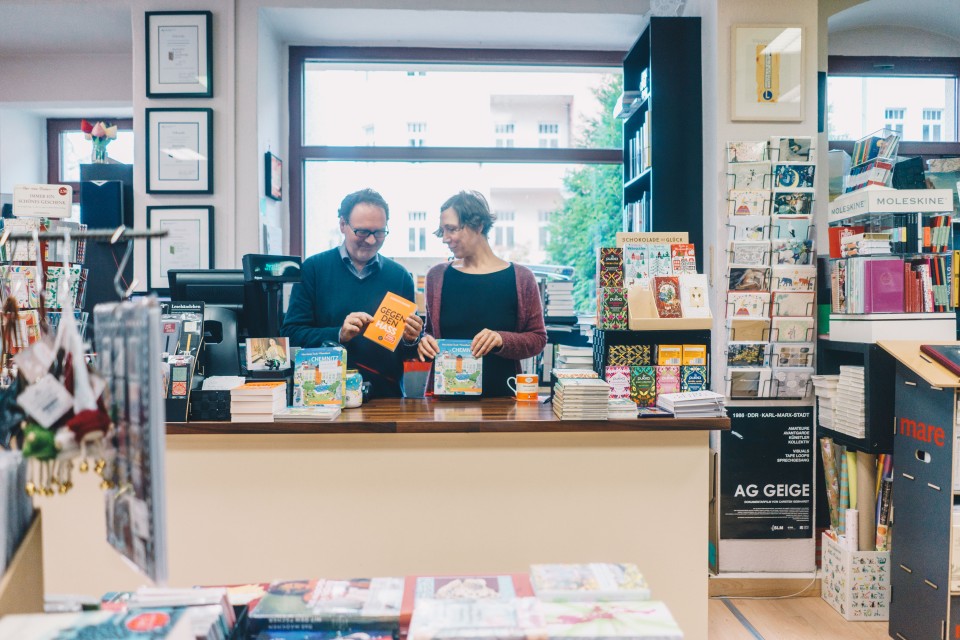
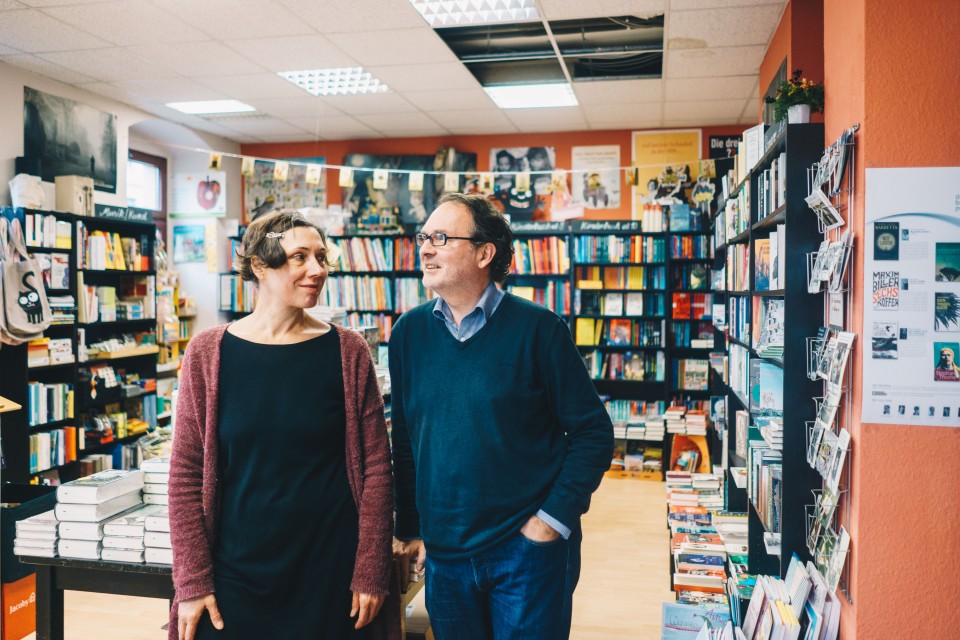
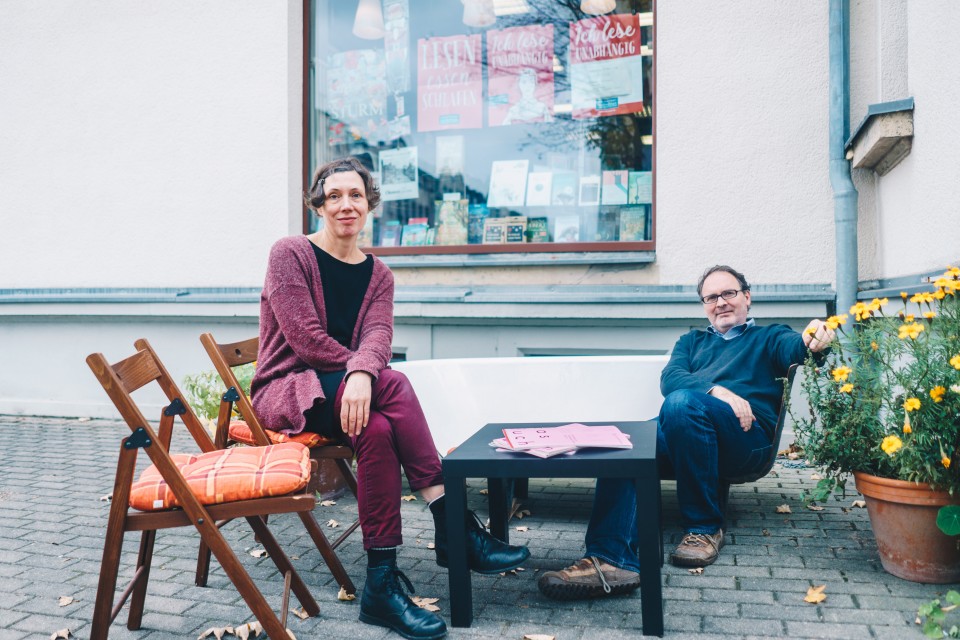
It is one of the three best bookshops in Germany in 2018. The independent Chemnitz bookshop "Lessing und Kompanie" received this award from the Federal Ministry of Culture, along with a prize of 25,000 euros. The couple Klaus Kowalke and Susanne Meysick, who run the chic shop on Kaßberg, said they had not expected this. What makes a bookshop the best in the country? Susanne Meysick and Klaus Kowalke reveal this in an interview. #MakeroftheWeek

How did you feel when you received the award?
Klaus Kowalke: We were really stunned. Although we knew that we would receive an award. Because all the nominees who are invited to the award ceremony receive an award. It's a really nice event where nobody goes away empty-handed.
The awards are presented in three categories: First category - "outstanding bookshop", which is endowed with 7,000 euros, second category - "particularly outstanding", with 15,000 euros and third category "best bookshop", with 25,000 euros. The Chemnitz bookshop already won the first category in 2015 and 2016. "A total of 118 independent bookshops were honoured," reports Kowalke. Being one of the top three was a surprise. "When the first two categories were awarded, I said to my partner that they had forgotten about us," says Susanne Meysick with a laugh. When the literary critic from the Frankfurter Allgemeine Zeitung, Sandra Kegel, gave the laudatory speech for the first three award winners, Klaus Kowalke was already receiving congratulatory messages on his mobile phone. "The press was quicker than the award," he adds with a grin. In addition to "Lessing und Kompanie", another bookshop - "Universitas" on the university campus in Reichenhainer Straße - received the "Outstanding Bookshop" award.
How does such an application work? Do you submit it yourself and present your bookshop?
Klaus Kowalke: There is an online questionnaire on the homepage of the Federal Ministry of Culture. You then have to fill in this online questionnaire with various attachments, with various explanations about your activities, the description of your bookshop. The whole set then comprises 40 pages and is checked and assessed by the jury members.
What motivates you to have applied for the third time in a row?
Klaus Kowalke:For the fourth time, actually. This prize has been around since 2015 and we have applied every year. It's a federal prize for cultural promotion because the aim is to support the book trade. For example, there are literary prizes for authors, there are publishing prizes, but the book trade as a retail trade has no endowed prizes.
You have to see this prize as a way of motivating booksellers to apply for it, as a kind of funding application. In principle, the criteria are structured in the same way as loan applications. You have to present balance sheet figures and all sorts of things. We are not allowed to apply next year. As the main prize winner, you have to sit out a year. But that doesn't matter. We'll continue to apply for the next few years as usual. Then we'll either win again or get nothing, that's the spirit of this award. Everyone who fulfils these quality requirements gets a turn.
What are you planning to do with the prize money?
Susanne Meysick: It is earmarked for a specific purpose. It will be invested in our bookshop for events and cultural work. There are enough "holes" that need to be plugged. In the age of the internet, every bookshop is struggling. Then it's just nice to sleep peacefully thanks to the prize money (laughs).
In 2008, they both opened the literary bookshop "Lessing und Kompanie" on the corner of Franz-Mehring-Straße and Theodor-Lessing-Straße. "We live right next door and the shop had been empty for four years," says Susanne Meysick. They see themselves as a neighbourhood bookshop. "This was missing here on Kaßberg," says Kowalke and his wife adds: "There was a lack of a literary bookshop in the whole of Chemnitz that really focussed on literature. Not mainstream and entertainment, but something special and beautiful."
What sets the Lessing bookshop apart from others?
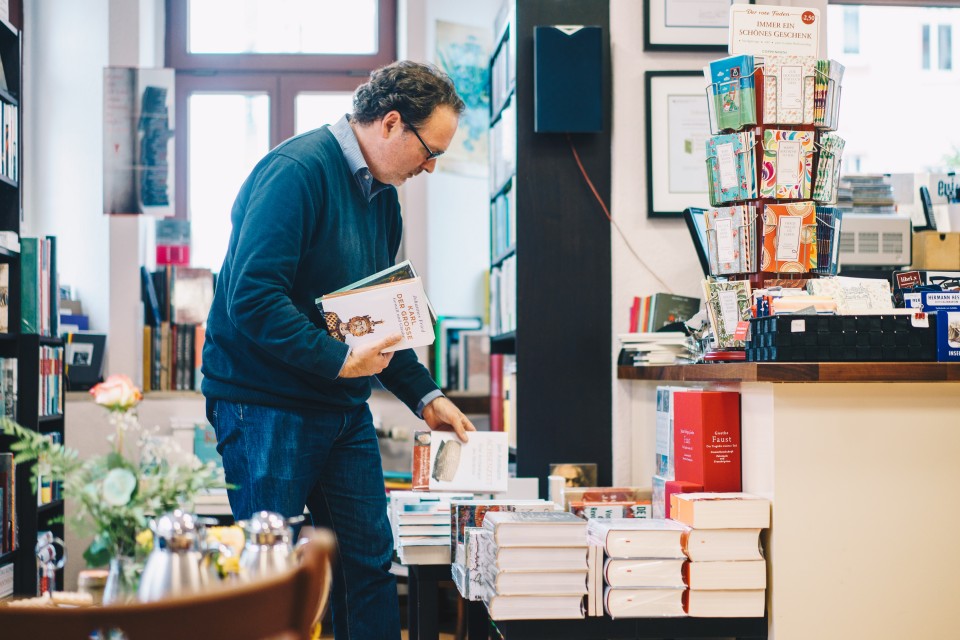
Klaus Kowalke: Roughly speaking, it is - certainly also in terms of the price - a history of selection and the presence of the available books, the entire range, with many small independent publishers who have a large presence here and the daily work with the publishers. We also offer a varied programme, with literature promotion, readings, events, but also cooperation with schools and after-school care centres.
Is this one of the reasons why you can assert yourself as a retailer against the Internet?
Klaus Kowalke: That is certainly one reason, especially as far as the publishing industry is concerned. The small publishers say that we have no presence on the Internet. When you look at the selection, they naturally rely on there being as many independent bookshops as possible. We are one of the few here in Chemnitz.
How big is the bookseller scene in Chemnitz?
Klaus Kowalke: There are about ten independent booksellers. Each one specialises in something.
Are the people of Chemnitz actually keen readers?
Klaus Kowalke: Yes, I would think so. We can't complain. Our customers also read a lot and regularly. They don't just come by once a year.
Klaus Kowalke, who comes from Lower Saxony, published books in Berlin from 1996 to 2001. He moved to Chemnitz for love. His partner Susanne Meysick was born in Zeitz and came to the city before reunification. "So we're both Chemnitz residents by choice and think it's nicer here than those who were born here," laughs Kowalke. "The people of Chemnitz need to become more optimistic. They need to be more committed to their city. Be a little happier and more content," adds his partner.
We want to be the Capital of Culture in 2025. How do you see the bid?
Klaus Kowalke: Very positive. I think Chemnitz will also make it because the city really has great potential in terms of subculture, and not just in comparison to the competitor cities. I think that's simply excellent and it makes life in Chemnitz very pleasant. I also think the city's micro-project funding programme is very good, because it has also called on the population to get actively involved.
We had a wonderful summer of culture. We had such a great atmosphere, which was then, I don't want to say ruined by these riots, but at least we got a shock. I think we are recovering from this shock, at least in Chemnitz, even if the outside perception takes longer to process.
Susanne Meysick: I think so too. Particularly in a city with such a low density of bookshops, two plots have won a prize this year. I see it as a start - the Capital of Culture continues. After the events in August/September, we were a bit down, and now, we think, we'll just carry on.
Klaus Kowalke: We had an incredible number of press enquiries, including international ones. It started with the FAZ, which asked about our nomination three days after the riots, so to speak. Then there was an interview with me on the feature page of the FAZ, which then attracted international media attention. The BBC and the Guardian called us on the same day. The Independent and a Dutch daily newspaper sent correspondents. Then MDR Kultur and ZDF came and filmed here. It was a gigantic press frenzy.
You hadn't even won the award yet. You were only nominated.
Klaus Kowalke:No, it wasn't about the prize at all. It was just about what a bookseller who lives in this city has to say about the situation. The initial question from Deutschlandfunk in the interview was: "Do people in Chemnitz buy a lot of right-wing literature?"
Your answer?
Klaus Kowalke: We have no demand for such literature. So the people of Chemnitz don't buy right-wing literature.
What still needs to happen in the city between now and 2025 before we become the Capital of Culture?
Klaus Kowalke:The first thing I would think is that all these hate debates need to stop. We need to start a dialogue. We definitely need to take people's concerns and needs seriously. But we can't have people shouting through the streets. And that this wonderful feeling from the 2018 summer of culture in the city will continue in 2019, 2020 and beyond. There really was a lot going on.
Finally, Klaus Kowalke has an event tip: "On 26 November, we will be hosting Carolin Emcke, winner of the Peace Prize of the German Book Trade. She will be reading from "Against Hate" at the Metropol cinema. That is a very important statement for us. In her book, she analyses quite wonderfully where this hatred actually comes from. You can be dissatisfied, you can also be dissatisfied with politics, there are democratic means for that. But where does this hatred come from, which is simply no longer explained or analysed at all? This hatred must stop. It's up to the whole of civil society, all residents."