

Departure from Chemnitz
Thomas Rosner
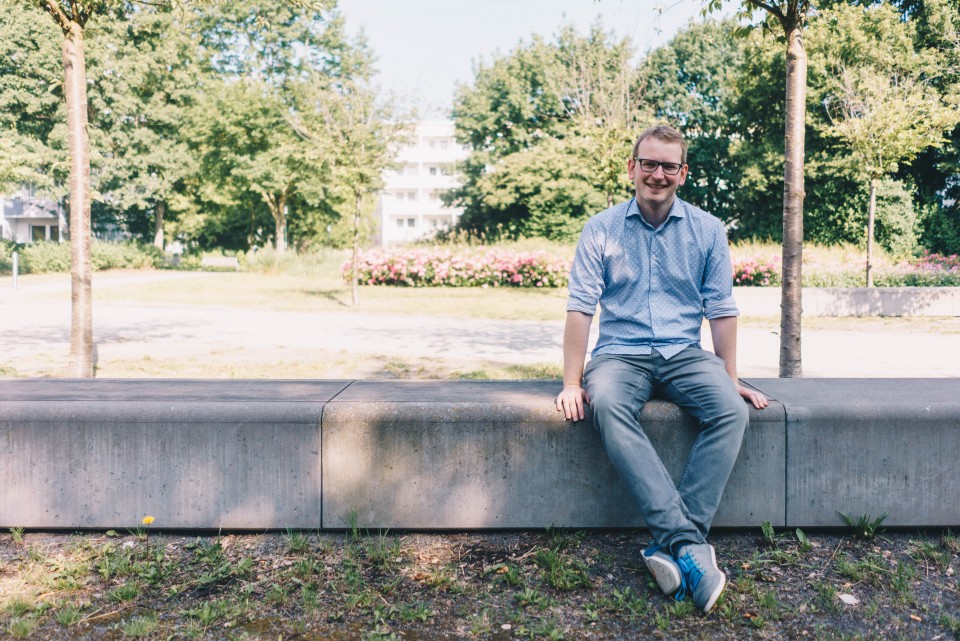
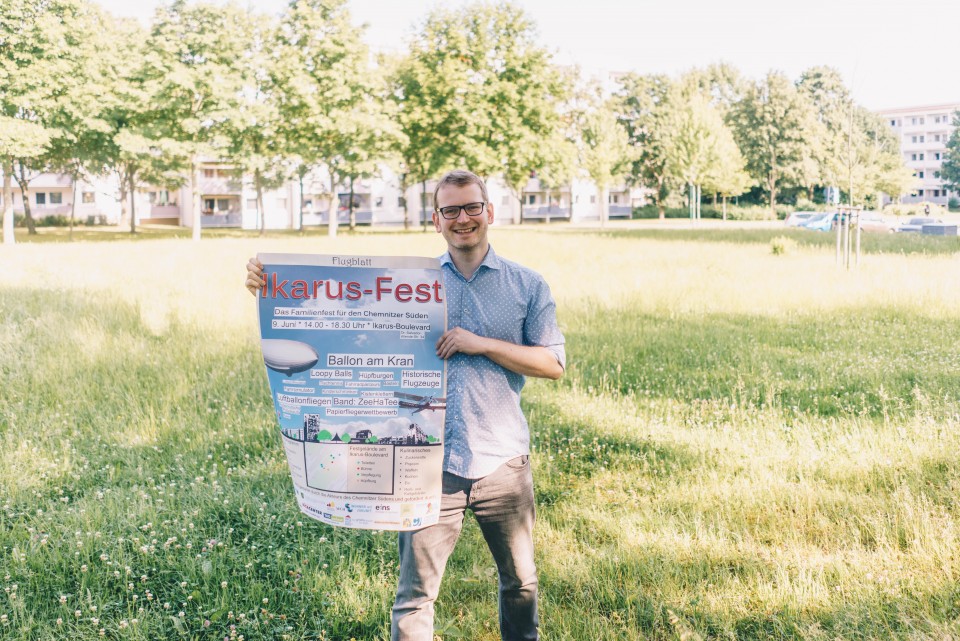
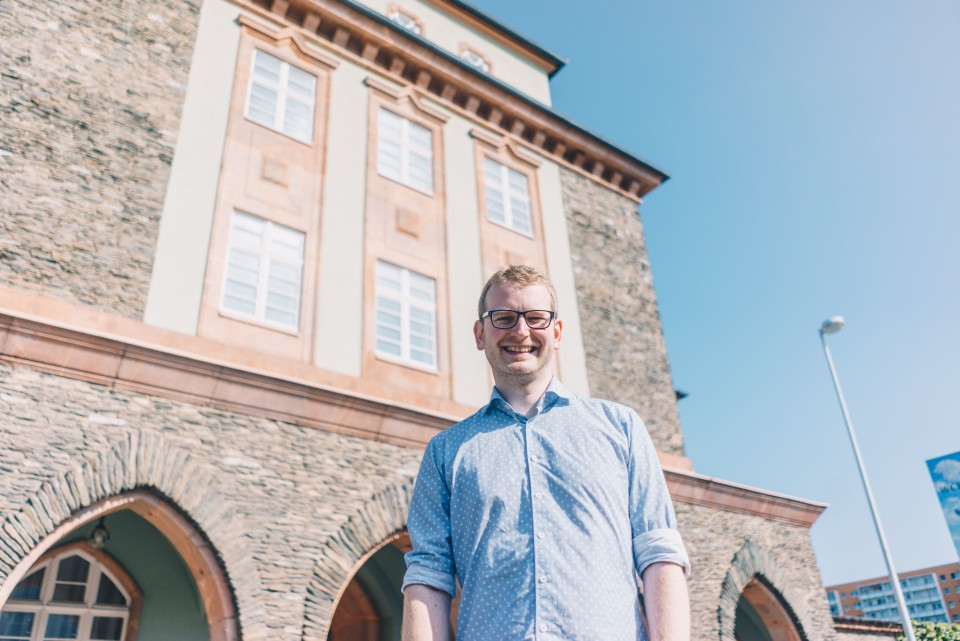
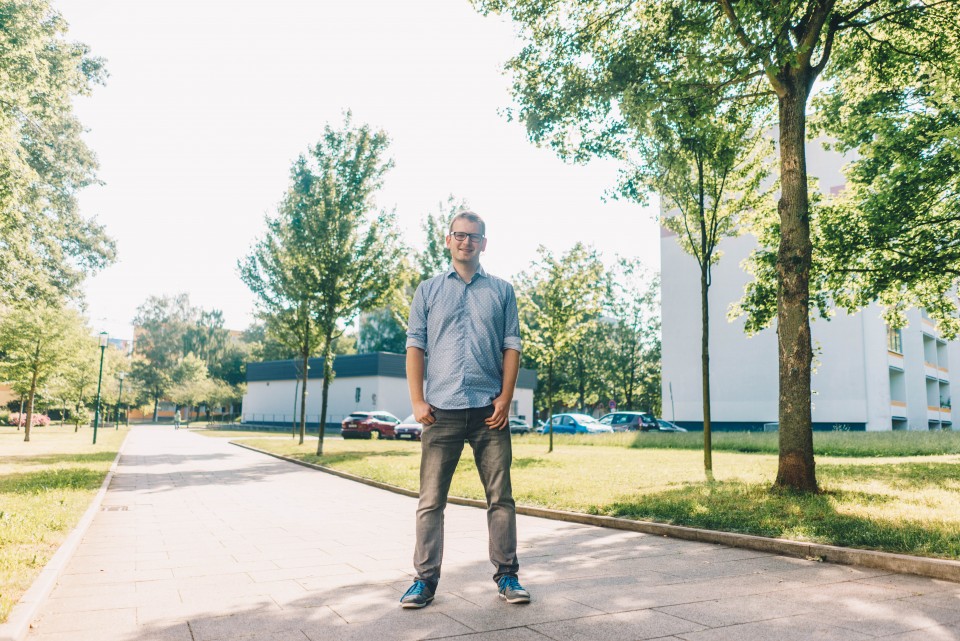
This was possible around 90 years ago. In the 1920s, Chemnitz Airport, located in what is now the Fritz Heckert area, was bustling with air traffic. A chapter in Chemnitz's history that will be revisited at this year's Ikarus Festival. The 875-year history of the city will be brought to life with many attractions, hands-on activities, historical exhibits and delicacies. Thomas Rosner is the district manager for Chemnitz South and the main organiser of the festival, which will take place on 9 June on Ikarus Boulevard from 2 to 6.30 pm. In our Maker of the Week interview, he talks about his work in the neighbourhood and how the airport era has left its mark here.

Why are you a neighbourhood manager?
Rosner: I have worked in neighbourhood management in Markersdorf/ Morgenleite/ Hutholz before and really enjoyed the job. I've always worked in the social sector for the last few years, but most recently in Zwickau. I wanted to return to Chemnitz and then the position of neighbourhood manager presented itself. It's also really nice because you get direct feedback. The residents are happy when they get help or a great event is organised. Organising a joint district festival, such as the Ikarus Festival, is a great highlight.
What else is on the South District Management's agenda for this year?
Rosner: We have lots of activities throughout the year, for example the apple juice pressing on 6 September. I think that's particularly nice because it brings the children together, they work together and they learn about where natural things, like apple juice, actually come from. We also organise the intercultural film nights on 2 November and publish the district newspaper "Südblick". I am also the local carer and contact person all year round.
What needs to be tackled in the Süd neighbourhood?
Rosner : After reunification, the area had to contend with a large exodus and many houses were demolished. Now, the focus is more on how citizens can be involved in upgrading the area. Above all, the funding programmes are now focusing on getting local residents on board. To this end, there are ESF projects that start at various points and try to do something for people, such as reintegrating them into working life and strengthening neighbourhood support. I think social integration is very important
Neighbourhood Management South has moved into new premises. Where can you be found now?
Rosner: Previously, we were based directly on Ikarus Boulevard. After our move at the end of March, we were welcomed with open arms in the Vita Centre. The neighbourhood management office is located at Wladimir-Sagorski-Straße 24 in the middle of the former Heckert area. There are very good public transport connections here thanks to lines 5 and 53. There will be an open day in the summer so that residents can discover and find us.
Is the Ikarus Festival also moving with us?
Rosner : The Ikarus Festival is being held on Ikarus Boulevard again this year, simply to have a nice local event for the people there. It's also a great place to celebrate a big festival for the whole family.
The Ikarus Festival takes place every year. What is so special about this year's event?
Rosner: This is already the 11th edition of the festival. This year, as part of the city's anniversary celebrations, 875 years of Chemnitz, we wanted to do something special. The Chemnitz-Süd citizens' network had the idea of bringing the history of the district to life to mark the anniversary. Thanks to the old airport, our urban area has an exciting past and we want to make this tangible for people. The festival is not only being organised by many local institutions, but also by committed players from all over the south of Chemnitz. Even the Grüna local history association will be present with a large model airship. There will also be bouncy castles, loopy balls, crate climbing, craft activities, a flyover of a historic aircraft and a balloon on a crane, which will give visitors a good view of the entire south of Chemnitz from a height of 50 metres.
The history of aviation in Chemnitz goes back long before the time of the airport in the 1920s. Ernst Georg August Baumgarten, also known as the flying chief forester of Grüna, had already achieved the first manned ascent of his constructed airship in 1879. He was an airship pioneer, as he successfully completed a manned ascent of a dirigible airship a good 20 years before the famous Count Ferdinand von Zeppelin. It was not until 1900 that Count von Zeppelin achieved the first ascent of the Zeppelin airship. 30 years later, the legendary "Graf Zeppelin", the most successful airship in the world with a size of over 200 metres, also landed at Chemnitz Airport and amazed the Chemnitz population. The Junker G 38, the largest land aeroplane in the world at the time, also stopped off in Chemnitz. In the 1930s, the airport became too small for regular air traffic and was only used for sightseeing flights, agricultural aircraft and gliders. In GDR times, air traffic was then completely discontinued and shortly afterwards the airport moved to Jahnsdorf and the Helbersdorf site was closed. The runway was dismantled. The "Fritz Heckert area" prefabricated housing estate was built on the vacated site. The "Ikarus" reception building of the old airport can still be found today between the tower blocks.
What historical value does the airport era have for the people of Chemnitz?
Rosner : The citizens have given an incredible amount of input and have come by to talk about their memories of the airport, for example that they flew here themselves, that their father was the airport director or the spectacular landing of the airship. This time is important for the people of Chemnitz. At the Ikarus Festival, we also have a history project on site that wants to analyse the history even more and is looking for contemporary witnesses and historical documents, for example.
How did the airport change the neighbourhood?
Rosner : Back then, the neighbourhoods were still villages and the airport was on the outskirts of the city. The closure of the airport meant that the area could be developed for apartment blocks for the first time. So it was actually good for the development of the area, as this was the only way so many people could come together in this place. If you like, the closure was the start of residential and multi-storey construction in this area.
What would it be like if Chemnitz had an airfield again?
Rosner: On the one hand, there would certainly be people who would be bothered by the aircraft noise. On the other hand, it would be a great connection to the world, especially when you see how long the issue with the ICE connection has been dragging on. I think it would make the city more interesting and bring many visitors here.
Chemnitz is applying for the title of European Capital of Culture 2025. What would you like to see for the city by then?
Rosner: It is important for the application that you pick up the local people, take them along and involve them properly. For people here, it seems more like a virtual topic that they have heard about. People often comment: "Chemnitz is a working-class city, what are we supposed to do with culture?" You have to make people realise that culture is not just high art, but can have a wide range of effects. I would like to see the city districts involved in a similar way to the 875th anniversary concept and to organise many local activities together with local stakeholders, for example street art. Maybe you could also do a kind of tour through the neighbourhoods so that the topic is more accepted and people get excited about it.