

Publications of the Chemnitz City Archive
On the trail of the past - Chemnitz history
An important concern of the Chemnitz City Archive is to prepare its sources for schoolchildren and to visualise historical processes for them. This is why the idea was born to create folders with a text section and illustrative panels to facilitate access to the sources. The idea was also to draw attention to the traces of the past that can be found in our immediate surroundings. This is how the series "On the Traces of the Past - Chemnitz History - Representations and Documents" came into being. This refers not only to the written documents stored in the City Archive's storerooms, but also to evidence found in today's cityscape.
Chemnitz in the First World War - Text-picture folder
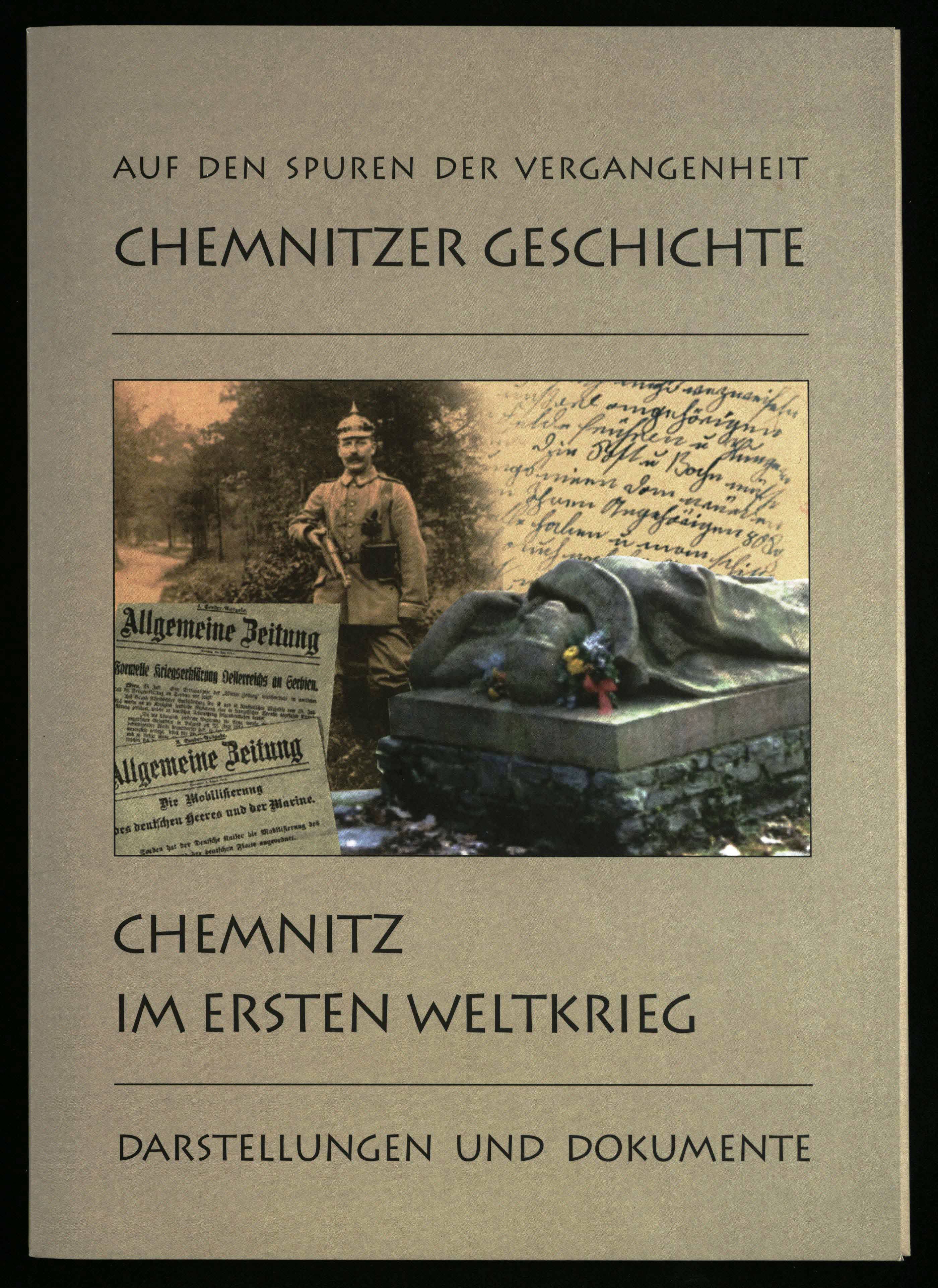
The folder analyses a piece of German and European history from an urban history perspective. It is suitable for history lessons and is aimed at pupils and teachers as well as readers interested in history. It is the fourth of its kind after publications on Georgius Agricola, the city fortifications and the beginning of the Industrial Revolution.
The First World War also marked a change of era for our town. It marked the end of an era of advancement, of successful economic and urban development, but also of the intellectual and cultural development of a bourgeois society that was, all in all, still intact. The text section sheds light on the position of the war in the political landscape of the city and the effects of the war on the situation of the labour force. The next section shows that Chemnitz's large-scale industry certainly benefited from the war. The city administration was faced with completely new challenges as it was now tasked with social welfare and the management of food and raw materials, for which an independent office structure was created. The war also had an impact on the city's financial situation. It led to a split in Chemnitz's social democracy, the founding of a new party in the labour movement and ultimately resulted in the November Revolution. Chemnitz became part of the first democratically organised state in German history, the Weimar Republic. All in all, it is clear that Chemnitz had changed significantly.
24 appendices document the events of the time in words and pictures. Among other things, they refer to "Chemnitz regiments in the war", "Field post letters" and "War deaths" and depict the lives of women and children during the war. The list of war bonds shows how the people of Chemnitz also helped to finance the war. One appendix is dedicated to the prisoner-of-war camp in Ebersdorf. A final section documents the culture of remembrance at Chemnitz and French cemeteries in the form of graves and memorials. Also included is a comprehensive list of archival documents and literature, which refers to holdings in the city archives and the city library.
The folder is available at a price of 5.00 euros.
Chemnitz - a station in the life of Dr Georgius Agricola
The folder was published to mark the 500th anniversary of the birth of the famous mining scientist and mayor of Chemnitz. The accompanying booklet was written by Gisela Helbig and Silke Goldberg. It deals with the following topics:
- The connection between the city of Chemnitz and Dr Georgius Agricola
- Agricola's path to becoming a polymath
- Our city 500 years ago - how did people live in Agricola's time?
- Agricola - a contemporary witness of the Reformation in Chemnitz
- Mayor in critical times
- The folder contains 20 attachment plates, including extracts from Agricola's works with explanatory notes.
Unfortunately no longer available, can be viewed in the city archives
Chemnitz - City and city fortifications
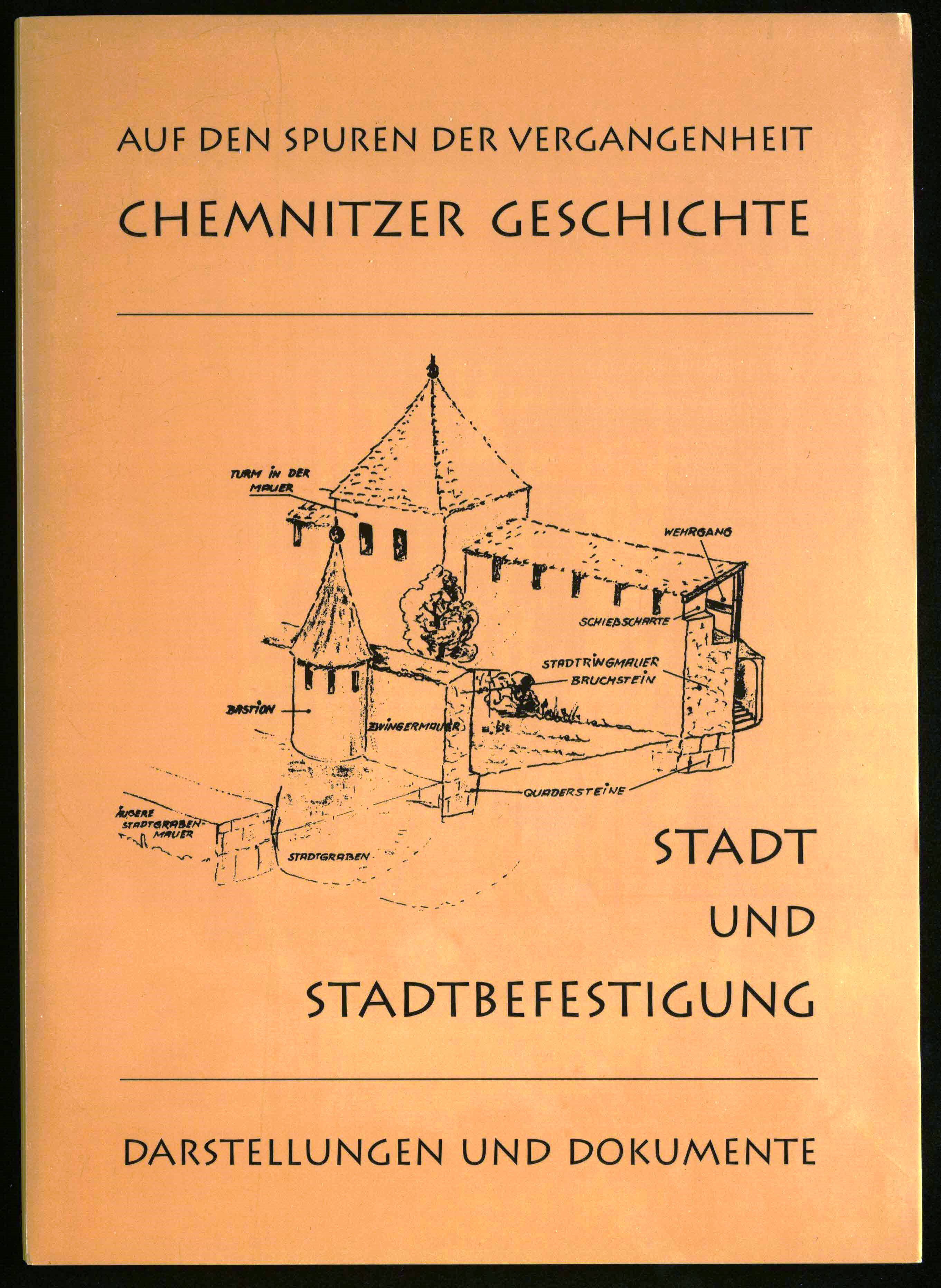
The archaeological excavations in the city centre aroused particular interest in the city's fortifications, which were once known as "Kempniz die feste". This is one of the reasons why this folder was created, the accompanying booklet of which was written by Ursula Ullrich. The focus is on
- The city wall - its location and appearance
- The beginnings of the city of Chemnitz - its origins and fortification
- The city wall as protection of the medieval city
- The city wall as a city boundary and source of income
- The town wall as an object of research.
The folder contains 16 layout plates, including a plan of the city centre of Chemnitz before 1945 and today, on models of the city fortifications and on the results of the excavations in the city centre.
Available as a reprint at a price of EUR 2.50.
Industrial revolution in Saxony - first factories on the Chemnitz river
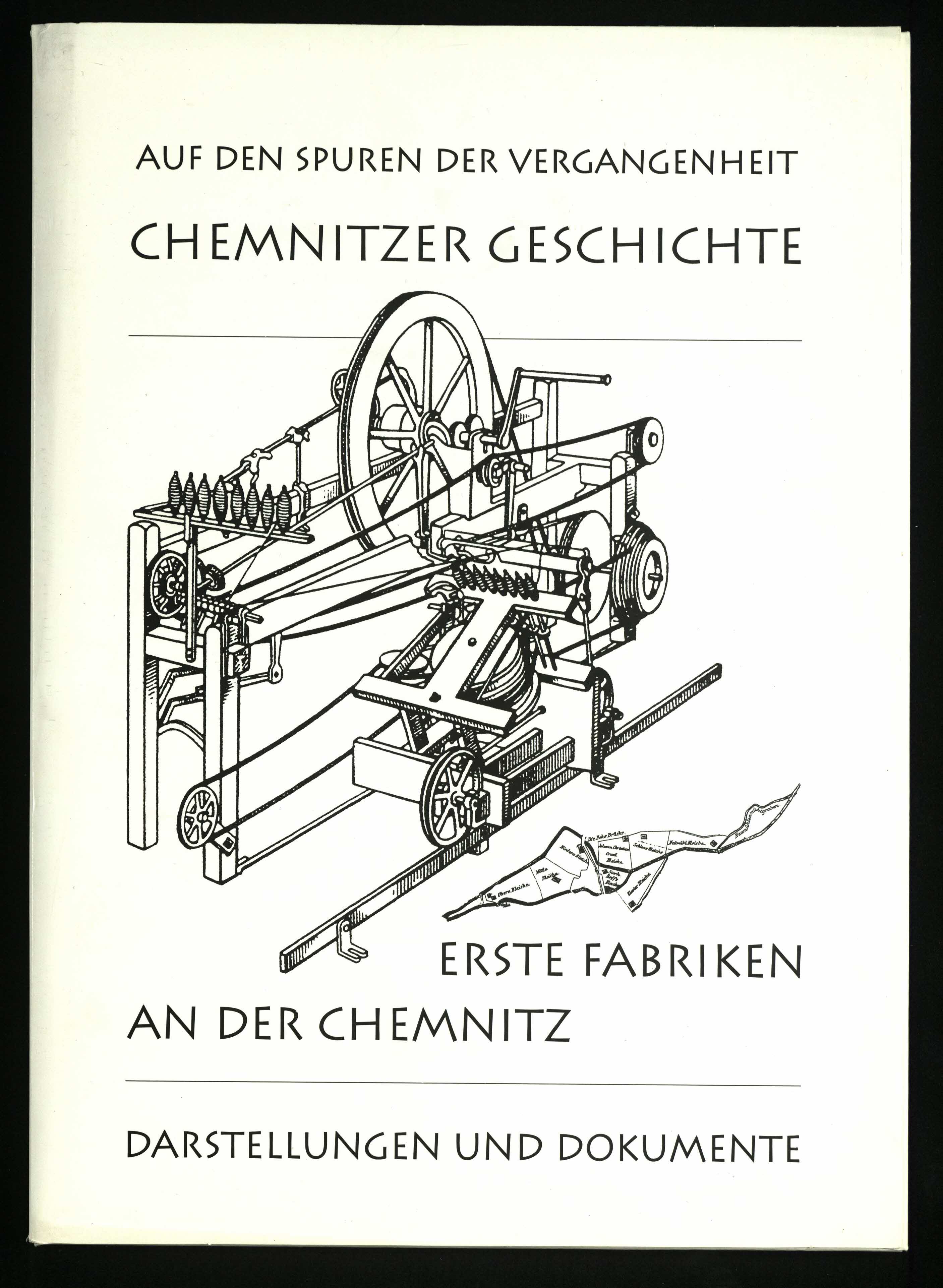
The folder was published on the occasion of the establishment of the first cotton machine spinning mill in Saxony, the Bernhard spinning mill in Harthau near Chemnitz, 200 years ago (1798). The accompanying booklet was written by Hans Münch. It deals with:
- Linen weavers and calico printing factories
- Machines "for spinning without fingers"
- Achievements of Saxon mechanics
- The spinning mill on the Würschnitz
- The spinning mill on the Chemnitz
- Expansion of cotton machine spinning in Saxony
- Machines for machines
The folder contains 15 attachment plates, including a city map from 1828 with marked industrial plants, a letter from a teacher about the conditions at the factory schools and an overview of former machine spinning mills in Chemnitz and the surrounding area.
Price: 2,50 EUR