

Discovery in the Petrified Forest
Joint press release by the Museums of Natural History Berlin and Chemnitz
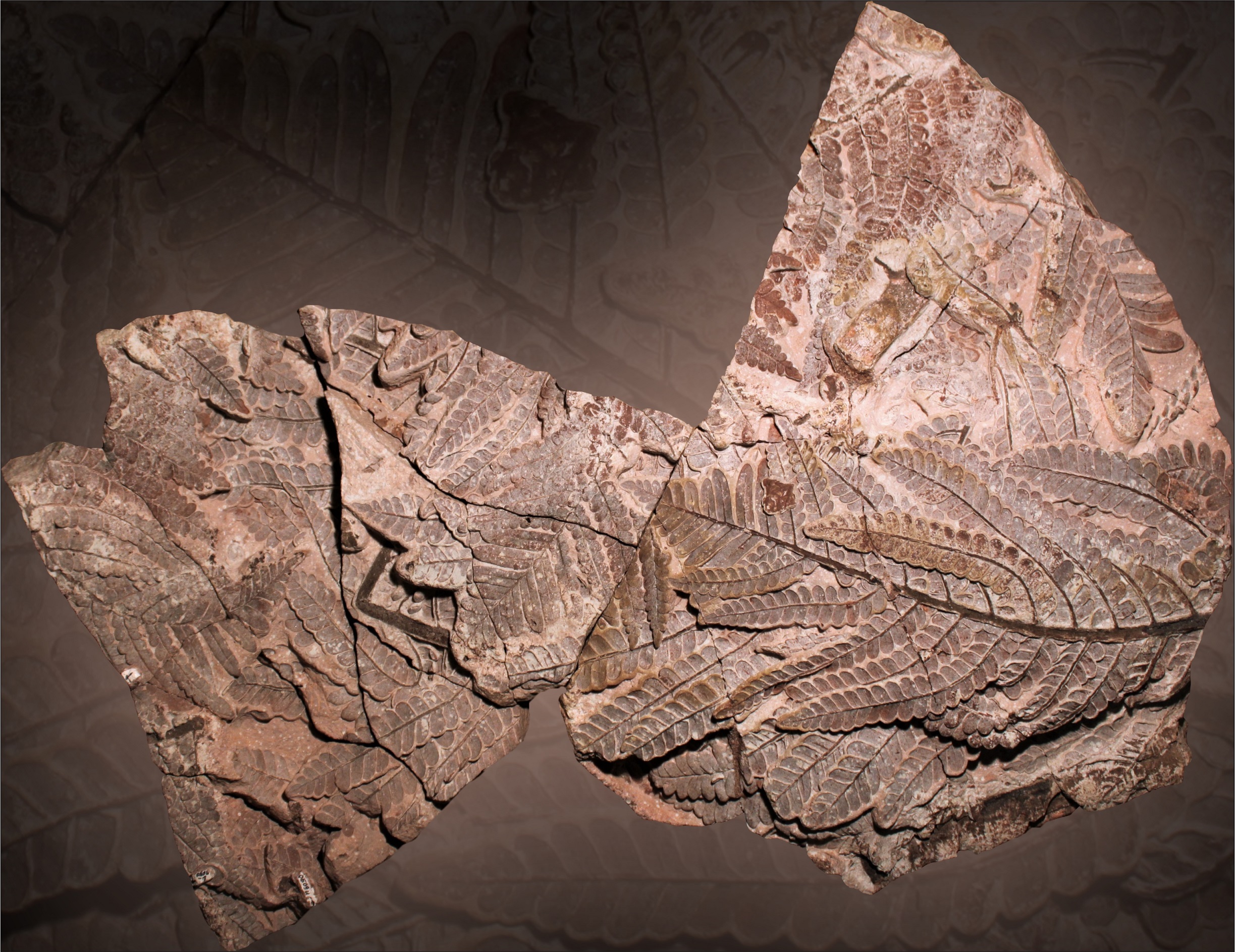
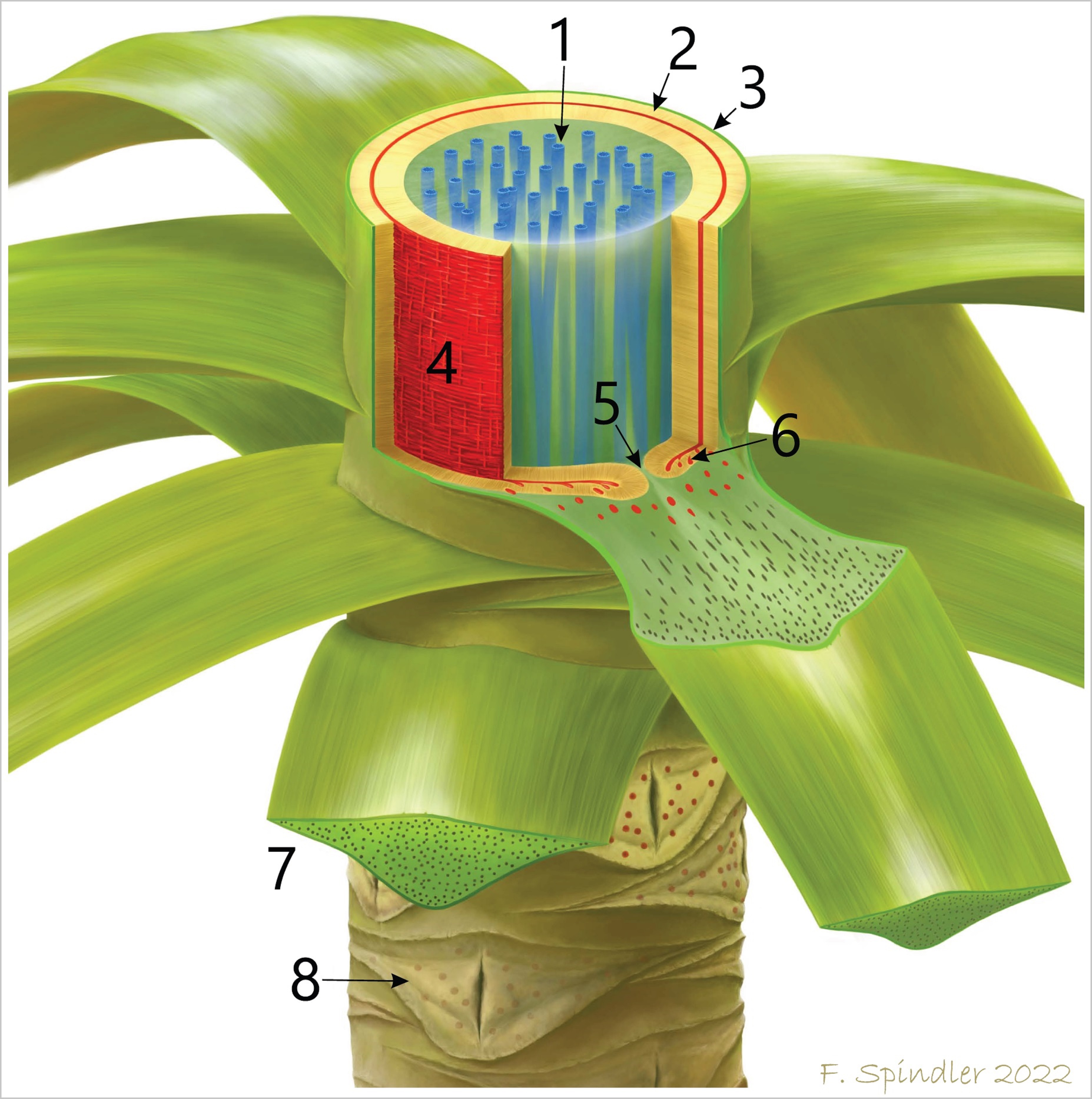
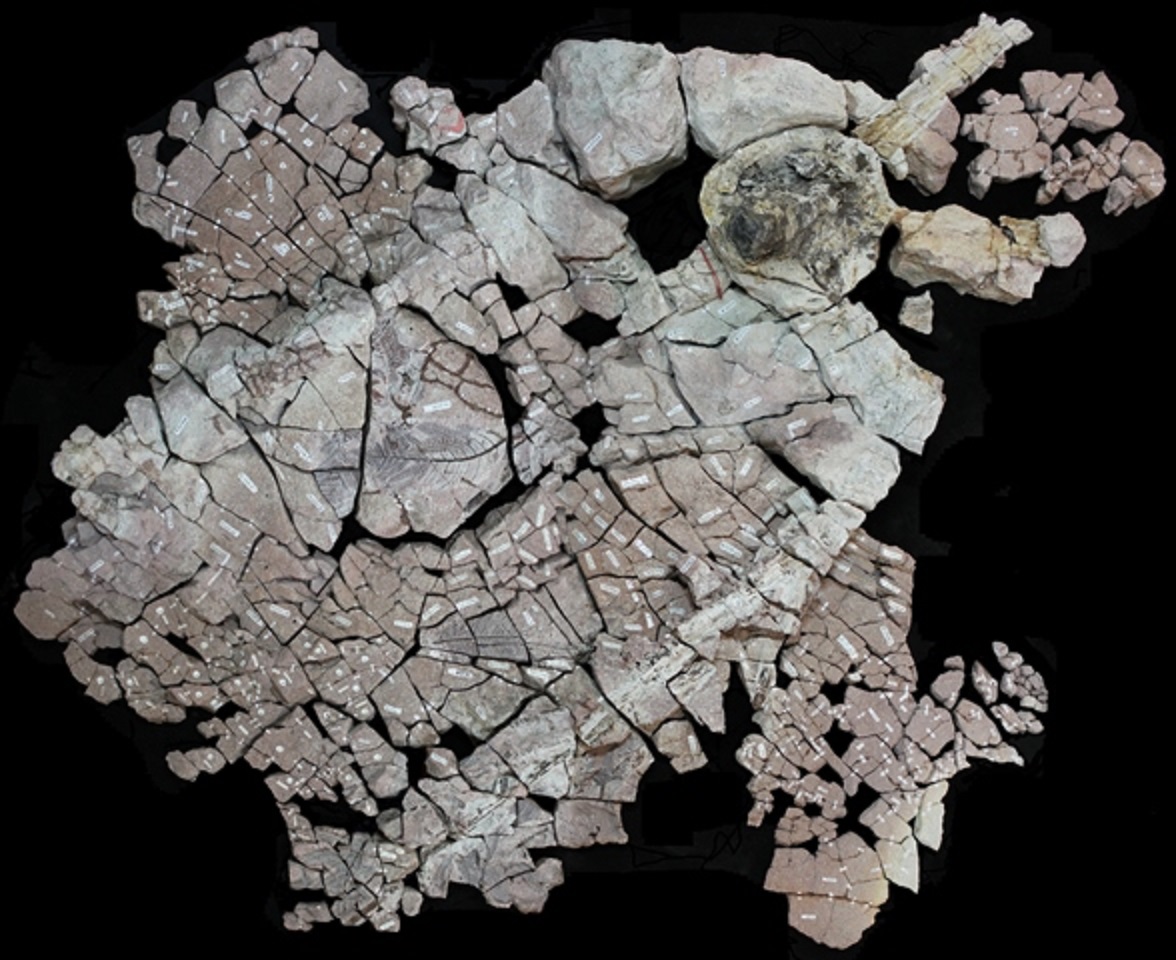
Researchers from the Museum für Naturkunde Berlin and the Museum für Naturkunde Chemnitz have described a new plant species from the Petrified Forest in Chemnitz. The giant, 291-million-year-old fern seed will be studied further in the coming years. The aim is to investigate the diversity of plants in the forests of the Early Permian and their role in the increasingly extreme ecosystems of this period. The results will contribute to a better understanding of the interactions between vegetation and climate in the late Palaeozoic, a time at the end of a major glaciation phase on our planet that is similar to our current situation.
A team of palaeobotanists has described a particularly impressive fossil of a fern seed plant (Medullosa stellata Cotta 1832), a group of now extinct seed plants that resemble large tree ferns in their foliage and growth habit. The crown of the plant, which had broken off the trunk during a volcanic eruption and fallen headfirst into volcanic ash, was excavated in the Chemnitz Petrified Forest in 2010. 291 million years ago, an entire forest including flora and fauna was buried under thick layers of ash and has been preserved in great detail in three dimensions to this day. Palaeontological research provides unique insights into this living world, particularly with regard to the interaction of organisms and their interaction with the environment.
After more than ten years of painstaking preparation work, the first ever detailed reconstruction of a Medullosales fern sampler is now available. The plant probably had a slender trunk up to ten metres long with an umbrella-like crown of several fronds over three metres long, which had an impressively large leaf surface of fine leaflets. They grew in the rather shady understorey of the forest, where huge cordaite trees (early relatives of conifers) formed the canopy. The large fronds were ideal for maximising the amount of incoming sunlight. The researchers assume that these plants had a high water absorption and evaporation capacity. They were therefore probably dependent on year-round moist locations with a high groundwater table and were widespread in the early Permian. In the increasingly dry climate of the supercontinent Pangaea, the Medullosales became extinct at the end of the Permian.
So far, little is known about these strange-looking plants. Their research is to be intensified in the coming years as part of a planned DFG project. The scientific work will be based on extensive fossil material in the palaeobotanical collections of the Museum für Naturkunde Berlin and the Museum für Naturkunde Chemnitz. The aim of the research is to investigate the diversity of plants in the forests of the Early Permian and their role in the increasingly extreme ecosystems of this period. "One exciting aspect of this is to look at analogies in the ecological role of these ferns compared to flowering plants in today's tropics and subtropics," says Ludwig Luthardt, palaeobotanist at the Museum für Naturkunde Berlin. "The results contribute to a better understanding of the interactions between vegetation and climate in the late Palaeozoic, a time at the end of a major glaciation phase on our planet that is roughly comparable to our current situation."