

Climate adaptation in the city of Chemnitz
Heat load analysis is carried out
The Environment Agency is drawing up a heat action plan for the city of Chemnitz. In this context, the Environment Agency has been conducting a study on heat stress at municipal daycare centres, schools and care facilities in Chemnitz since this week.
Mitigating the effects of climate change is an important task that the city of Chemnitz is also pursuing. The heat action plan is about adapting to changes that are already occurring. The city of Chemnitz wants to ensure that particularly sensitive population groups are well prepared and protected. In addition to people in need of care, this also includes children.
In this context, the Chemnitz Environmental Agency has commissioned a pilot study that will analyse a total of 20 facilities (schools, daycare centres and care homes) in terms of their heat load over the coming weeks.
The main factors being examined are the degree of sealing, proportion of greenery, vitality of green structures, building exposure, air conditioning and shading elements, as well as surveys. The results will be presented to the public as part of the public participation process for the updating of the integrated climate protection programme.
The aim is to create an impact analysis as a basis for recommendations for action in future refurbishment and modernisation projects.
The Thuringian Institute for Sustainability and Climate Protection GmbH (ThINK) from Jena was commissioned to carry out the analysis.
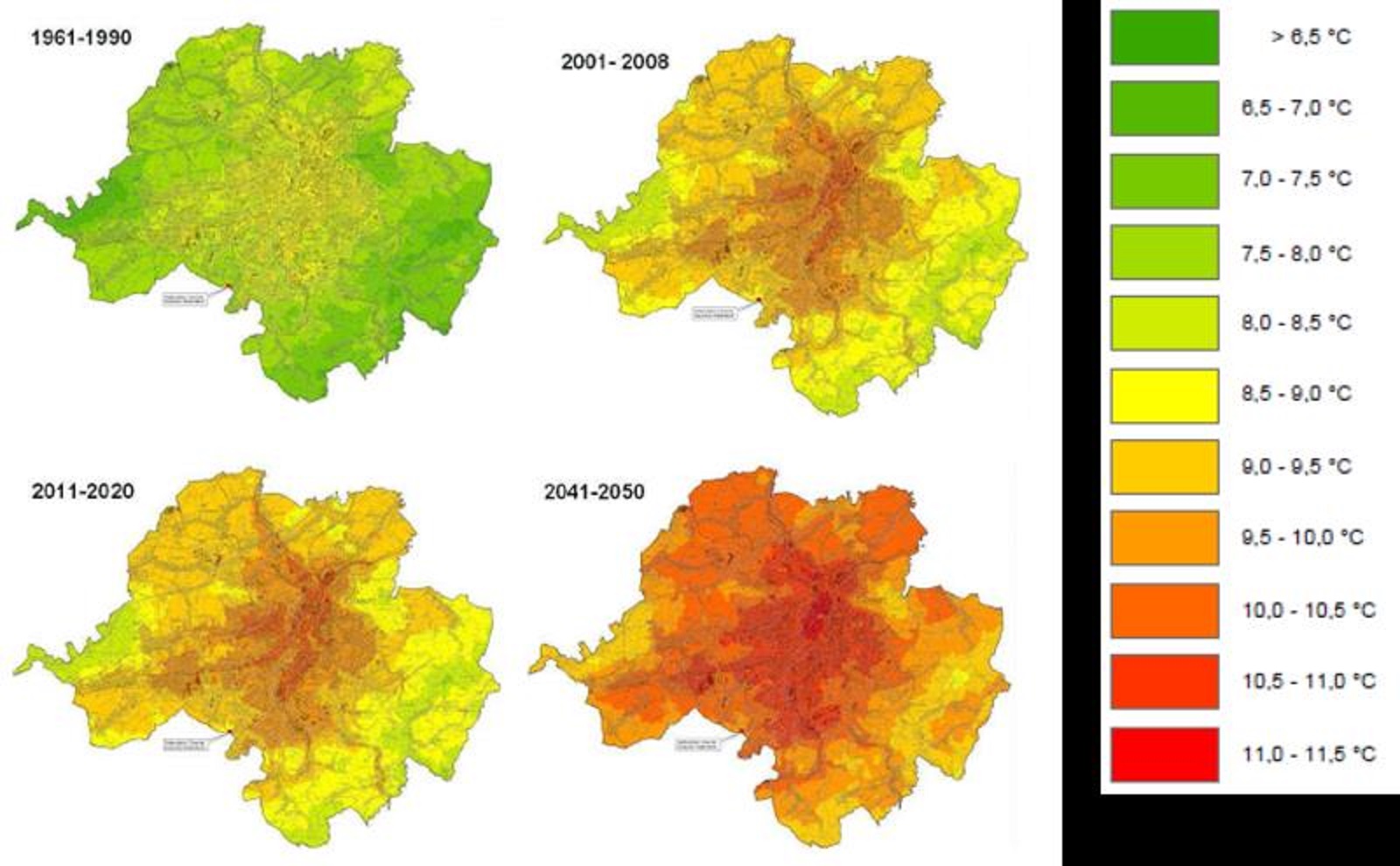
The background to the project is that Chemnitz has experienced extremely hot summers over the past two years and that heatwaves will continue to increase as a result of climate change. Man-made climate change has already caused global warming of 1 degree (+/-0.2 degrees).
Climate forecasts assume that the number of so-called "hot days" will triple on average by 2050 and increase ninefold by 2100(www.rekis.de). "Hot days" are defined as days on which the maximum daily temperature reaches or exceeds the 30°C mark. There are similar trends in the increase in so-called "tropical nights", where the temperature does not cool down below 20°C at night. What sounds like a holiday at first is a heavy burden on the circulation for many people, especially in densely built-up areas, as urban areas in particular have a heat island effect, i.e. additional warming compared to the surrounding area.