

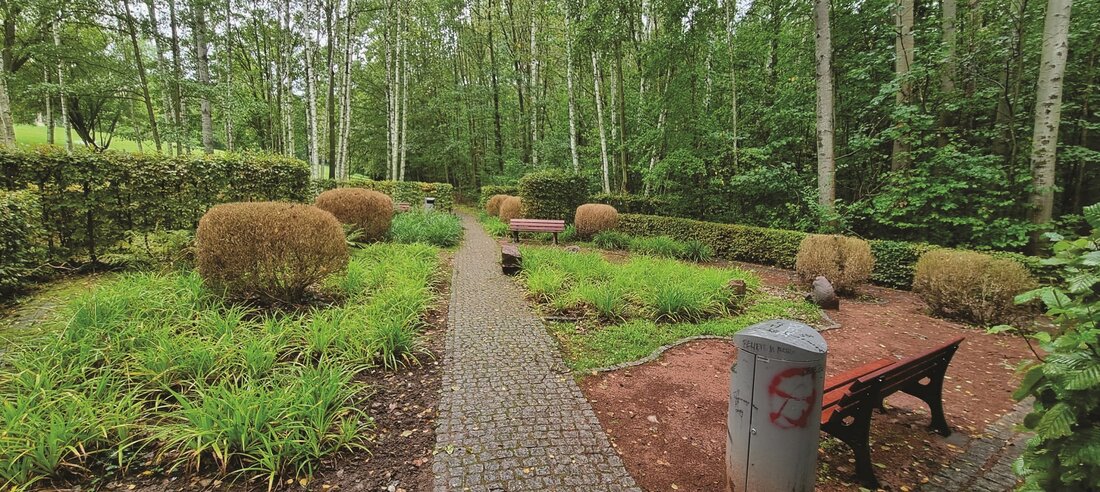

Since the beginning of April, nine box trees have been replaced by yews (Taxus media "Densiformis") in the "Garden of Tranquillity" in the Morgenleite park, in the immediate vicinity of the newly created intervention area with the water playground. The existing shrubs were heavily infested by the box tree moth. The replacement planting is necessary in order to preserve the appearance of the garden, which was designed with spherical box trees in the style of Japanese gardens.
The yew trees are planted as solitary specimens with wire balling at a height of approx. 1 to 1.25 metres. Decisive factors in the selection of the species and variety were the location, the habitus and the expected low pruning measures required to maintain the spherical shape.
The nine new plants cost around 1,400 euros.
Background
Controlling the box tree moth is extremely difficult and costly. The pest spreads rapidly and effectively protects itself with its spider-like webs. Although manual removal, biological control or the use of pesticides are possible, they are costly and often only partially successful, especially if the pest population is large and the damage to the plants is advanced. From a certain degree of infestation, saving the box trees is almost hopeless. The most sustainable and effective solution is therefore to switch to resistant alternatives or resistant box varieties.
Alternatives that are similar to boxwood and resistant to the moth include Yew (Taxus), dwarf privet (Ligustrum vulgare), laurel (Laurus nobilis), holly (Ilex crenata).
The box tree moth (Cydalima perspectalis) is no longer an unknown problem. In recent years in particular, the pest has become a serious threat to box trees in many parks and gardens. Originally from East Asia, the box tree moth has also gained a foothold in Europe due to climate change and increasing globalisation. The warm summer months and mild winters favour its rapid growth and spread.
The butterfly lays its eggs on the box trees and the larvae that hatch from them eat the leaves bare. Due to the loss of leaves and the resulting reduction in photosynthesis, the plant loses its vitality. The feeding damage also favours infestation with other pests and diseases. If the infestation is severe, long-term preservation of the trees is hardly possible. The box trees are visibly bare, often decorated with spider-like webs. The plants lose their aesthetic value completely.
The box tree moth poses a considerable threat to the maintenance and preservation of green spaces. The following also applies in the private sector: anyone caring for a box tree in their own garden should be aware of the danger posed by the borer and think about alternatives. By choosing robust, native and resistant plant species, everyone can make a contribution to preserving green diversity.