

Protecting insects in zoos and game reserves
Chemnitz Zoo and the wildlife park want to contribute even more actively to the protection and conservation of insects. Both facilities will have areas where flower meadows are allowed to grow to serve as a food source for insects. There is a good reason why some parts of the zoo and wildlife park may look a little "unkempt" to the human eye. The maintenance of the wildflower meadow is not so important - it takes patience for such a meadow to unfold its full splendour.
Insects are the most species-rich group of animals. Many species native to Germany are under special protection (incidentally, protection applies to all stages of insect development, i.e. egg, larva, pupa and adult insect).
A decline in insects has been recorded for more than 30 years. This concerns both the number of species in general and the number of insects in individual areas. The great "insect extinction" is currently progressing at an alarming rate.
In recent years, many children (and parents) have been able to learn how important insects can also be for humans in zoo education programmes at the zoo school or during special holiday activities at Chemnitz Zoo.
The protection of and knowledge transfer about insects will be further intensified in both facilities over the next few years. The aim is to encourage visitors to think and act holistically. After all, a "basic ecological law" of great and comprehensive importance states: healthy soil - healthy plants - healthy animals - healthy people. It is often the little things that can make a big difference.
Examples of insect protection
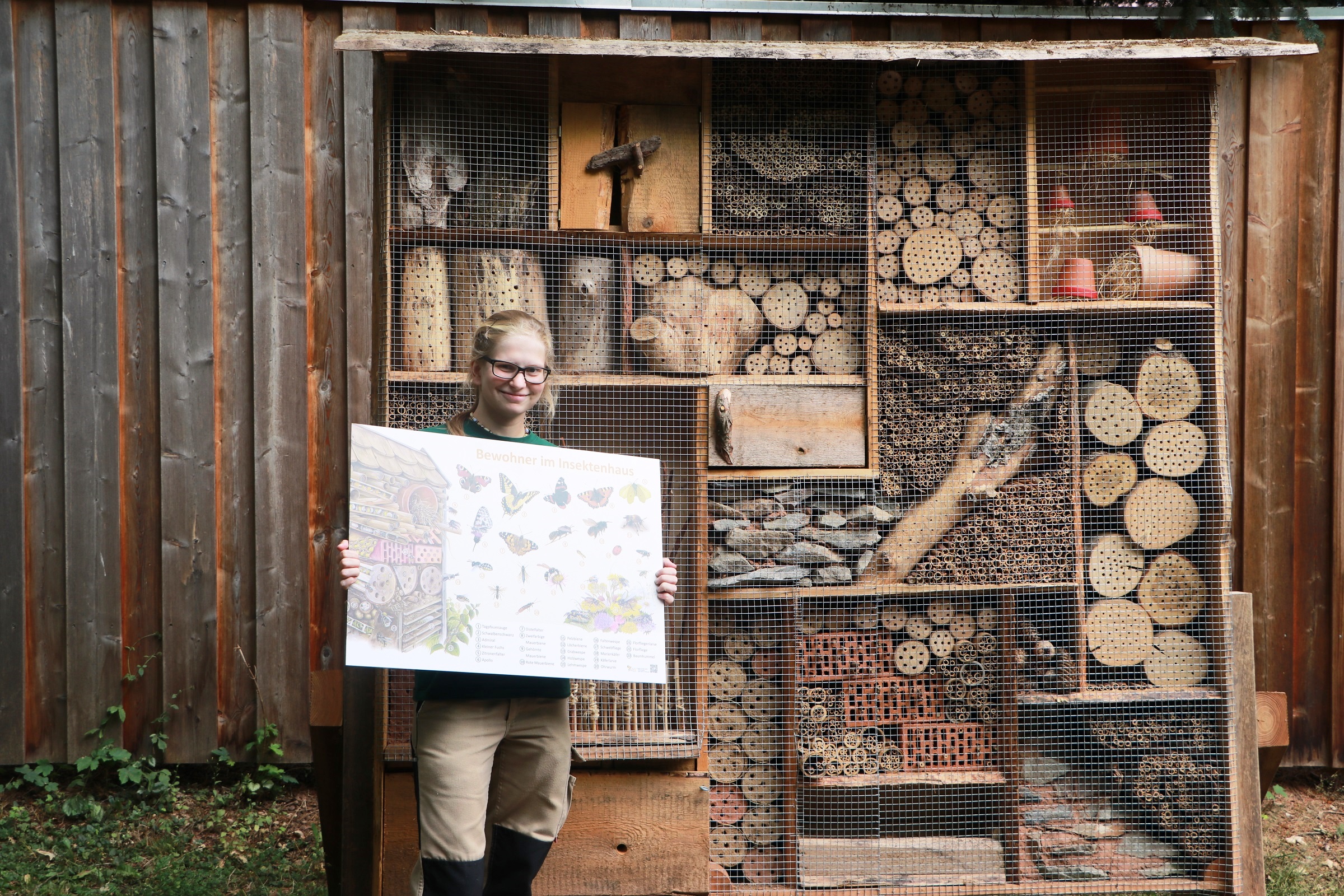
Hannah Kunze took on a special project during her voluntary ecological year at the zoo - building an insect hotel. This project demonstrates the various nesting opportunities that humans can offer insects. During construction, some insect species and thus the first guests have already moved in. However, the insect hotel's impressive size is also intended to attract the attention of visitors to the zoo and thus draw attention to the problems and protection of insects. (see photo)
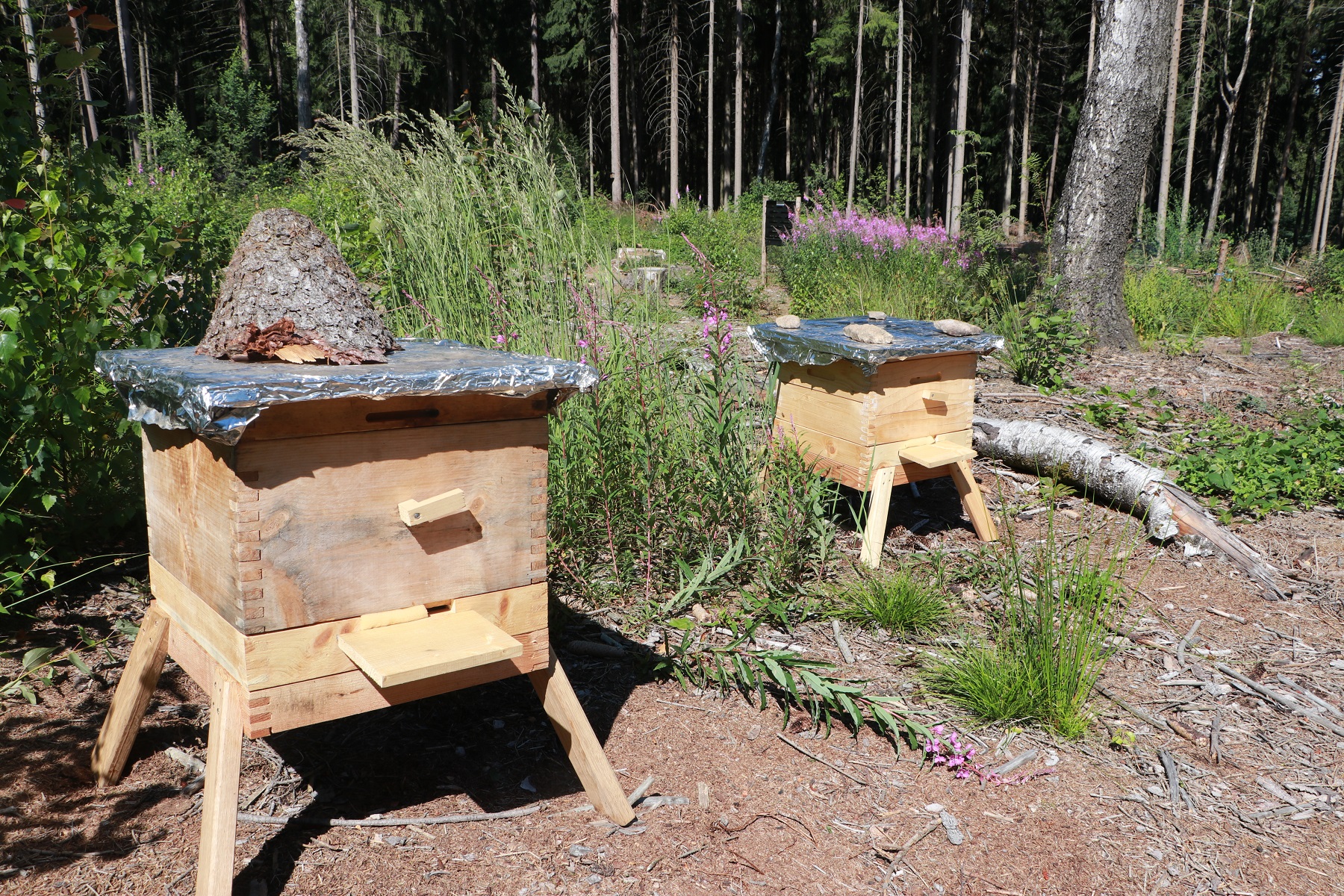
The owner of Honigmanufaktur Rabenstein, Maxi Arnold, has set up two of her honey bee colonies in the wildlife enclosure. Visitors to the wildlife park can thus observe the buzzing and humming life of the beehive. In addition, insects such as bees are essential for the reproduction (pollination) of many flowering plants. (see photo)
Red wood ants have also re-colonised the wildlife enclosure. They are particularly important for forest hygiene as predators of other insects and are therefore indispensable for forests used by humans. Ant nests must not be destroyed.
Opening hours in summer
Zoo: 9 am to 7 pm, last admission 6 pm
Game enclosure: 8 am to 6 pm, last admission 5 pm