

New residents at the game reserve and zoo
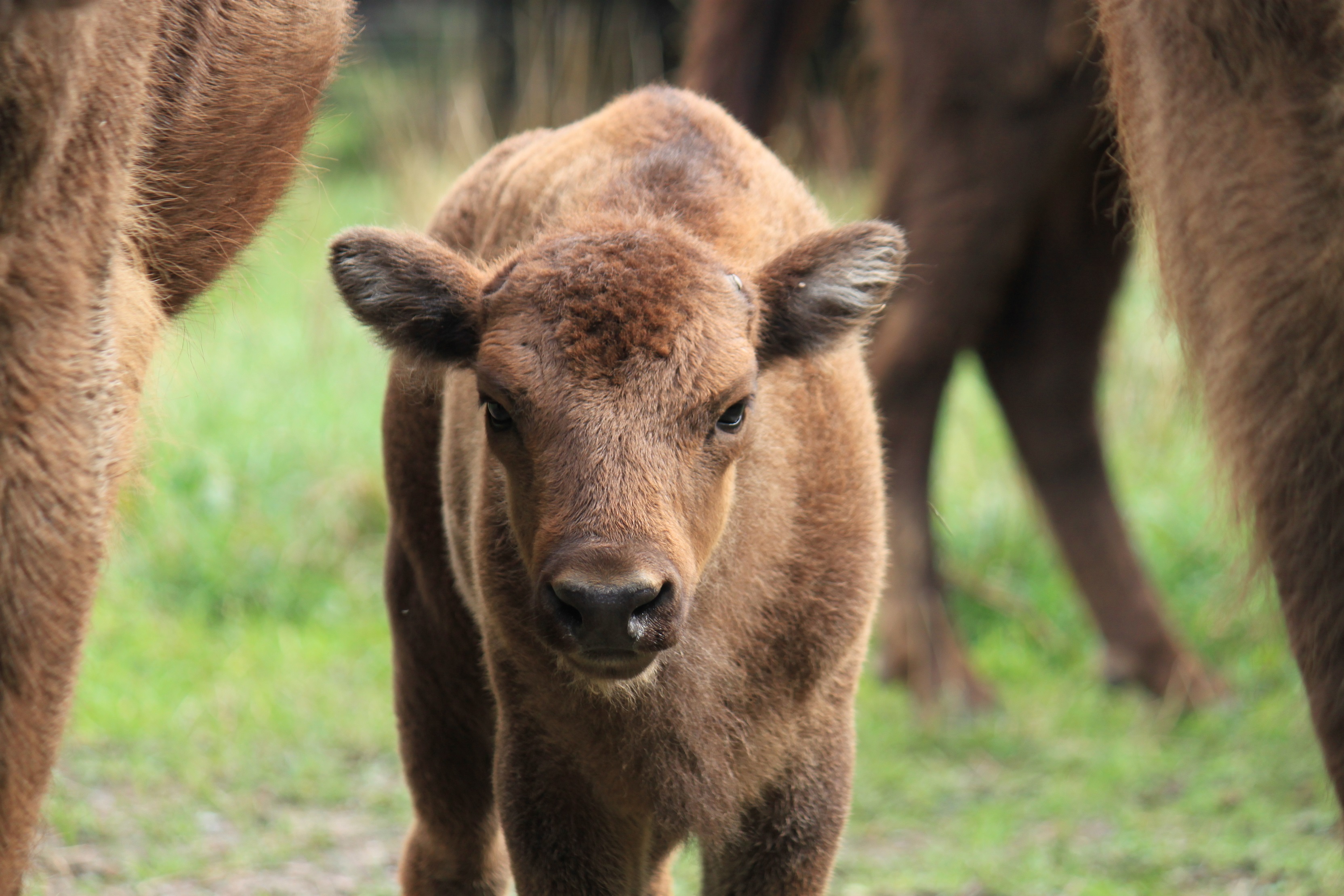
A female bison calf was born in the wildlife enclosure at the beginning of August. The mother is five-year-old "Pronka" from Prague Zoo, the father is three-year-old "Zaafer" from Sababurg Zoo. The birth was a real surprise, as neither rutting nor mating was observed. What's more, the bull is still very young. The new arrival is called "Orlanda". The names of all bison born in the Oberrabenstein game reserve begin with the letters "Or" - for Oberrabenstein.
Normally, the rut takes place from August to October and a calf is born after around nine months.
Bison are the largest European land mammals. Bulls can weigh up to 1000 kg, cows reach a weight of 600 kg. After the extinction of the aurochs, they are the only surviving wild cattle in Europe. However, bison are not closely related to domestic cattle, whose ancestor was the aurochs. They are closest to the American bison. In the first half of the 20th century, the bison were almost extinct. Thanks to the joint efforts of zoological institutions and a few private owners, they were saved and later even reintroduced in various countries. Today there are over 4000 animals again, a third of which live in zoos and wildlife parks. In Germany, bison can even be seen in the wild in the Rothaargebirge.
New resident among the steppe foxes
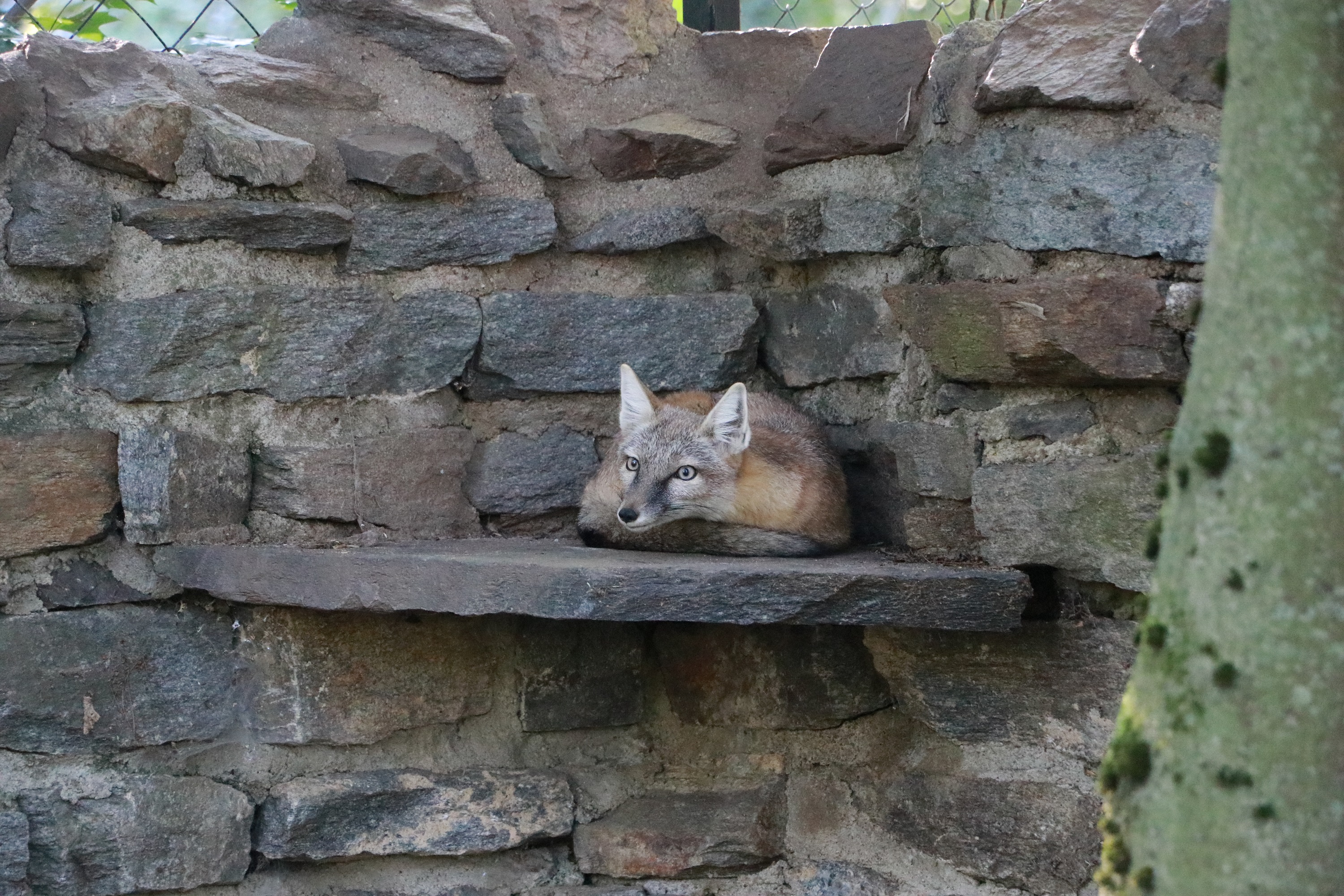
After a female corsac or steppe fox moved into the zoo in September last year, a second animal followed in August this year. The male corsac, born on 3 March, comes to Chemnitz from Gera Zoo. This means that it will be possible to breed this fox species in the future.
The rather dainty-looking steppe foxes are found in Central and East Asia as well as in south-eastern Eastern Europe. As the name suggests, they mainly inhabit steppe landscapes and semi-deserts. Due to their distribution areas, steppe foxes are adapted to extreme weather conditions. They can cope with extreme winter cold and summer drought by changing their fur, among other things. The soft and silky winter fur of the corsac is often the species' undoing, as it is highly sought after as fur and the animals are therefore hunted.
Opening hours in September:
Zoo: 9 am to 7 pm, last admission 6 pm
Game enclosure: 8 am to 6 pm, last admission 5 pm