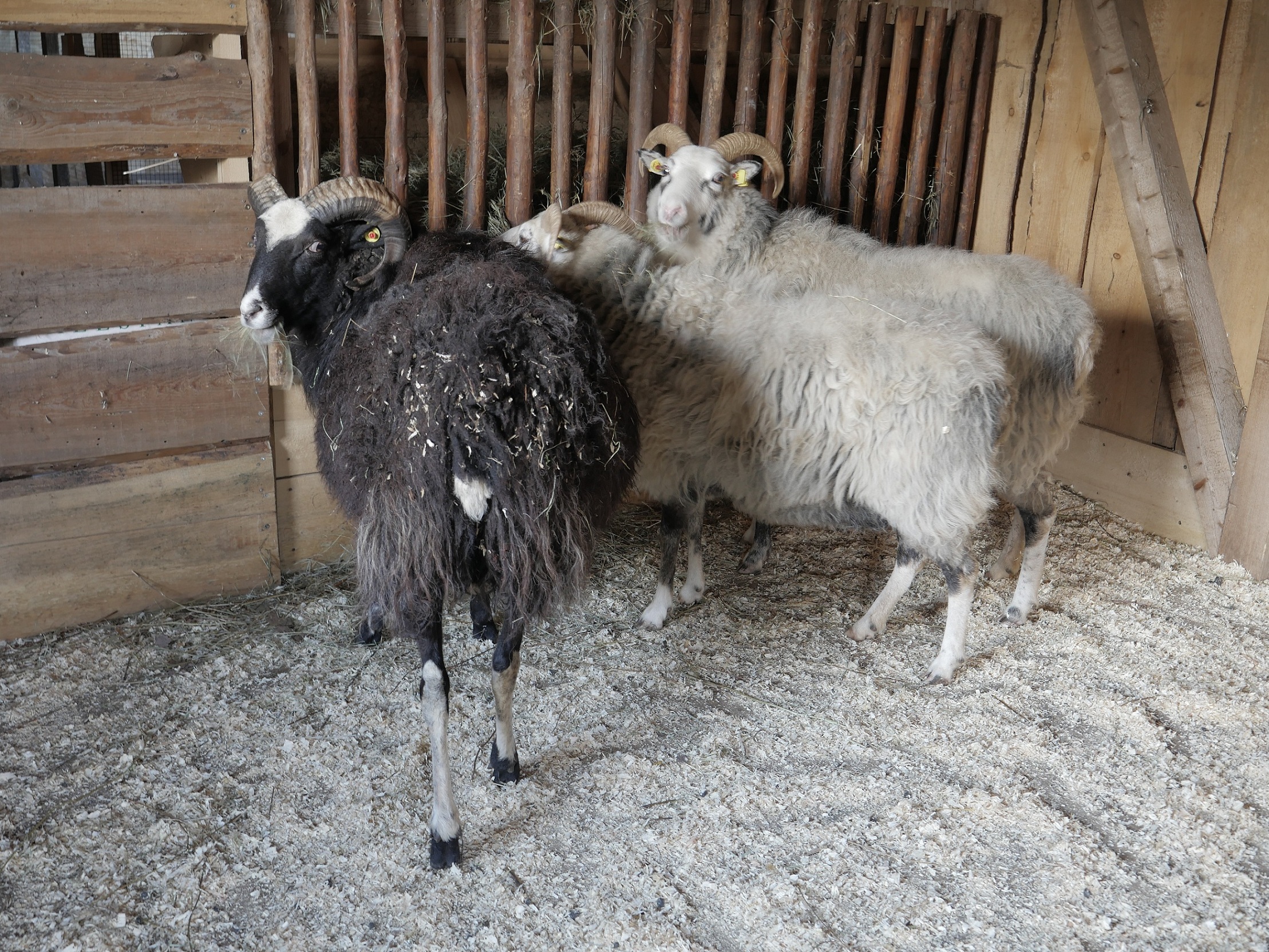
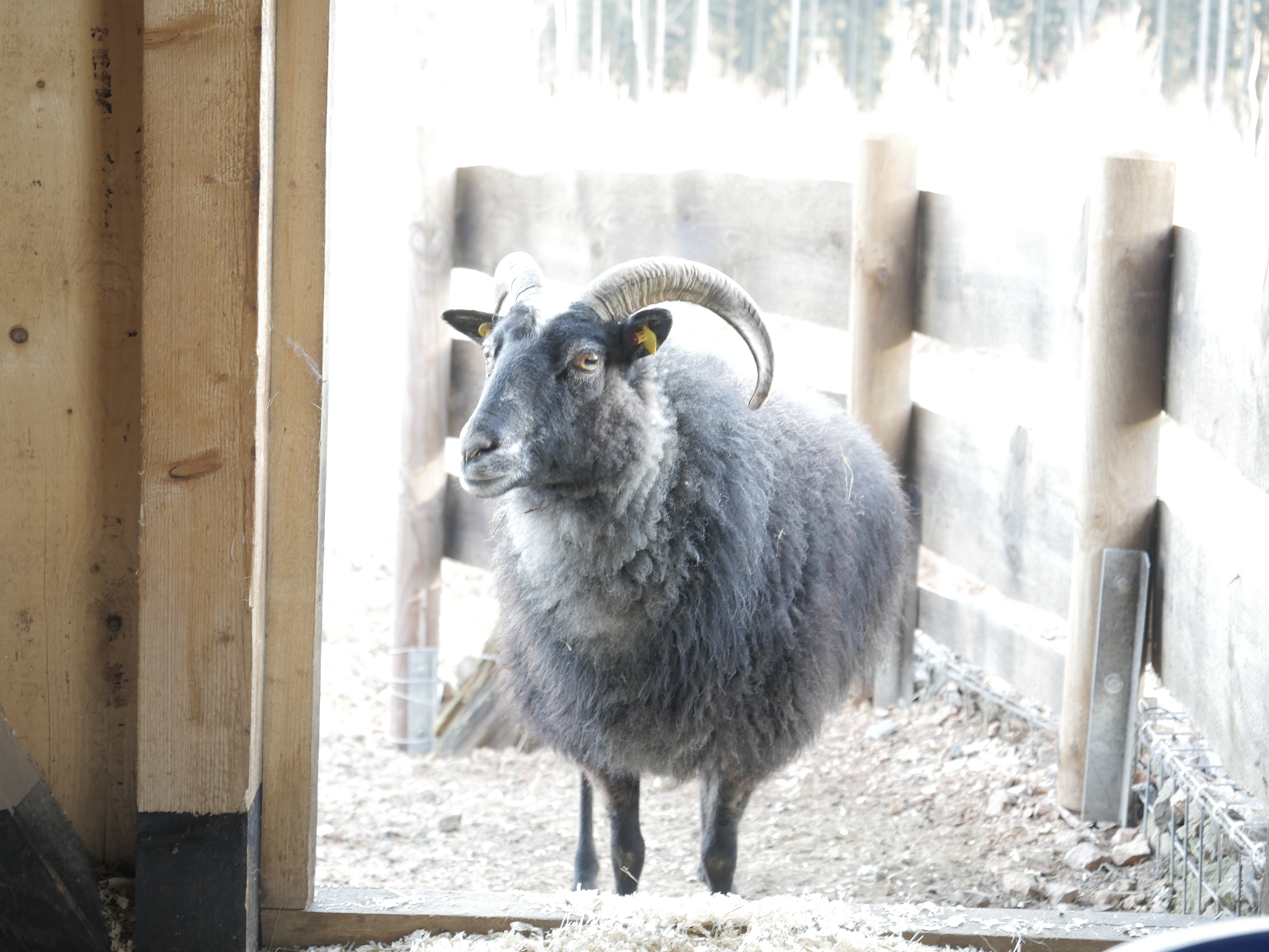
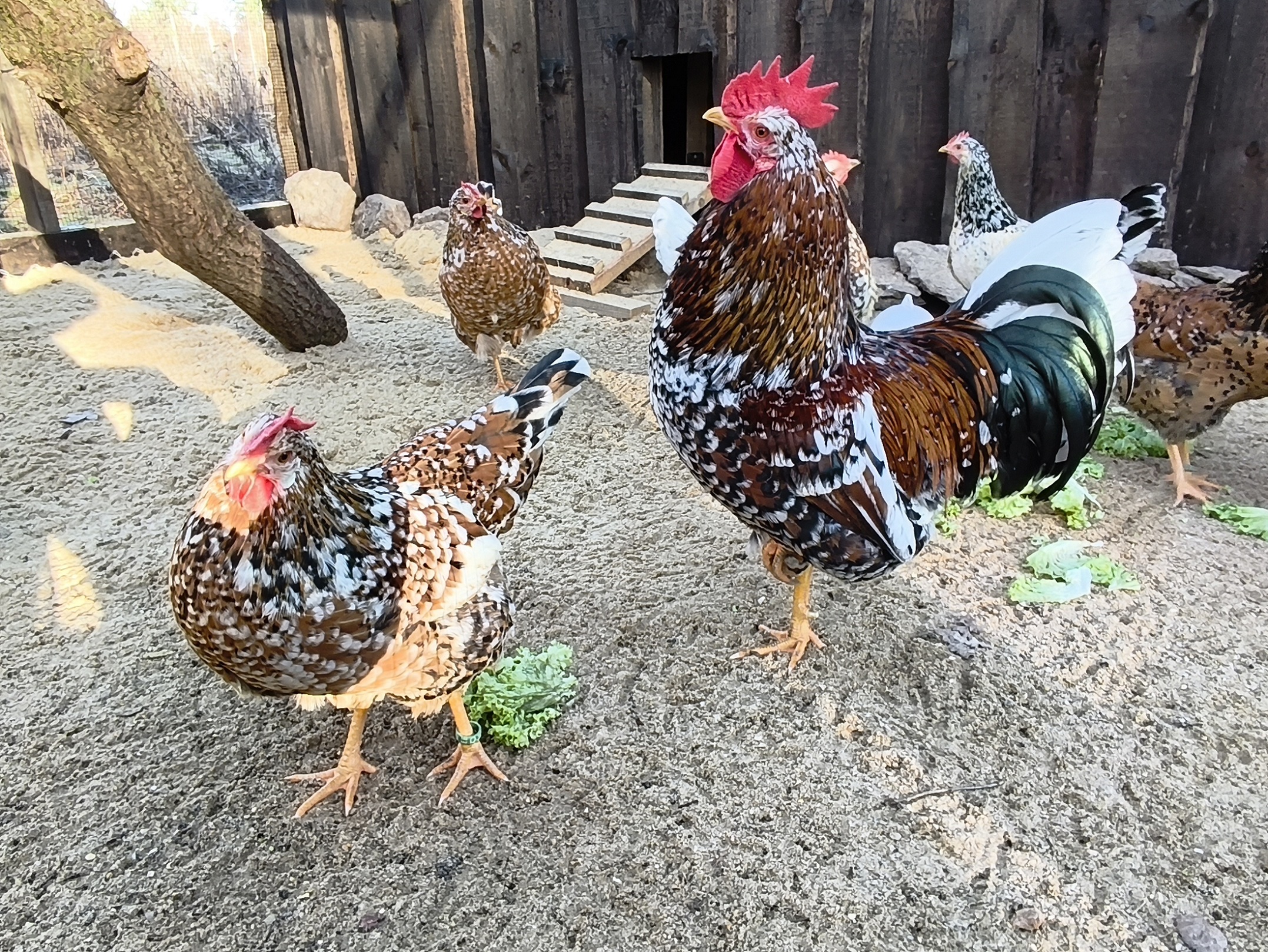
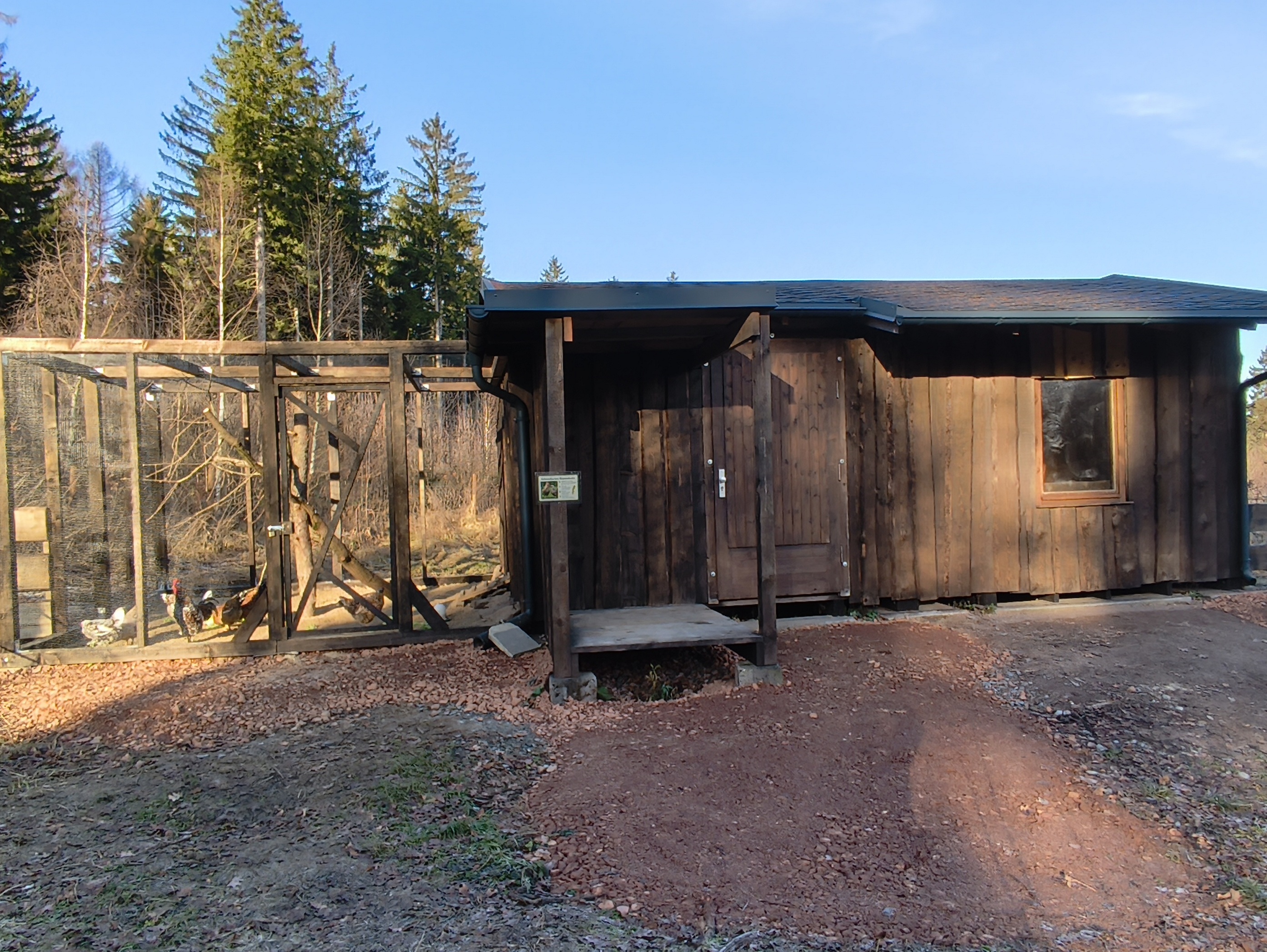
From now on, the new arrivals of the Swedish flower hens and good sheep can be visited and observed in their new enclosures in the Oberrabenstein game reserve at Thomas-Müntzer-Höhe 13. The new enclosures have been created over the past few months and the outdoor enclosures have now been completed. The work was carried out entirely by the employees of the Wildgatter.
The Auen, the female Guteschafe sheep named Björk, Aili and Kaja from Erfurt Zoo, moved into the game enclosure at the end of August. At the beginning of September, the ram Tjelvar arrived from a private holding in Freiberg.
The Guteschaf is a robust, medium-sized landrace from the group of Northern European short-tailed sheep originating from the Swedish island of Gotland. Its physique largely corresponds to that of the sheep kept in the Viking Age. They are characterised by horns similar to those of the mouflon, which are pronounced in both the rams and the does. Another special feature: the animals largely shed their wool themselves in early summer and can therefore be kept almost without shearing.
The Wildgatter is currently the only zoological facility in Germany that keeps this breed of sheep.
The sheep's outdoor enclosure has been planted with a variety of wild fruit trees. This contributes to a near-natural enclosure design, native species are strengthened and ecological diversity is promoted. In addition to serviceberry, speierling, wild serviceberry, sweet chestnut and common weeping cherry, wild apple and pear can also be found in the outdoor enclosure.
The Swedish flower hens - also known as Schonian flower hens - are also a speciality. A total of six hens and one cockerel moved into the new area in November and have already settled in very well.
This species is an old Swedish landrace that was thought to be extinct around 1970 until one of the last flocks was discovered in the village of Vomb in Skåne. The current flock can be traced back to just three flocks in Vomb, Tofta and Esarp. The chicken breed is now bred by several hundred owners and is now also common outside Sweden, including in Denmark, Germany and Switzerland.
Flower chickens are characterised by their extremely varied appearance: no two animals are the same. The basic colours range from black, blue, grey and brown to wild colours and yellowish tones. White feather tips create the eponymous floral pattern in the plumage.
With the new enclosures, the Oberrabenstein Wildlife Park not only offers its visitors attractive insights into rare and historic livestock breeds, but also makes an important contribution to the preservation of old breeds.
Opening hours of the zoo and game park:
| Daily | 9 am to 4 pm |
Last admission one hour before closing time.