

Game enclosure: Offspring of Germany's largest deer species
Reforestation in the Oberrabenstein game reserve in full swing Further easing of restrictions in the zoo and game enclosure
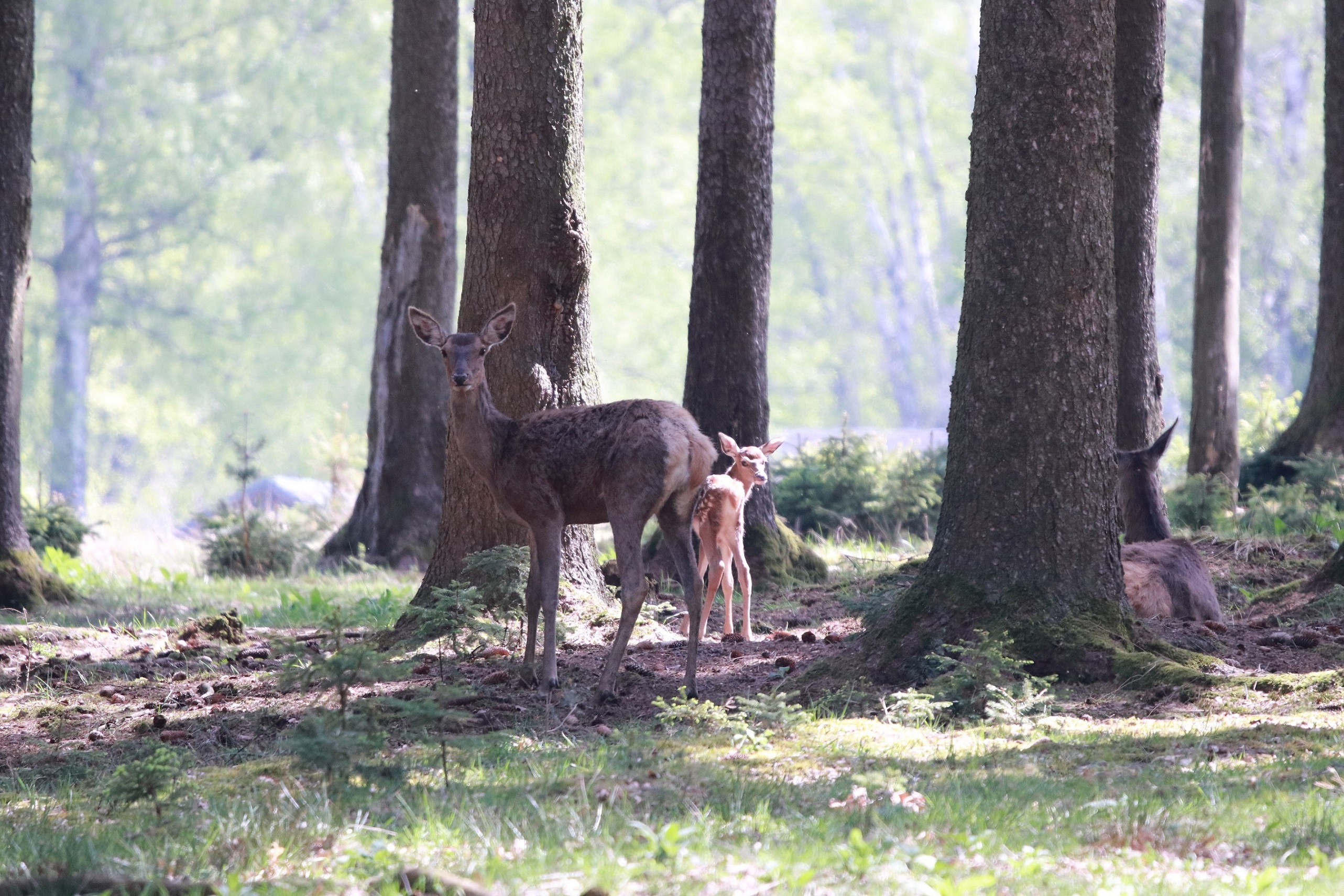
At the beginning of May, the keepers discovered a single calf in the red deer enclosure. The birth was a bit of a surprise for the staff in that it took place a little early in the year. Normally, the adult animal gives birth at the end of May, but essentially in June. The gestation period is eight and a half months. Accordingly, the rut takes place from mid-September to mid-October. As a rule, only one calf is born.
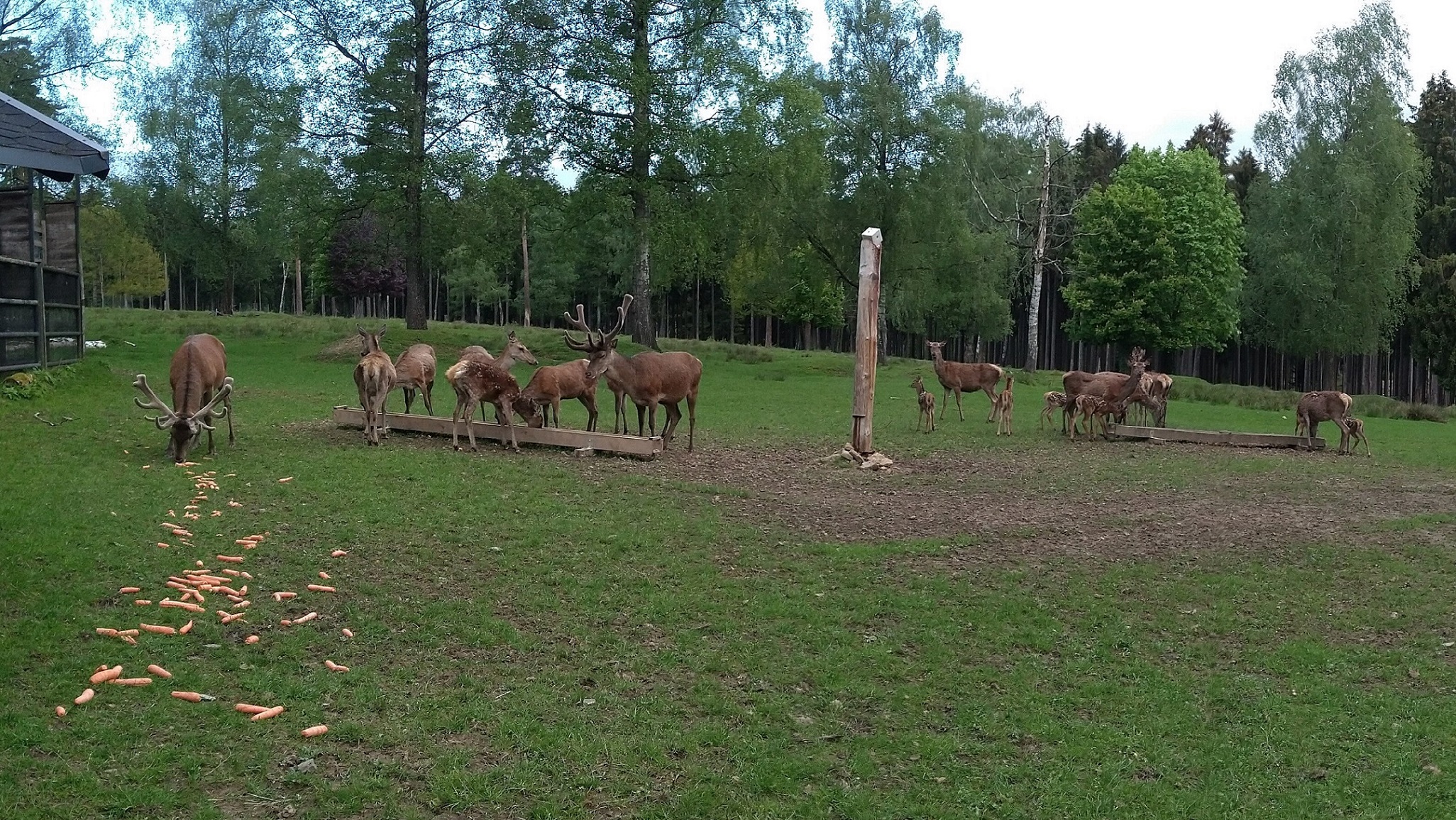
By June, six more calves have been born. This means that the red deer herd in the game reserve currently consists of 20 animals. The sexes of the young animals are not yet known. They are suckled until late summer, occasionally even throughout the winter. It is only in autumn that it may be possible to recognise a slightly thicker head in the stag calves - but this is a rather uncertain characteristic. The forehead cones - the so-called rosebud - on which the antlers later sit may be recognisable.
As with most antlered animals, only the males of red deer have antlers. These are newly formed every year and primarily serve as an eye-catcher for mutual recognition. During the rut, serious antler fights take place between equal rivals. The stags shed their antlers from the end of February until April. The stag wears its strongest antlers when it is eleven to 13 years old. However, the number of ends on a red deer's antlers is not a sign of age. Red deer are antlerless and are therefore called "bald deer".
After the bison, red deer are the largest wild land mammals in Germany. Of all antlered animals, they have the largest range worldwide. Due to their hunting and cultural-historical significance, they are exhibited in many zoological institutions. Despite this fame, there are always people who mistake the roe deer for a female red deer. However, red deer are categorised as real deer, whereas roe deer are categorised as deer. These are two different subfamilies within the deer family.
Reforestation in the Oberrabenstein game reserve in full swing
In order to maintain a species-rich and resilient forest for the future, reforestation has begun at the Oberrabenstein game reserve.
The game reserve has also suffered greatly from extreme weather conditions in recent years. At first it was storms that brought down many trees on site. The dry summers of recent years also gave the bark beetle an easy opportunity to spread unhindered and damage the trees. Due to the lack of water, the spruces were unable to produce resin to defend themselves against the bark beetle. However, this is an event that occurs throughout Germany.
In 2019 alone, around 600 solid cubic metres of wood had to be felled and cleared from the game reserve. Something had to be done to ensure that the wildlife park retained its forest character.
In July 2020, the Förderverein Tierparkfreunde Chemnitz e.V. decided to launch a tree sponsorship campaign. Supporters of the wildlife park were able to buy "their" own tree. Around 150 larger trees were planted within a short space of time. Care was taken to ensure that only deciduous trees were planted.
In the same year, district forester Ullrich Göthel from the Grüna/ Sachsenforst forest district offered to provide 2,500 young trees in 2021.
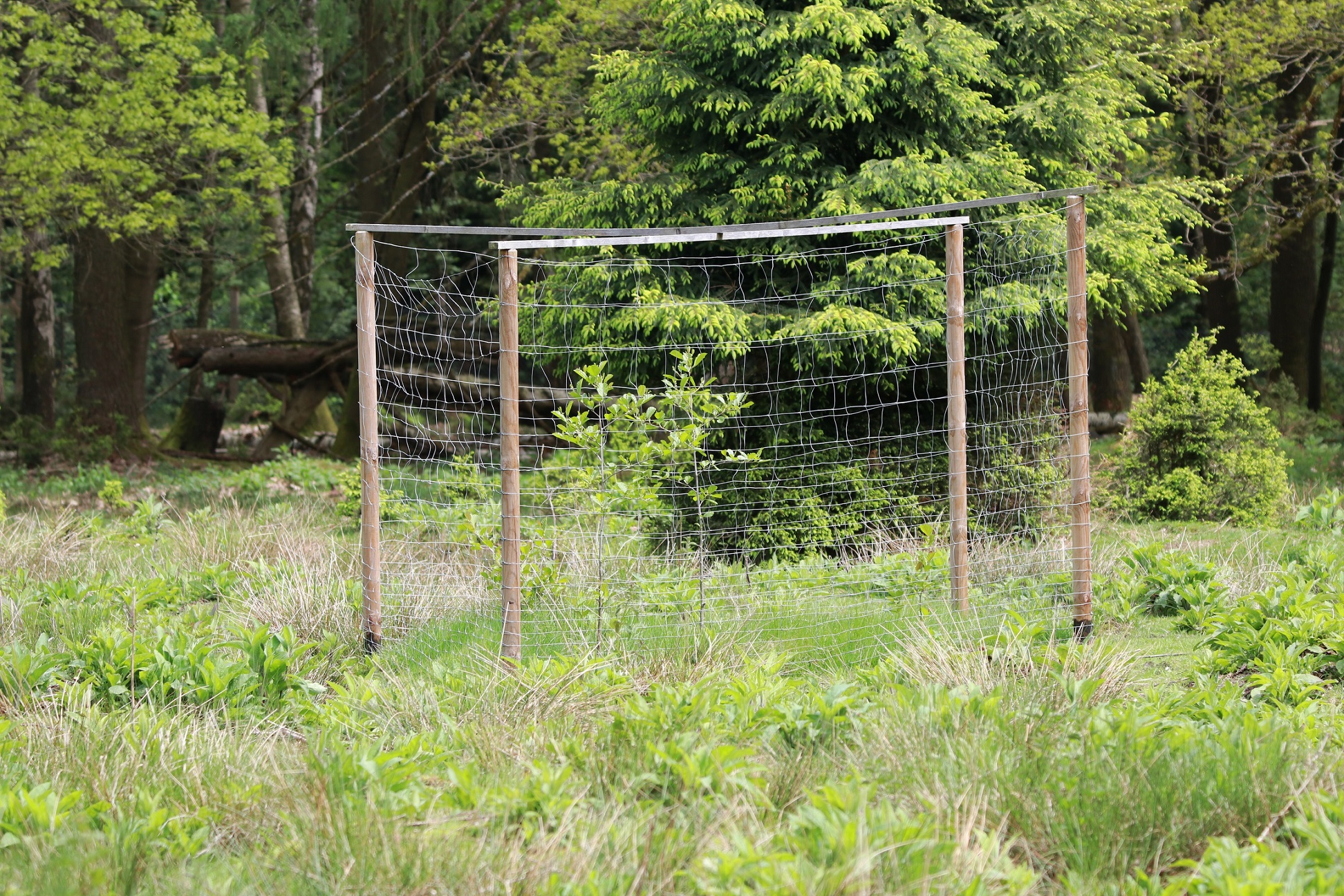
In recent weeks, protective fences have now been erected in some of the enclosures where the young plants were planted. The fences are intended to protect the plants from being eaten by the animals in the enclosures. However, the majority of the trees were planted outside the enclosures.
Both planting campaigns have introduced tree species to the wildlife enclosure that were not previously present, including winter and summer lime, wild service tree, spirea and fluttering elm. Other tree species include sessile oak, wild cherry, silver fir, black alder, ash and copper beech.
Further relaxation in the zoo and game enclosure
Since Thursday, 10 June, testing has been compulsory at Chemnitz Zoo and Oberrabenstein Wildlife Park, and as of today, 15 June, contact details are also no longer required.
Nevertheless, it is still necessary to register online in advance for a visit, as only a limited number of visitors can be admitted to each of the two facilities.
In addition, the tropical house and the farm, including the petting enclosure, can once again be entered at the zoo. A one-way system and masks are compulsory in both buildings.
All current requirements for registration and the rules for a visit can be found at www.tierpark-chemnitz.de.
Opening hours in June:
Zoo 9 am to 7 pm, last admission 6 pm
Game enclosure 8 am to 6 pm, last admission 5 pm
www.tierpark-chemnitz.de