

Chemnitz Zoo: Capybara offspring
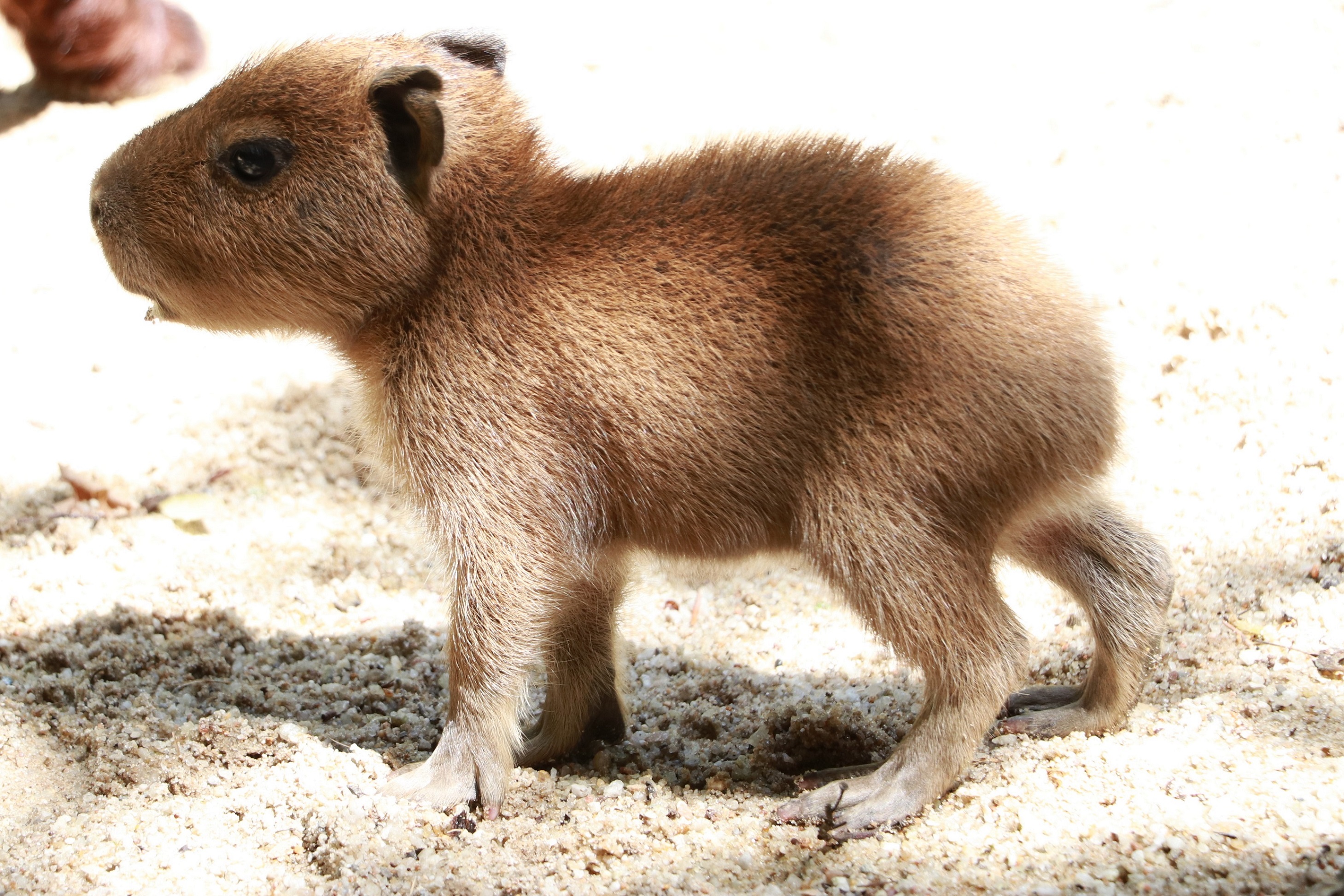
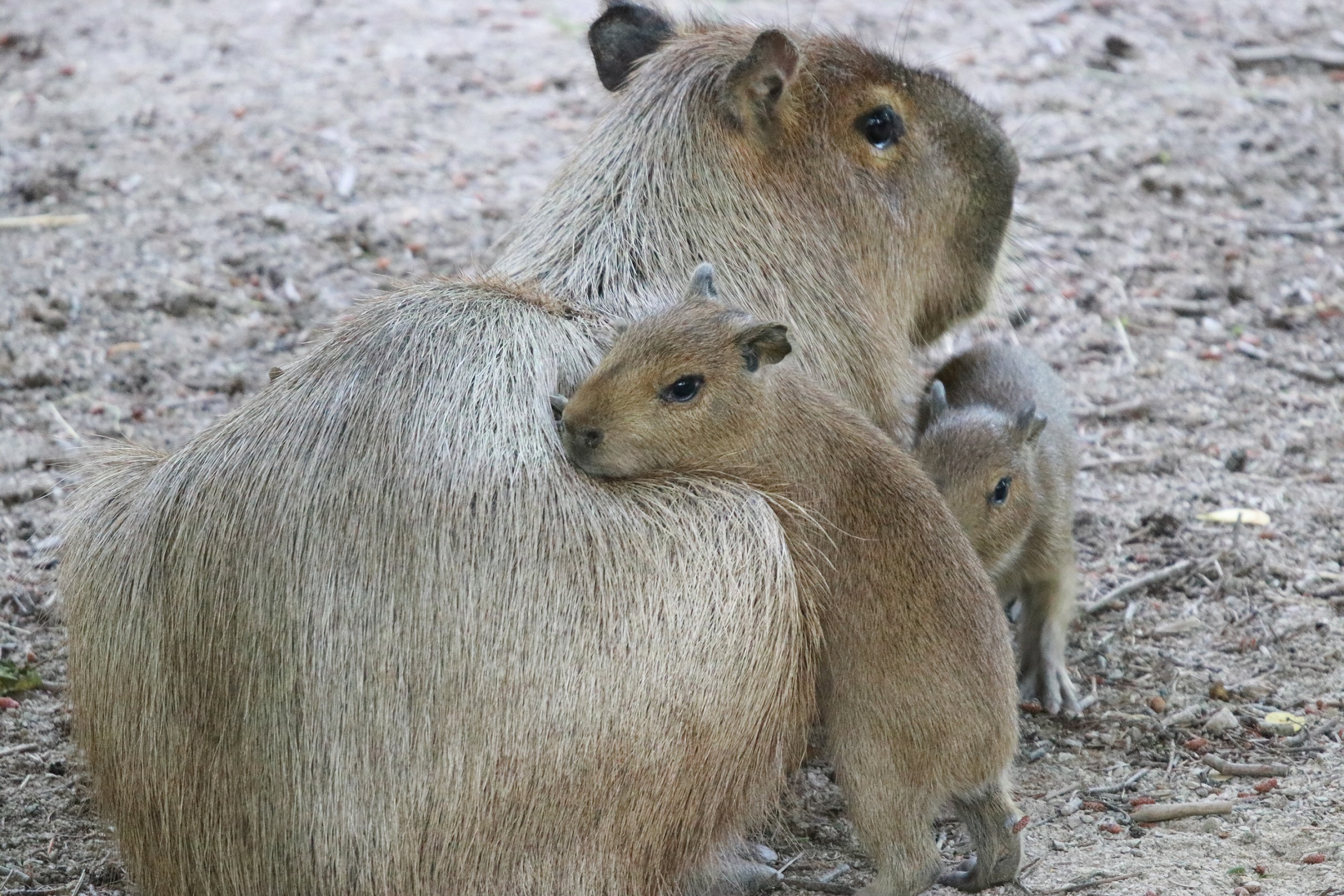
At the beginning of July, the largest rodent species in the South America enclosure at Chemnitz Zoo gave birth. Capybara lady Lotta gave birth to three kittens on 8 July.
This is Lotta's first ever offspring. She came to Chemnitz from ZooParc Overloon in the Netherlands in September 2019 when she was just under nine months old, together with another female. Her father is ten-year-old Fred, who has lived in Chemnitz since 2014.
Capybaras, as they are also known in German, are born well developed as so-called nest fledglings. As is common for most rodents, capybaras do not have milk teeth at birth, but instead have permanent teeth. The young animals therefore eat solid food, mainly grasses, from day one. They are suckled for around three to four months.
In South America, capybaras are among the largest grass-eaters on the continent. Translated, the name capybara also means "lord of the grasses".
At Chemnitz Zoo, the animals share the enclosure with nandus and alpacas throughout the summer. When the days get shorter and the temperatures colder, the capaybaras, which are used to warmer temperatures, move into the tropical house and share the enclosure with the sloth as understaffing.
Opening hours in summer:
Zoo: 9 am to 7 pm, last admission 6 pm
Game enclosure: 8 am to 6 pm, last admission 5 pm