

Smart Urban Services
Test and trial phase completed
Chemnitz is working on the research questions of the future. The city of Chemnitz is a city laboratory in the research network "Smart Urban Services: Data-based service platform for the urban value creation of tomorrow". The question is how smart urban services can benefit municipalities and their residents.
The test and trial phase of the Smart Urban Services project, which began in January 2018, ended in September 2018. Data is no longer being transmitted and analysed via the Bluetooth sensor network in Chemnitz city centre or via the MobiApp Chemnitz. The Bluetooth sensor infrastructure installed in Chemnitz city centre will be uninstalled by the end of the year. The sensors will no longer be used.
The results from the test and trial phase are currently being analysed. This means that the data collected using the sensor network and MobiApp Chemnitz is being analysed in terms of its quality and usability. The results will be published on the project website of the City of Chemnitz and on the research project website once the project has been completed, i.e. at the beginning of 2019.
Keyword: Smart Urban Services

Smart Urban Services are intelligently networked services that are created by collecting and collating different types of data. A sensor infrastructure was set up for the project in Chemnitz in summer 2017.
Three Smart Urban Services in Chemnitz
Interactive city map
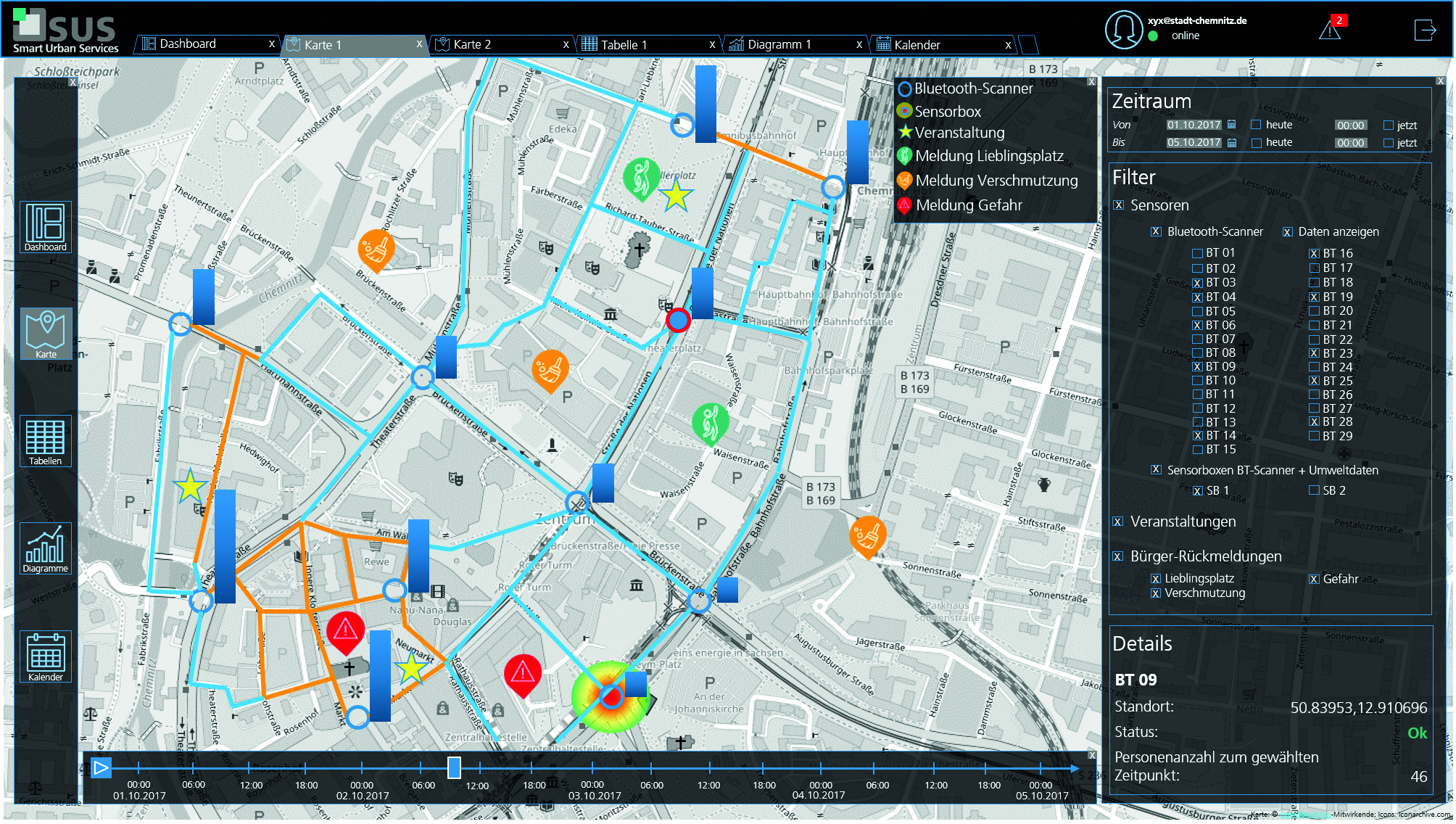
An interactive city map is being developed that links movements in the city with event data. The map will be visible in the city centre and show what is going on in Chemnitz. The co-operation partner is the city magazine 371.
Visual analysis tool
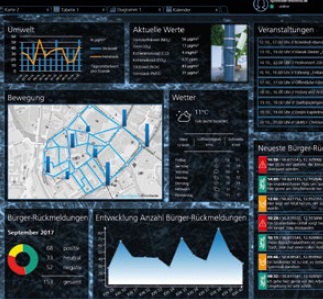
The data collected will be used to create a visual analysis tool that urban planners, researchers and transport experts can use in their work.
MobiApp Chemnitz
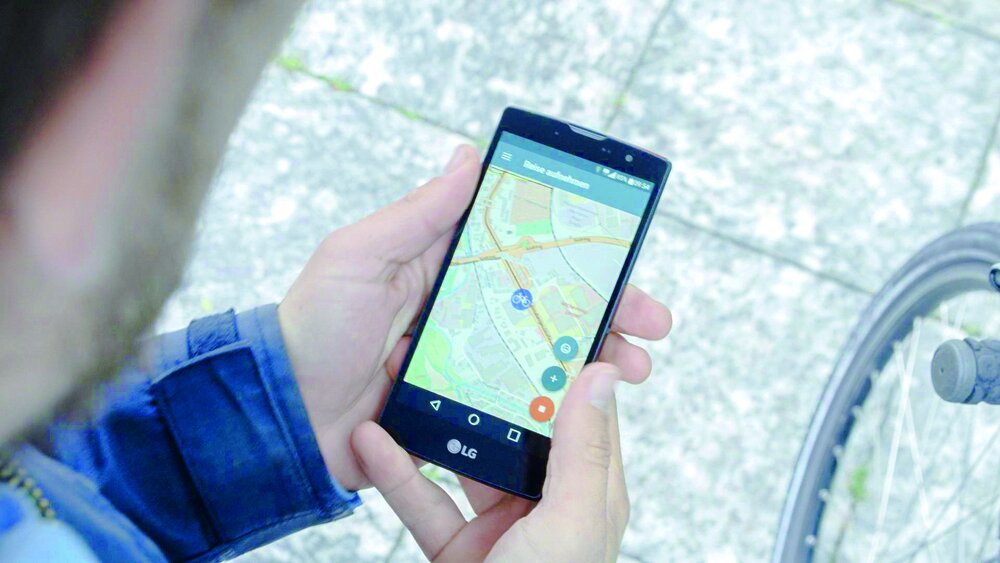
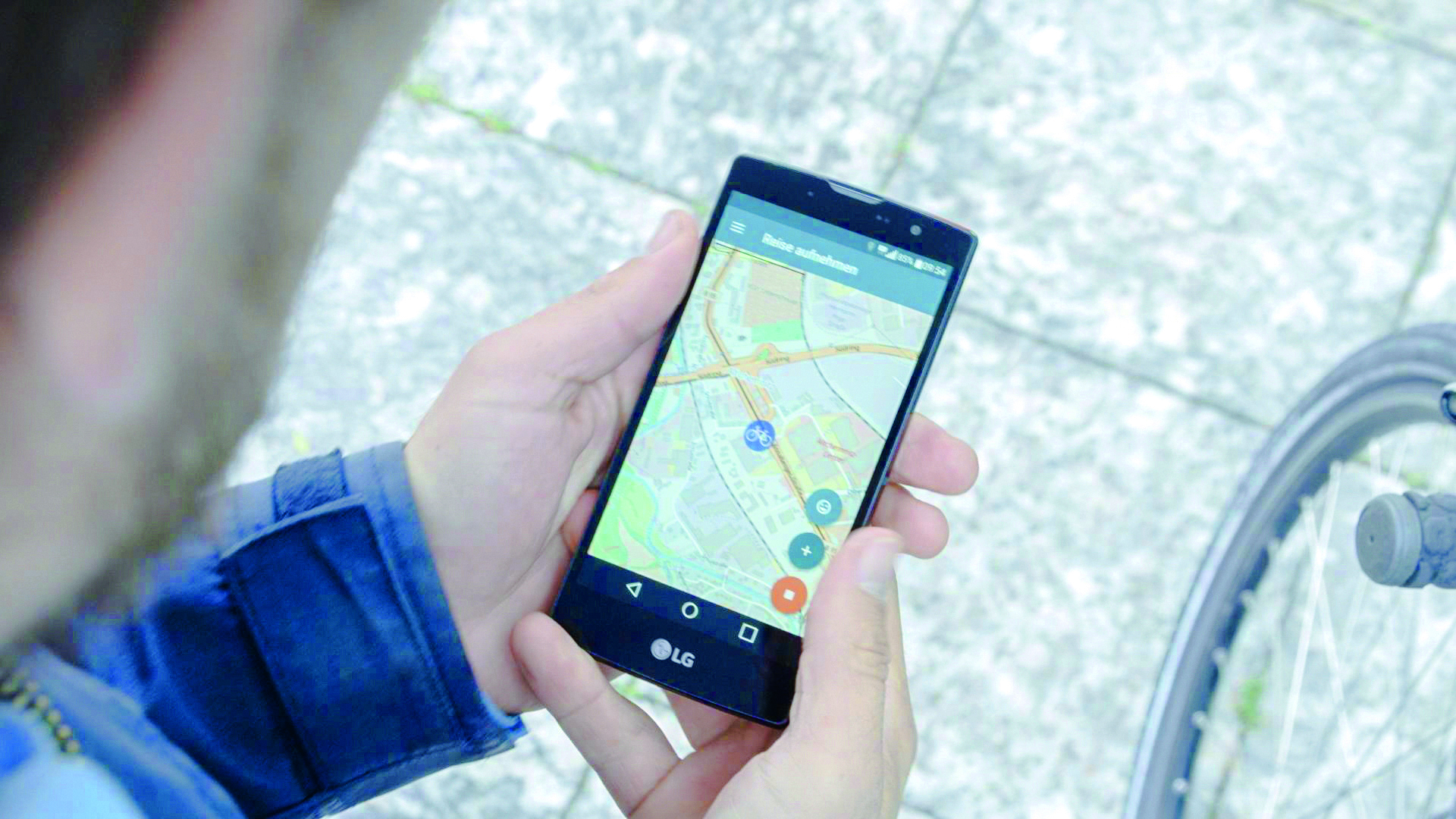
App users can provide feedback on transport and mobility in Chemnitz and the public space. They can also rate their own routes travelled in the city according to various criteria. The evaluation criteria include, for example, the punctuality of the chosen means of transport, safety on the chosen route or the structural condition of the transport routes used. Users can also create design suggestions and mark the places where they should be implemented on a map.
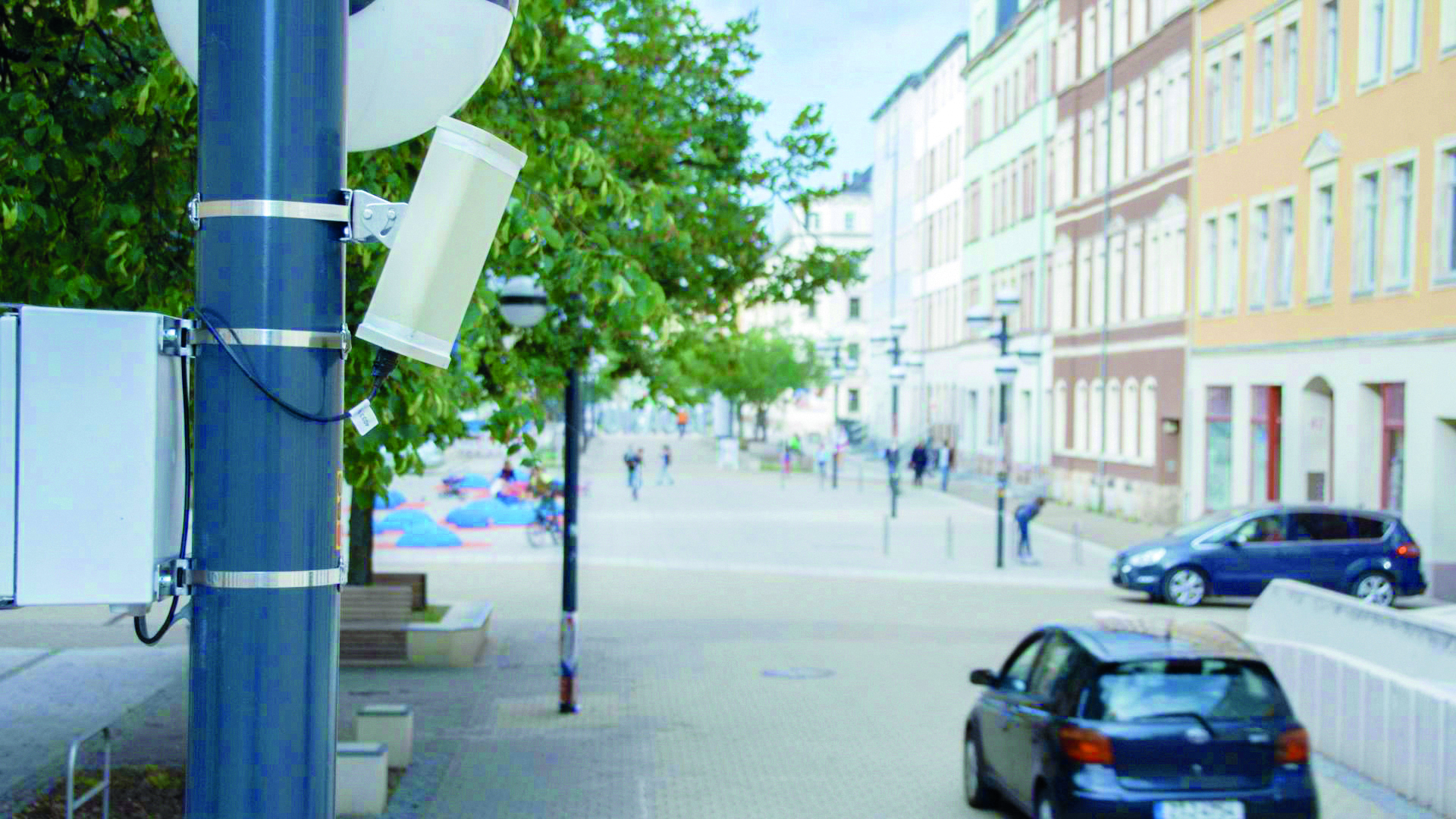
Sensors in the city centre

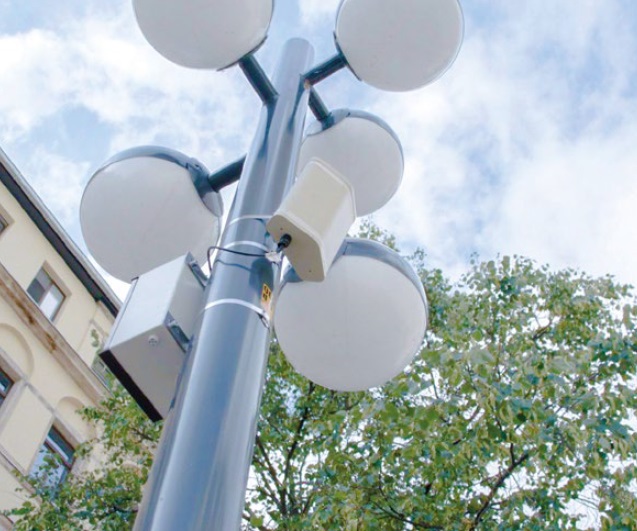
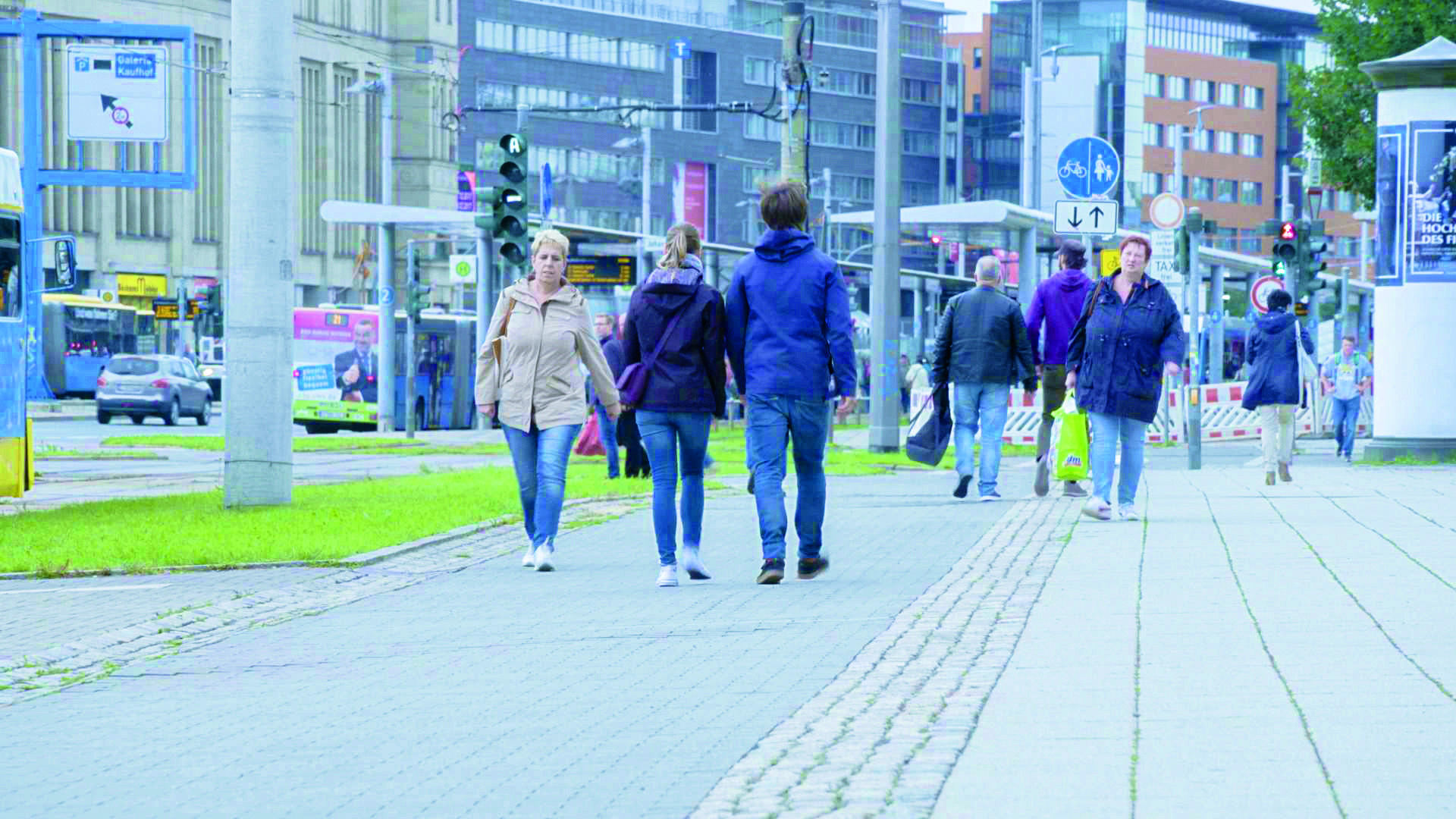
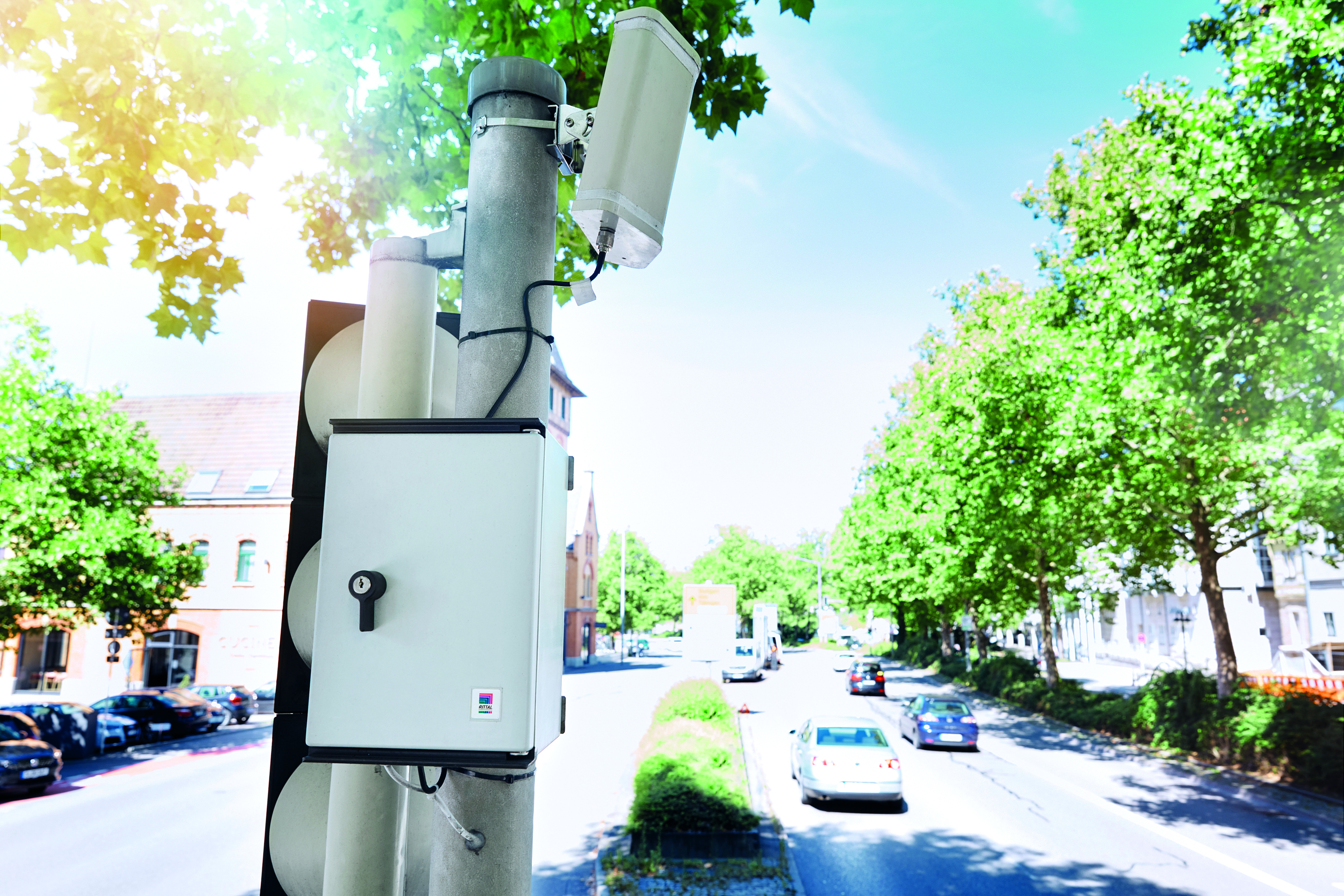
Environmental and Bluetooth sensors have been installed on traffic lights and street lamps in the city centre, on the Brühl and on the Chemnitz University of Technology campus. While the former measure temperature and humidity, the latter can register movement. The Bluetooth sensors detect electronic devices such as smartphones of road users as they pass by, provided they have activated Bluetooth. A comprehensive data protection concept was developed for data processing.
User data anonymised
Data protection measures, such as the multi-stage anonymisation of personal data, prevent conclusions being drawn about individuals and thus protect the privacy of citizens. The data collected will be used for the prototype development of the three intelligent, networked services, known as Smart Services. The smart services are intended to contribute to improving the quality of life of citizens in an innovative way.
Project partners
The research project is being led by the Fraunhofer Institute for Industrial Engineering. In addition to the City of Chemnitz, other project partners include the Institute for Labour Science and Technology Management at the University of Stuttgart and Input Consulting - Gemeinnützige Gesellschaft für Innovationstransfer, Post & Telekommunikation mbH. Another urban laboratory is being set up in Reutlingen.
The pilot project "Smart Urban Services: Data-based service platform for the urban value creation of tomorrow" is funded by the German Federal Ministry of Education and Research (BMBF) in the programme "Innovations for the production, services and work of tomorrow" (funding code 02K14Z010 to 14) and supervised by the Project Management Agency Karlsruhe (PTKA). The author is responsible for the content of this publication.
Further information

The pilot project is investigating how new and intelligently networked
services - known as smart urban services - can connect urban spaces
and generate benefits.