

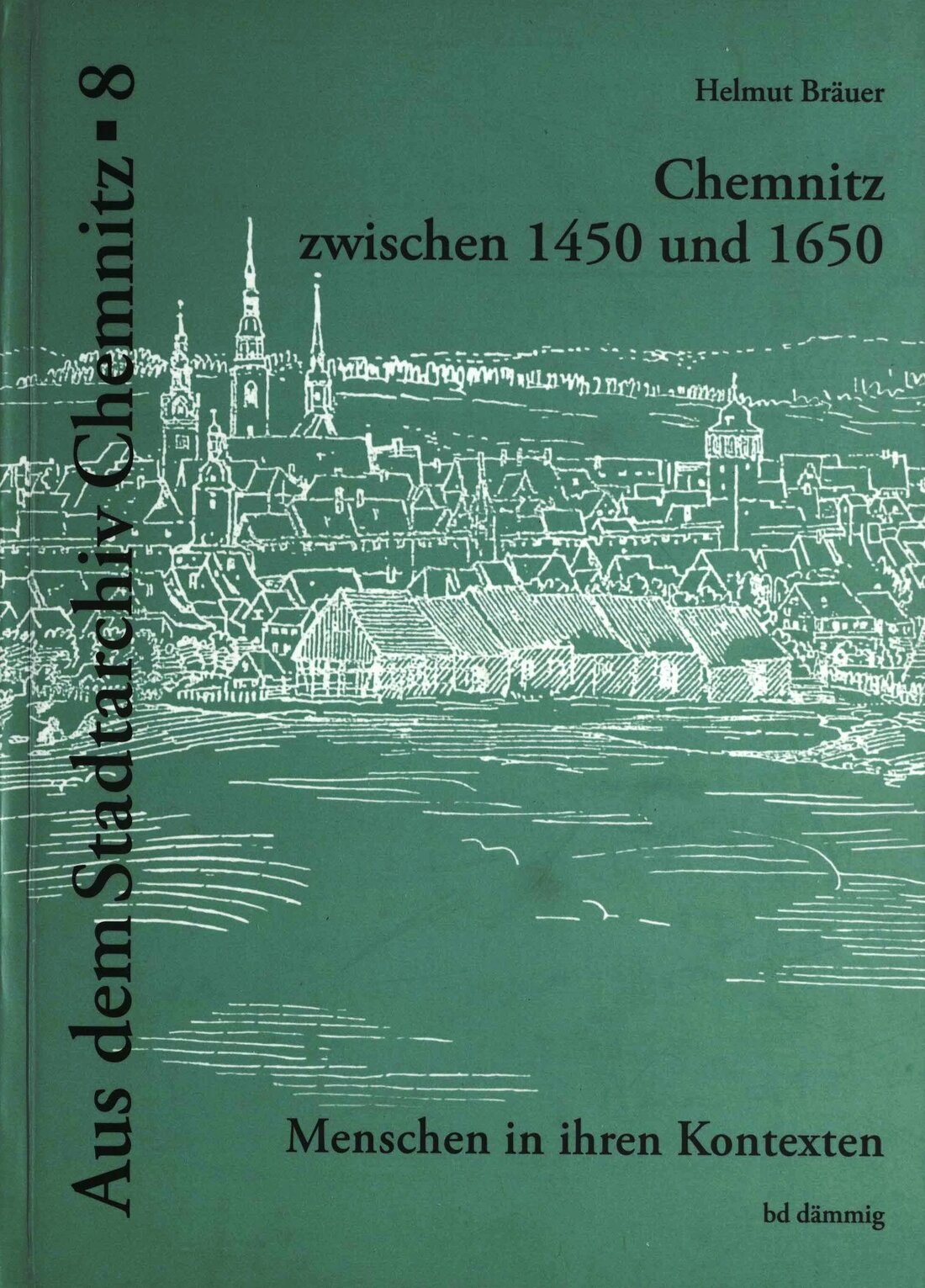

The volume is published on the occasion of the 450th anniversary of Georgius Agricola's death and covers the period from the beginning of the early modern period to the end of the Thirty Years' War. This is the first time in the history of the city that this period has been dealt with in such depth. During this period, Chemnitz was a municipality in Upper Saxony within a dense urban landscape. The author describes the city's constitution and administration and also deals with inner-city disputes. He paints a vivid picture of the town centre with its public buildings, walls and towers. He comprehensively analyses economic life in Chemnitz, which was characterised by linen weaving and bleaching, but also by the Saiger smelter and copper hammers.
The social conditions of the population, wages and prices as well as problems of family life are described.Ecclesiastical and religious life, schools and education, art and culture, the depiction of hardships and afflictions, in particular the Schmalkaldic War and the Thirty Years' War and its consequences, complete the picture of the city of Chemnitz during this period.