

New animal species discovered in the Petrified Forest
291-million-year-old Chemnitzion richteri becomes ambassador for Chemnitz

Scientists from the Chemnitz, Schleusingen and Berlin Natural History Museums and the TU Bergakademie Freiberg have made a sensational discovery that has attracted worldwide attention. They have described a new animal species from the Chemnitz Petrified Forest.
The anatomical features of the insectivorous amphibian from the 291-million-year-old Chemnitz Petrified Forest differ from all comparable forms known to date. For this reason, the fossil from Chemnitz was given a new genus and species name. The name Chemnitzion richteri honours the place where the fossil was found, the European Capital of Culture 2025, as well as Fred Richter, a deserving fossil and mineral collector and chairman of the Friends of the Museum für Naturkunde Chemnitz e. V.
The scientific work was evaluated by international peer reviewers and has been published in the Palaeontological Journal (Springer Nature Switzerland AG). The article can be found at the following link: https://link.springer.com/article/10.1007/s12542-022-00624-8.
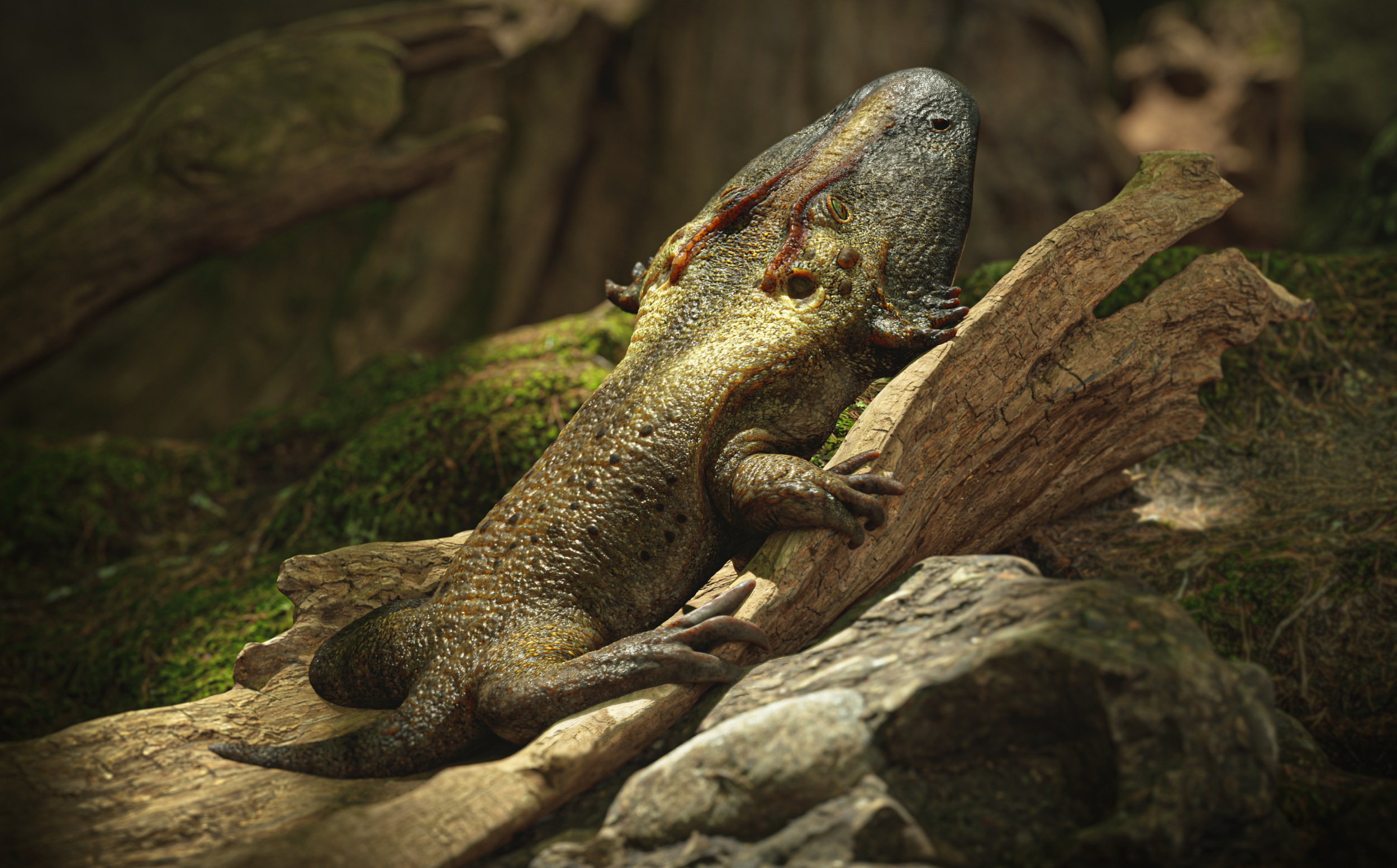
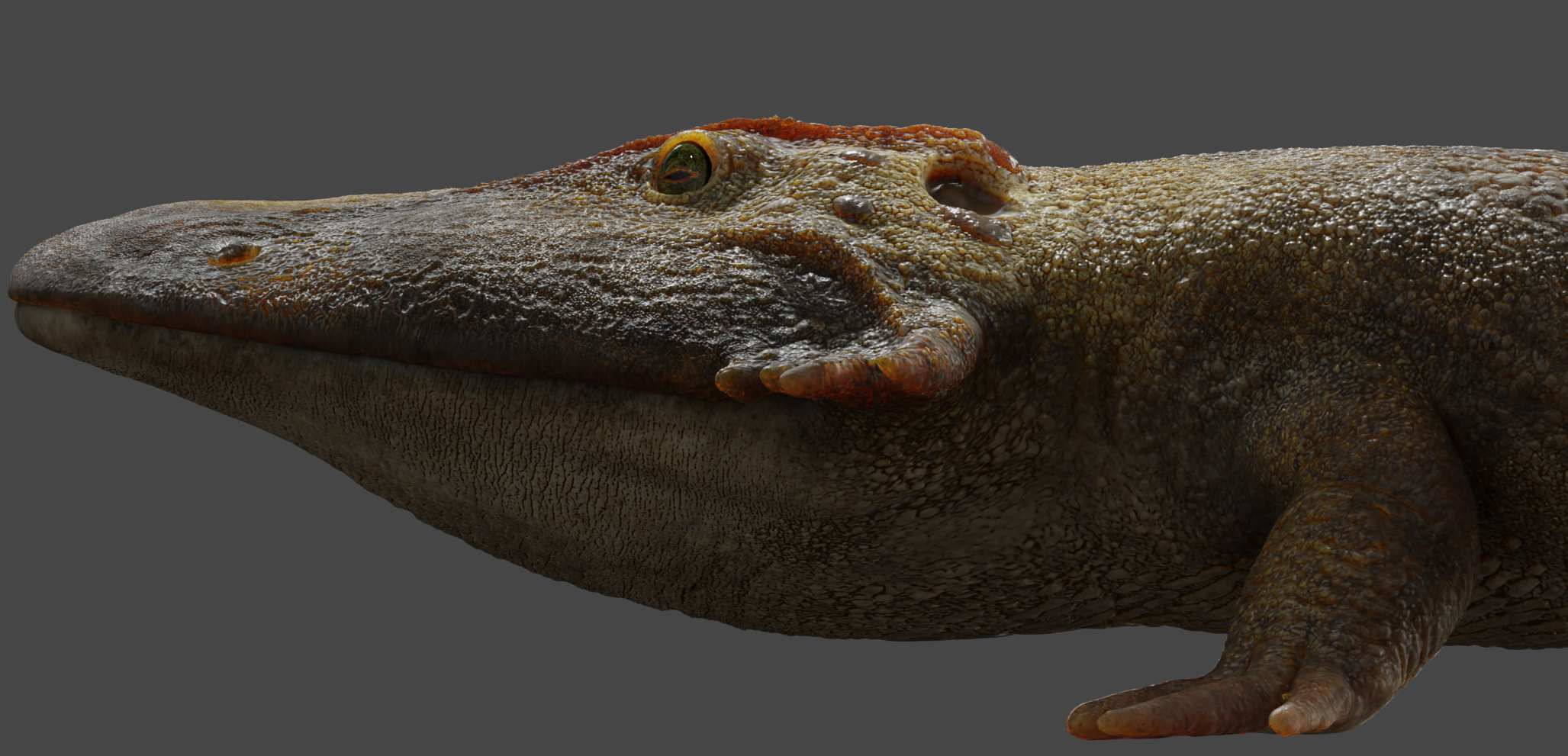
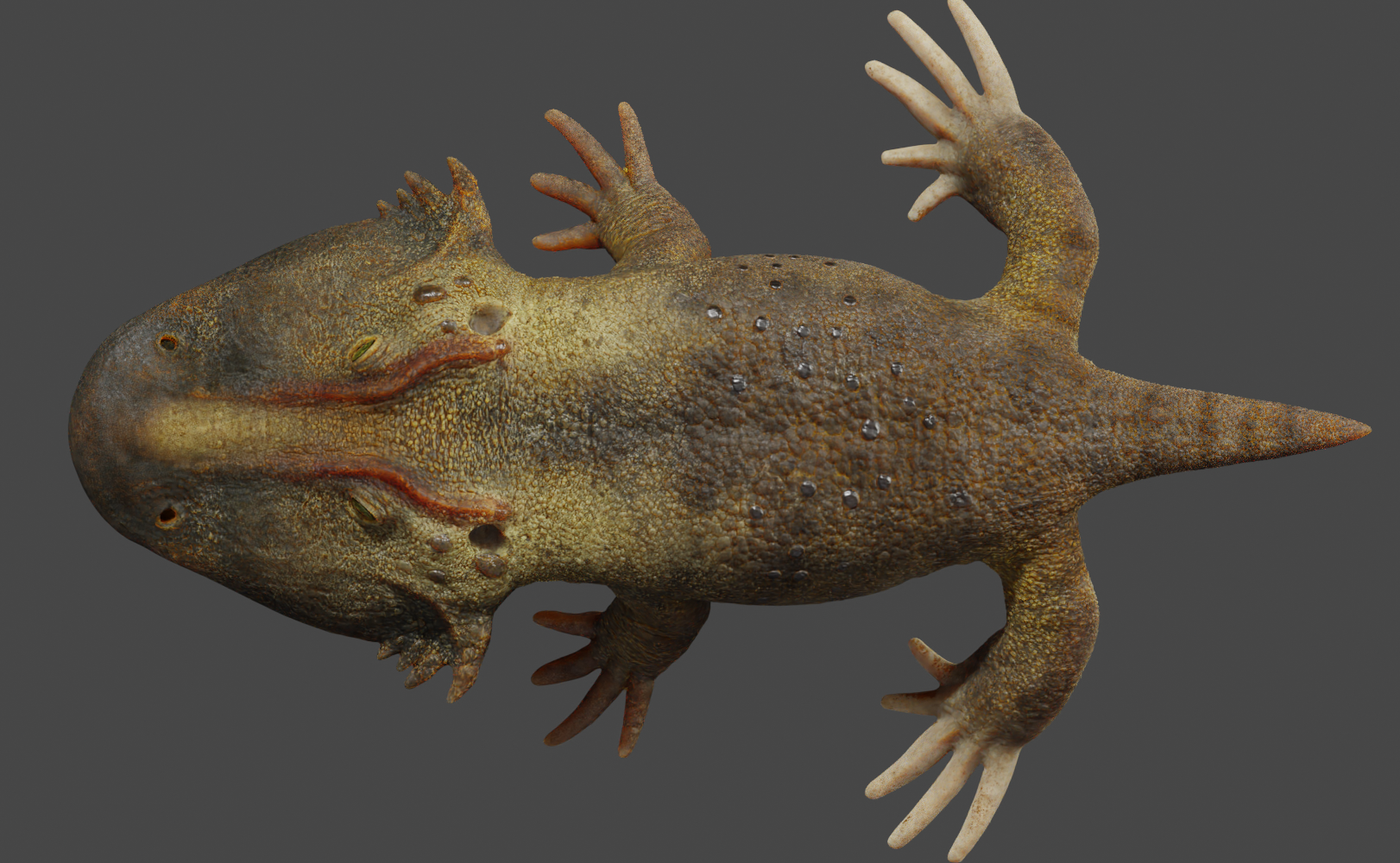
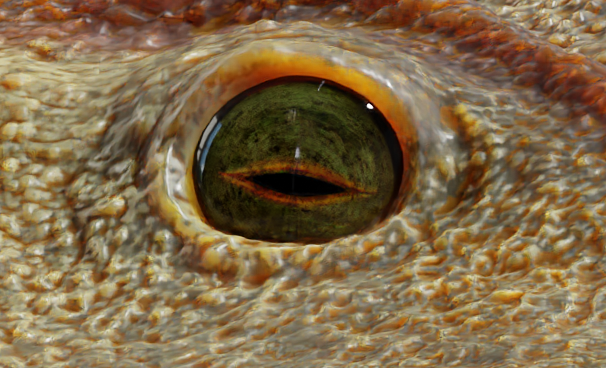
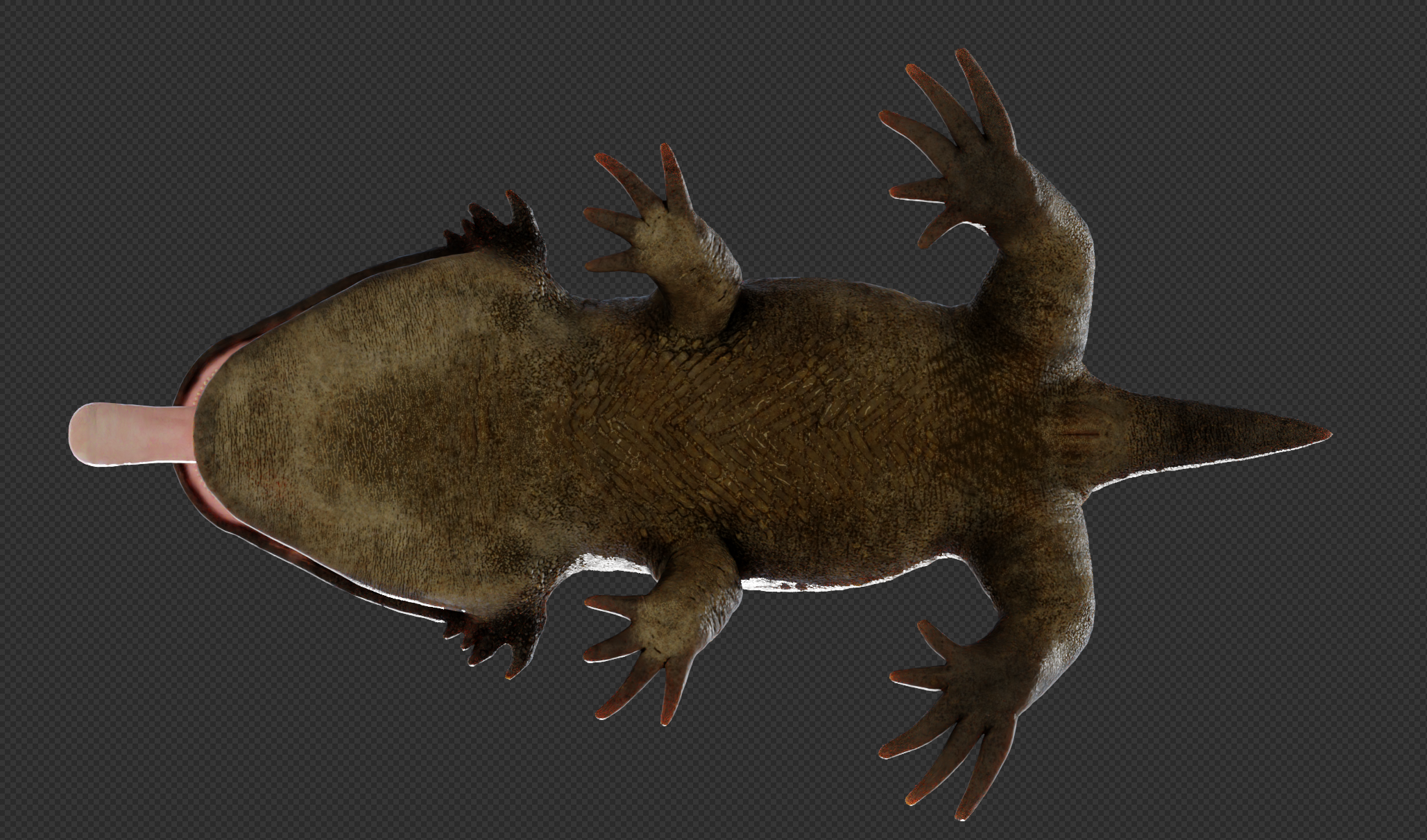
A team of scientists led by Dr Ralf Werneburg from the Schleusingen Natural History Museum has researched the new terrestrial amphibian with sturdy hind legs and a large skull plate from the Chemnitz Petrified Forest. This predatory amphibian was part of a complex food web of vertebrates, scorpions, centipedes, insects, snails, plants and fungi in the Permian habitat. The localised, tropical-looking forest was dominated by tree-like fern seeds (medullaria). Tree ferns, horsetail trees and coniferous tree relatives also grew in the seasonal climate 291 million years ago.
The death of the animal and its fossil record is closely linked to the deposition of very fine volcanic ash. A subsequent massive flow of gas, ash and rock fragments heated the organic remains and thus contributed to fossilisation.

Chemnitzion richteri was a rather stocky amphibian with a comparatively huge skull, short torso and relatively short front legs, but very strong hind legs. The Chemnitzion richteri was a rather passive predator that lurked for prey. With its explosively extending, sticky tongue, the animal caught insects, centipedes and other arthropods. C. richteri was not a specialised jumper like today's frogs, but it could reach prey further away by hopping.
The newly described find epitomises the biodiversity of the Chemnitz fossil deposit, which offers a unique snapshot of a changing world. The drastic climate changes at the end of a major glacial phase on Earth are comparable to those of today - only then without human influence.
The fossil was discovered during excavations on Frankenberger Straße at around house number 61, which lasted from 2008 to 2011. The fossil find will be presented to the public in a specially designed display case framed by two information boards in the permanent exhibition from 29 July to 30 August. From 31 August, the original find will initially be returned to the magazine and will be further prepared for a new permanent exhibition to be created after 2025.
In the project "When Chemnitz was on the Equator", which is supported by the German Federal Cultural Foundation, the team at the Museum für Naturkunde Chemnitz has worked together with the American palaeoartist Calliesauria to recreate the dinosaur in 3D. Based on the scientific drawings and reconstructions and in constant consultation with the scientists, the artist has developed a lifelike digital model that is suitable for both 3D printing and animation. In the medium term, the aim is to create a science-based digital 3D model of the Permian forest. This will make it possible to travel back in time to Chemnitz's geological past, and perspectives on climate change today will become tangible.
The project "When Chemnitz was on the equator. Prelude to a digital journey into prehistoric times." is being developed as part of the "dive in. Programme for Digital Interactions" of the German Federal Cultural Foundation, funded by the Federal Government Commissioner for Culture and the Media (BKM) as part of the Neustart Kultur programme.
