![[Translate to English:]](https://d2vw8mc5mcb3gm.cloudfront.net/fileadmin/_processed_/c/3/csm_pd0314_Wildkatzennachwuchs2026_Foto_S.Flade_bf45b181e2.jpg "[Translate to English:]")
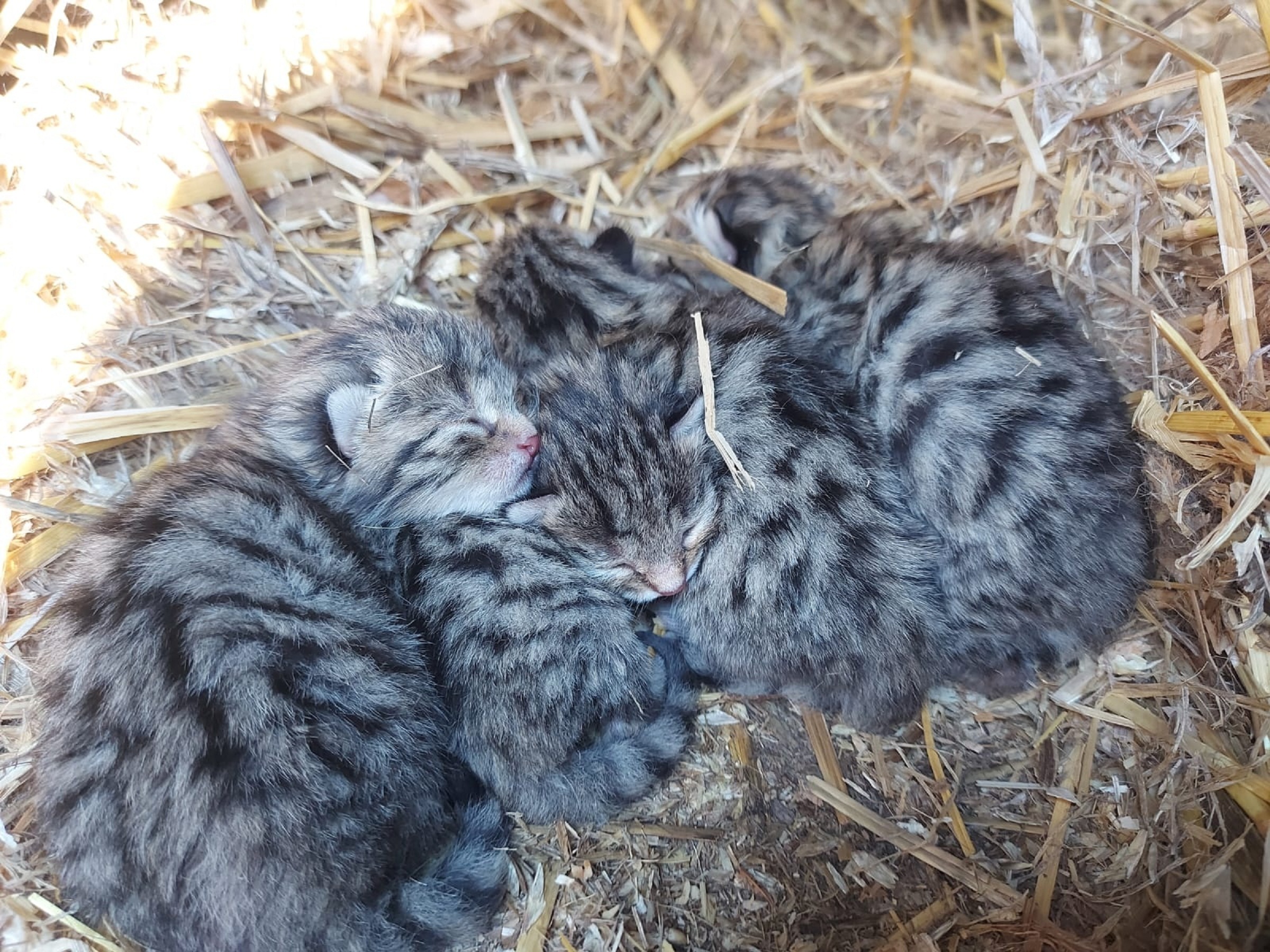
The European wildcats at the Oberrabenstein wildlife enclosure have had offspring. Four kittens were discovered in the enclosure's litter box on 22 March 2026. The young wildcats are now curiously exploring the outdoor enclosure.
After a gestation period of around nine weeks, the European wildcat (Felis silvestris) usually gives birth to three to five kittens in a protected hiding place. The kittens are so-called nestlings and are born blind. They only open their eyes after around nine days. The chance of spotting the kittens outside the whelping box in the first few weeks of their lives is therefore rather low.
As wildcats are mainly crepuscular and nocturnal, their main time of activity usually begins after sunset. However, with a bit of luck, visitors can now also observe the young wildcats in the outdoor enclosure during the day.
The European wildcat is often confused with feral domestic cats, but is not an ancestral form of the domestic cat. These are descended from the African wildcat, also known as the hawkcat. European wildcats are significantly stronger than domestic cats. An adult wild cat can weigh up to eight kilograms. Another typical feature is the bushy, approximately 30 centimetre long tail with three distinctive black rings and a blunt black tip.
In the natural distribution areas, crossbreeding between wild and domestic cats can occasionally occur. However, the resulting so-called "dazzlers" usually have little chance of survival in the wild.