

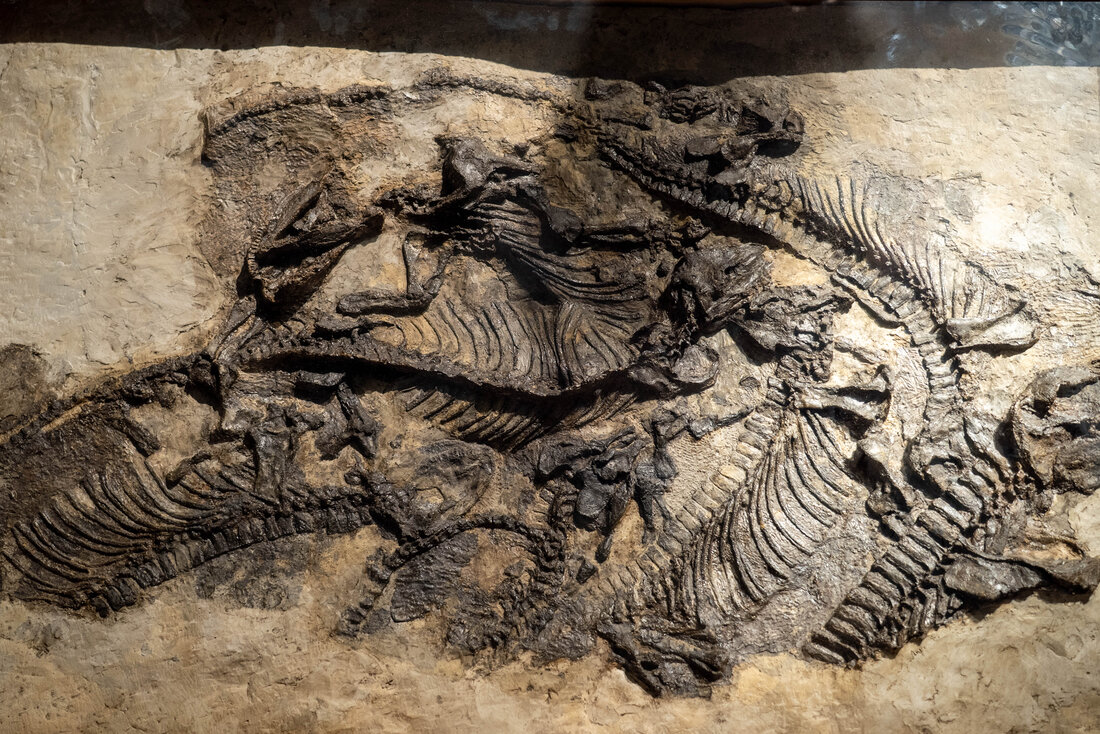
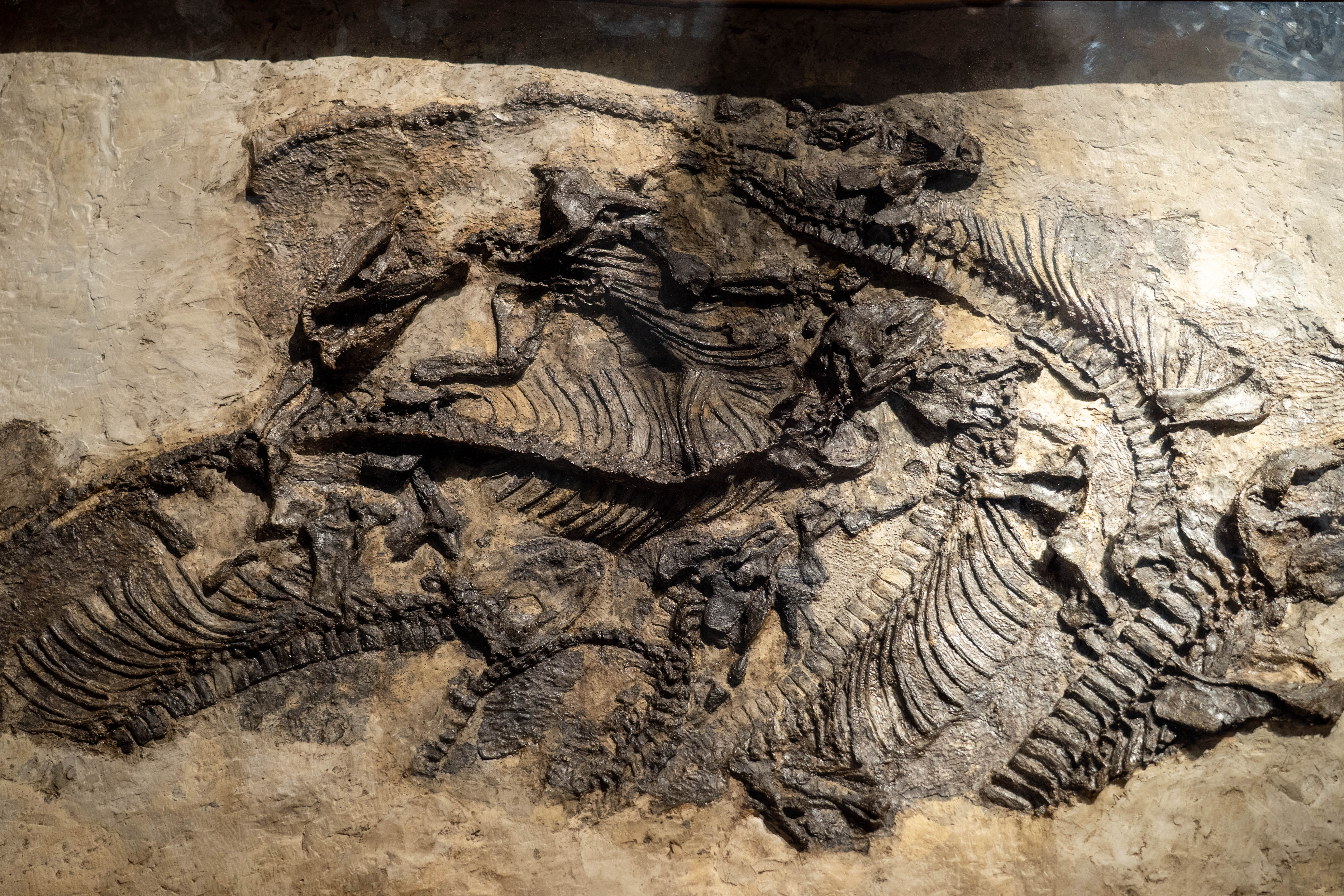
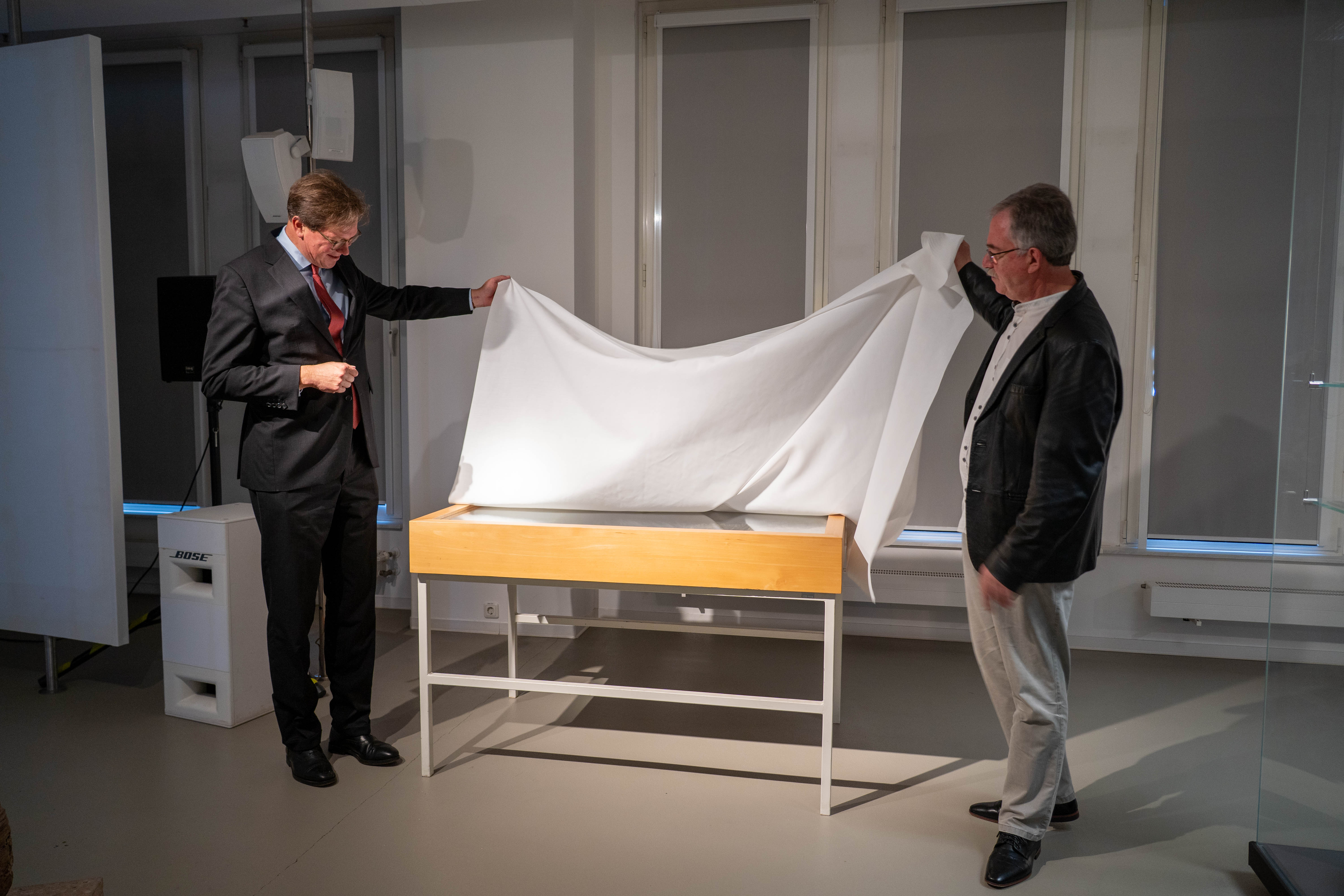
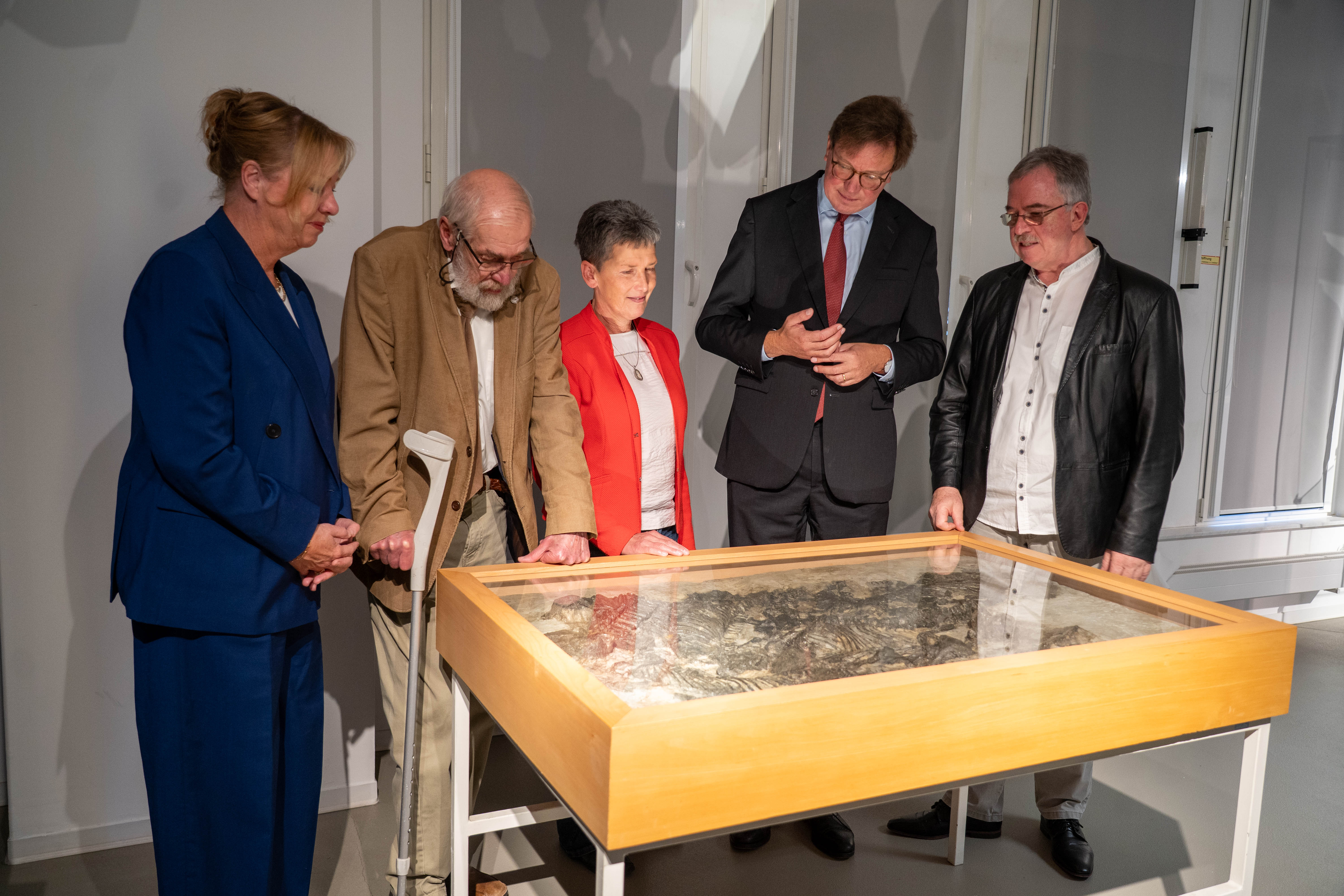
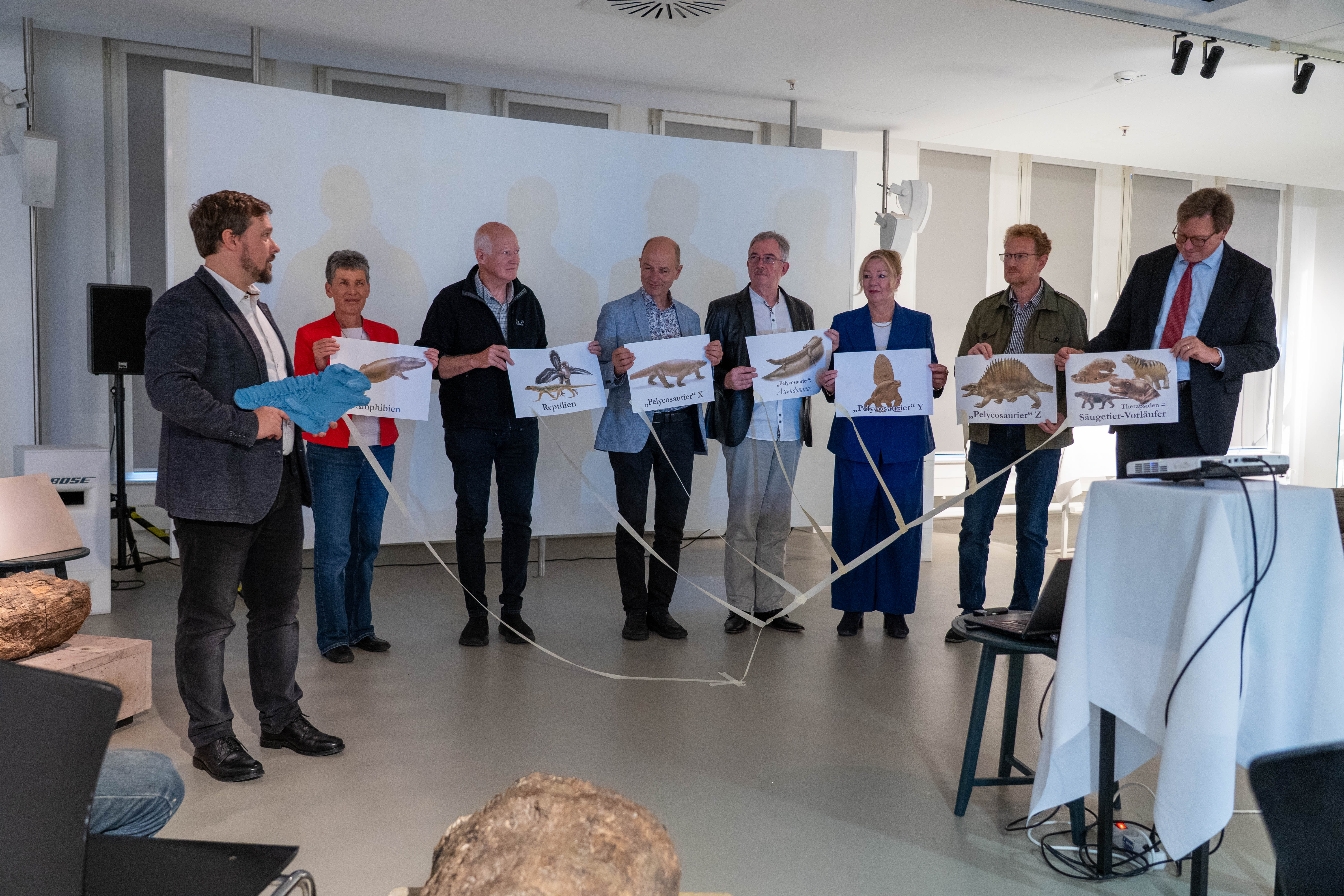
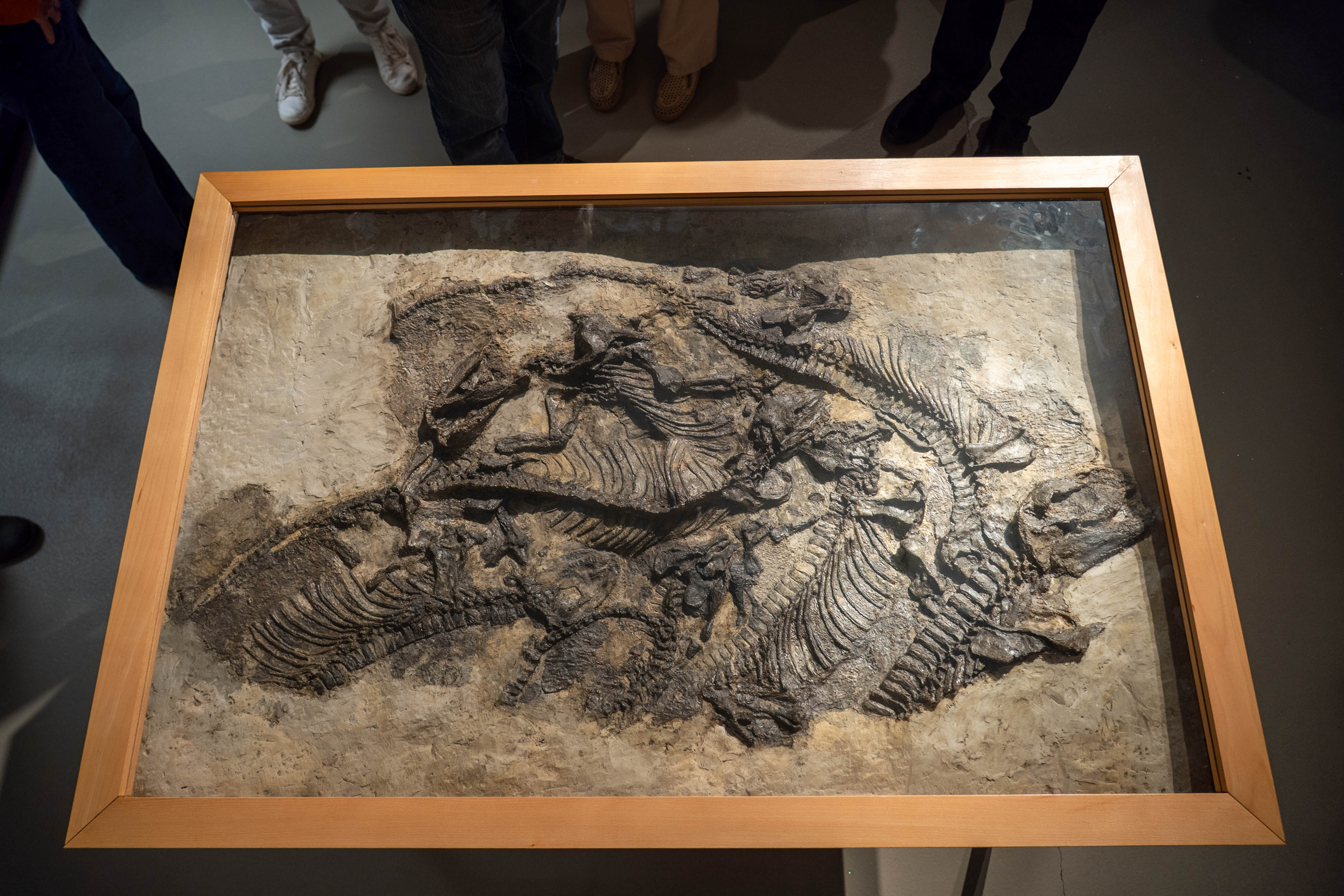
The Chemnitz Museum of Natural History has acquired one of the most significant fossils in the Free State of Saxony. Georg-Ludwig von Breitenbuch, Minister of State for the Environment and Agriculture, today, in the presence of Heinz Bernd Bettig, President of the State Office for the Environment, Agriculture and Geology (LfULG), and Mayor Dagmar Ruscheinsky, presented the original Freital dinosaur slab (Pantelosaurus saxonicus) to the Chemnitz Museum of Natural History on permanent loan.
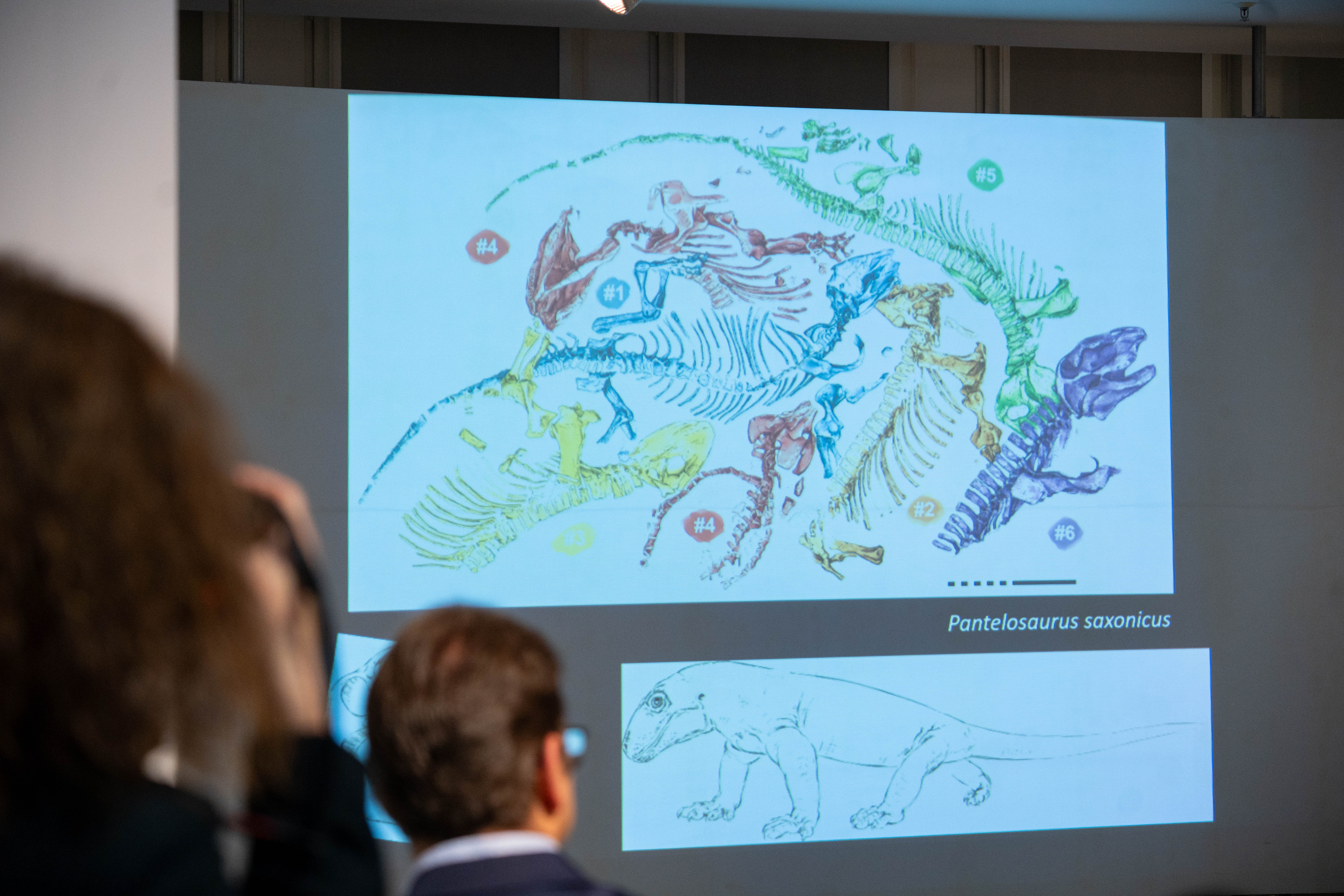
The slab features six skeletons of Pantelosaurus saxonicus. This is an extinct genus of carnivorous terrestrial vertebrates from the Permian geological period, some 300 million years ago. The animals perished as a result of volcanic activity and were embedded in rock slurry. The exact details remain unknown to science to this day. The slab was discovered and secured in 1901 by Freital coal miners after it had fallen from the roof whilst they were working underground. For more than 125 years, it has been preserved and studied by the Geological Service of the Saxony State Environment Agency and has not been accessible to the public. Copies can be found in London, New York and at the KohleWelt in Oelsnitz, amongst other places.
Natural History Museum acquires important fossil
The permanent loan of the Freital dinosaur slab – which is unique in the world – is also a strong testament to the scientific recognition enjoyed by the Chemnitz Museum of Natural History. It demonstrates that our scientific work and our expertise in researching and communicating the history of the Earth are recognised and valued far beyond the borders of Saxony. I am delighted that Chemnitz has been granted the loan of this extraordinary fossil and am looking forward to the upcoming special exhibition.
The dinosaur slab is undoubtedly the most spectacular fossil in the Free State and is of far-reaching international significance. We are delighted that the LfLUG intends to put the dinosaur slab on public display once again. It was therefore only natural for us to put ourselves forward to host this slab, for there is nothing more authentic than bringing these treasures closer to visitors, so that we may be enriched by their perspective. Alongside the preservation, collection and research of artefacts, this, too, is one of a museum’s tasks.
The Chemnitz Museum of Natural History focuses its research precisely on the same geological period as the Freital dinosaur slab – as demonstrated by the Petrified Forest, which was formed 291 million years ago. As early as the 1990s, the Chemnitz Museum of Natural History, together with other institutions in Saxony, worked to ensure that the slab was prepared. In 1998, it received a negative cast on permanent loan from the LfLUG.
The plan is for the original slab to be not only preserved in Chemnitz, but also subjected to further scientific research and presented to the public. It will be incorporated as a highlight into the special exhibition currently under construction, which is due to open at the Museum of Natural History at the end of January. The exhibition is funded by the Cultural Foundation of the German States and the Saxon State Office for Museums.