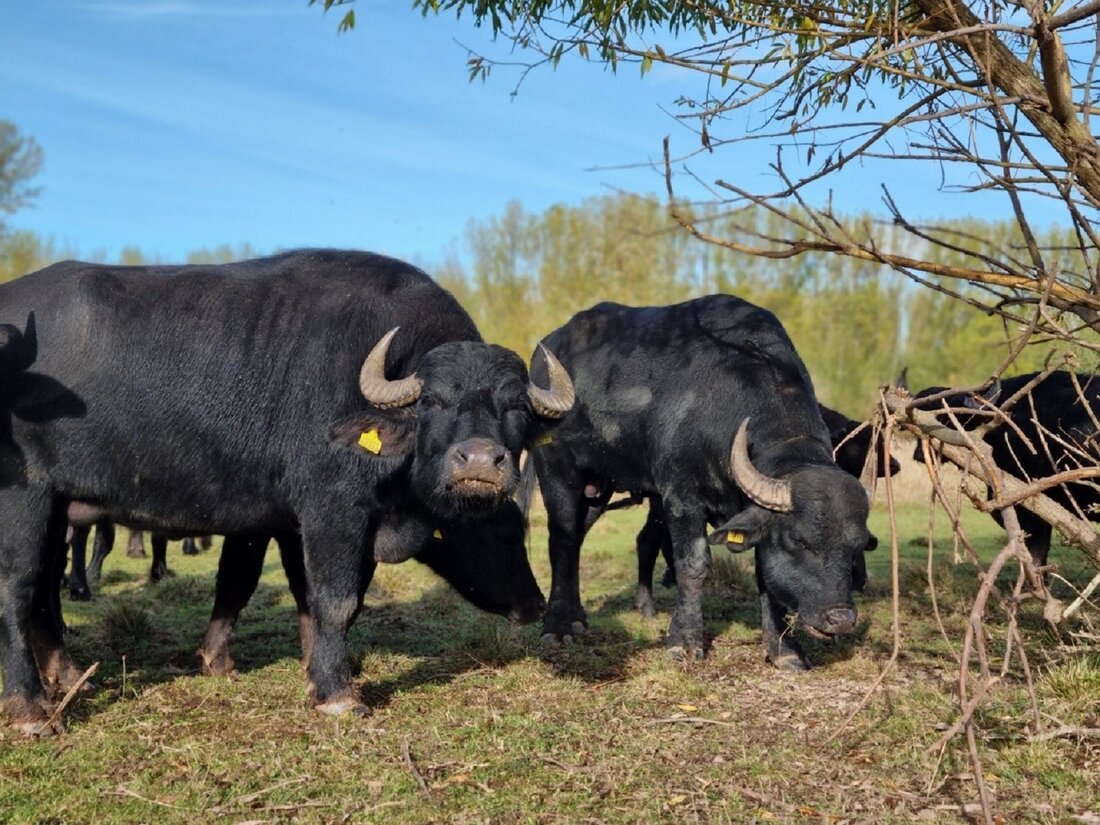
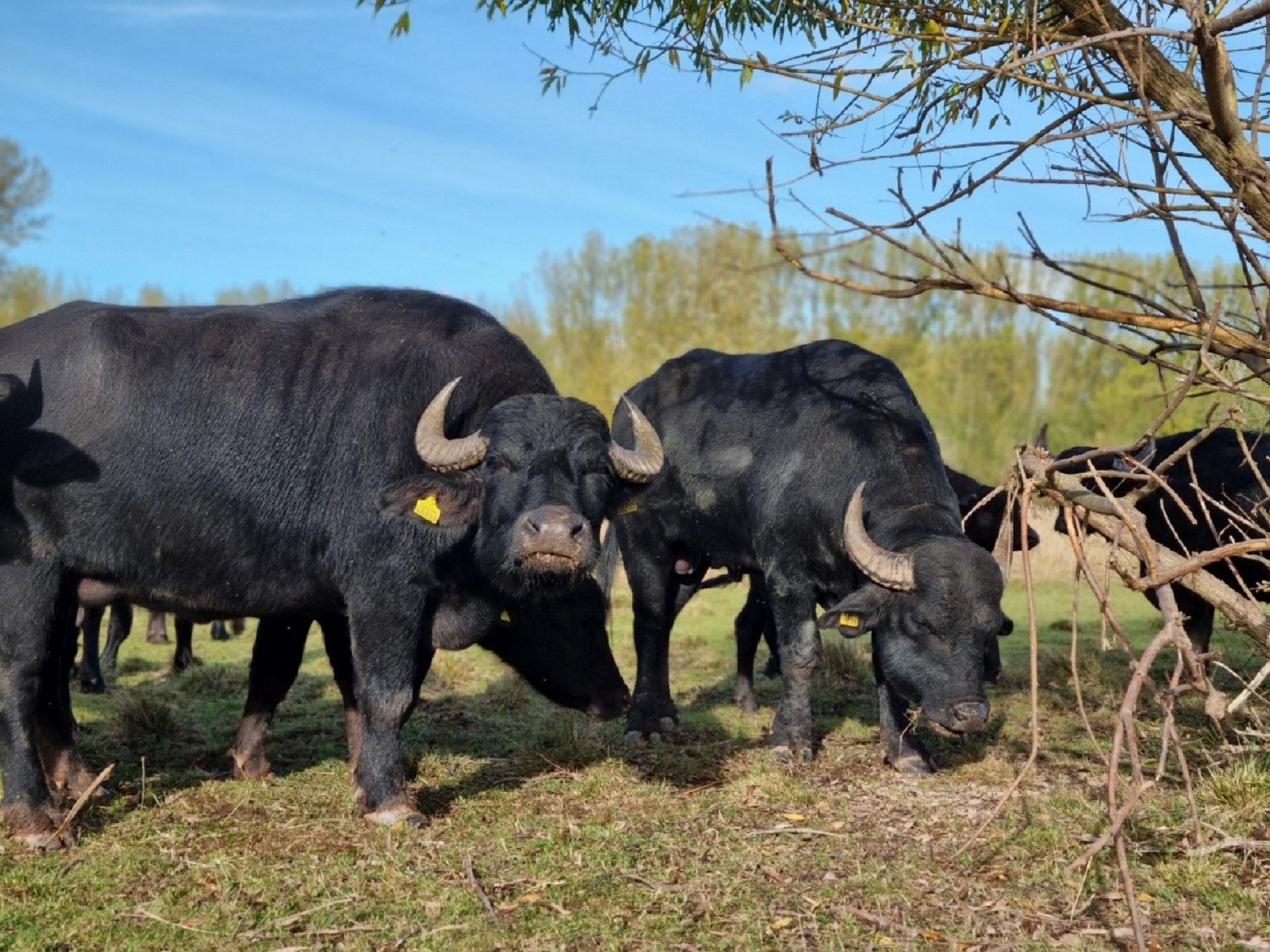
The meeting point is in the car park on Eubaer Straße, opposite the Euba Dam; from there, it is about a 15-minute walk to a former military site belonging to the CIS armed forces on Eubaer Straße, near the dam. Since 2022, the Büschelhof Eibenberg farm, in cooperation with the Chemnitz Nature Conservation Station of the City of Chemnitz’s Environment Agency, has been extensively grazing this land with water buffalo and Scottish Highland cattle. The aim is to preserve semi-open biotopes and curb scrub encroachment in order to maintain the habitat of rare plants, animals and fungi. Thanks to their hooves, which are adapted to aquatic habitats, water buffalo are primarily used for biotope management in wetland and marshland areas.
The excursion lasts around two hours and aims to demonstrate how landscape management through extensive, nature-friendly grazing has a positive impact on the character of the area and how insects and birds benefit from it. It will also show how agriculture and nature conservation can work together. Questions will be answered by the Büschelhof’s owners, Antje and Tim Winkler, and by Jens Börner from the Chemnitz Lower Nature Conservation Authority.
Open and semi-open landscapes such as this area can be preserved and enhanced more effectively and cost-efficiently through grazing than through mechanical measures. This is because, unlike mowing, grazing animals graze the land selectively, patch by patch, due to the low stocking density. This creates a mosaic within the landscape that is of high conservation value and always provides sufficient residual vegetation for native insects.
Hardy breeds such as the water buffalo also utilise low-quality forage such as reeds, cattails and even the dominant common reed, and are therefore particularly well suited to the management of this area.


English
Choose