

Wild neighbours - animals of the Ore Mountains
Museum für Naturkunde: Opening of the special exhibition on 27 March, 5 pm
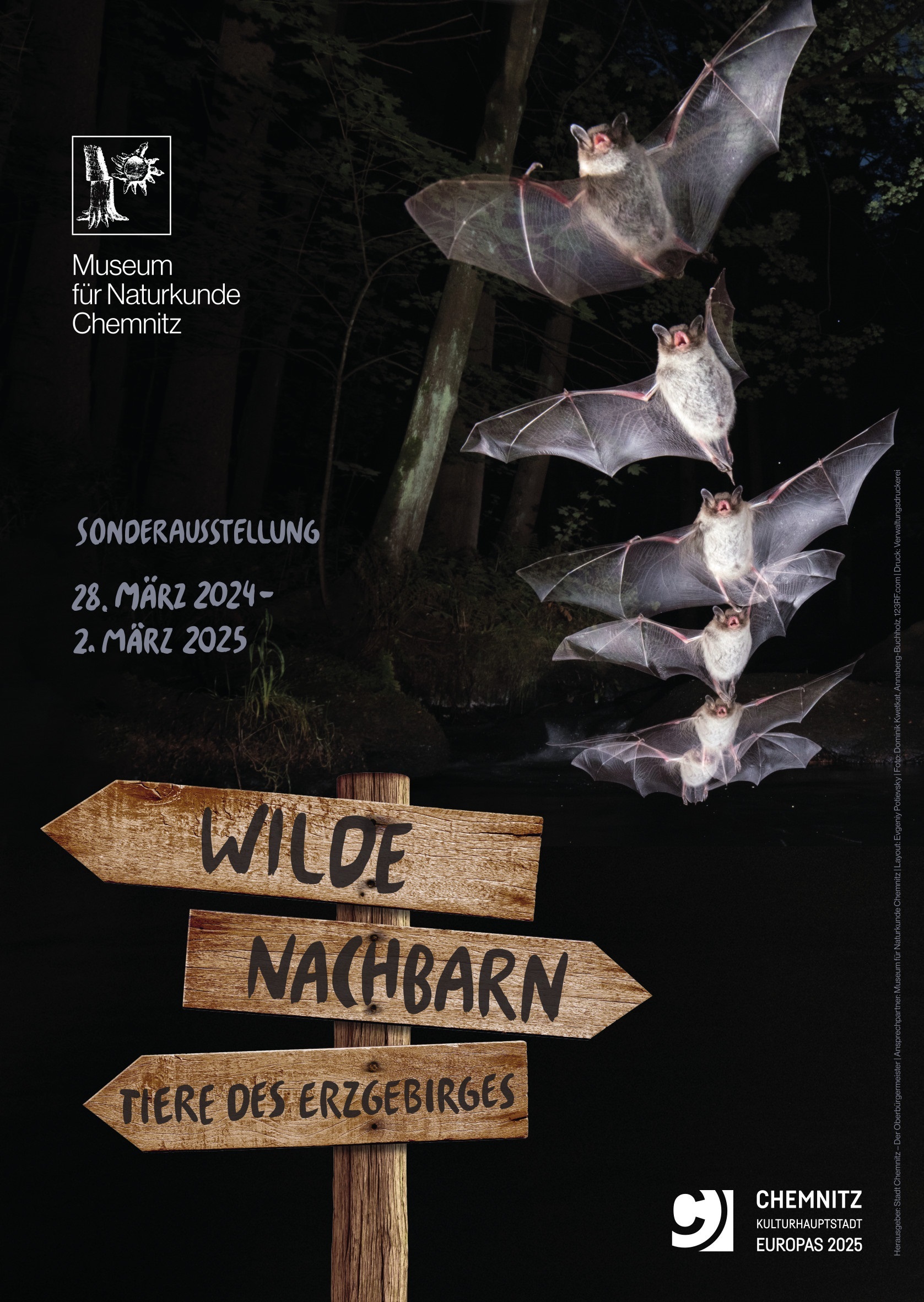
The special exhibition "Wild Neighbours - Animals of the Ore Mountains" will open on Wednesday, 27 March at 5 pm at the Museum of Natural History in the TIETZ. Jens Nixdorf from the Erzgebirge Botany Group will talk about rare vertebrate species in the region. Anyone interested is cordially invited to attend. Admission is free.
Representatives of the media are also invited to the exhibition opening. On request, it is possible to view the exhibition in advance today and tomorrow, 26 and 27 March.
The exhibition portrays a total of 28 animal species. Fascinating images by six animal photographers are on display, flanked by original specimens of the animals. Four screens also show wildlife camera images from various locations in the Ore Mountains, which were set up as part of the wolf monitoring programme.
The exhibition takes visitors through the typical habitats of the animal species, from urban areas to the heavily over-developed cultural landscape to near-natural forests and mountain regions. In addition to native species such as the wild boar and the cuckoo, invasive species such as the raccoon and the raccoon dog, which were introduced by humans and have been spreading in Central Europe for several decades, are also on display. This also applies to two of the four deer species presented: While the roe deer and the red deer are native, the fallow deer and the sika deer came to Germany as hunting game.
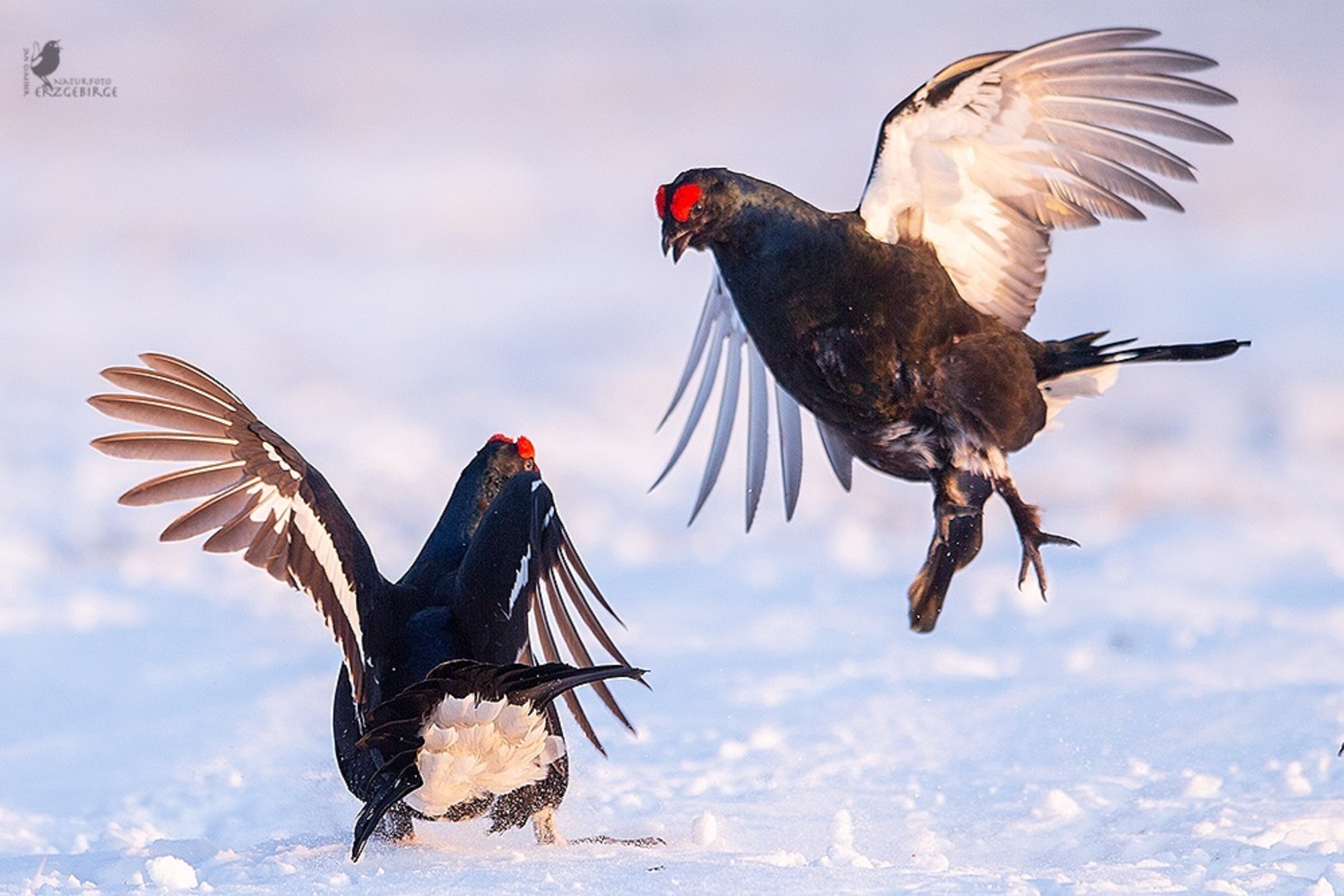
From the water bat, just a few centimetres in size, to the 300-kilogram red deer, and from the nocturnal predator eagle owl to the slender diurnal adder - the fauna of the Ore Mountains is diverse and has many surprises in store alongside the well-known representatives of the four-legged and bird world. For example, the crane, which is considered a bird of happiness in many cultures: breeding cranes were observed on the Ore Mountain ridge for the first time in 2021. Or the shy pine marten, which looks confusingly similar to its cousin, the stone marten - but unlike it, avoids human settlements. Or the black grouse - a chicken bird threatened with extinction, whose largest habitat north of the Alps is the moors and sparse forests of the Ore Mountains. And last but not least, the wolf - a success story, as the reintroduction of wolves is a natural process that humans are only supporting by not intervening.
The exhibition will be on display at the Museum für Naturkunde Chemnitz from 28 March 2024 to 2 March 2025 during regular opening hours.
www.naturkundemuseum-chemnitz.de