

Two offspring of Europe's largest wild cattle
Chemnitz Zoo: bison calves on display in the Oberrabenstein wildlife park
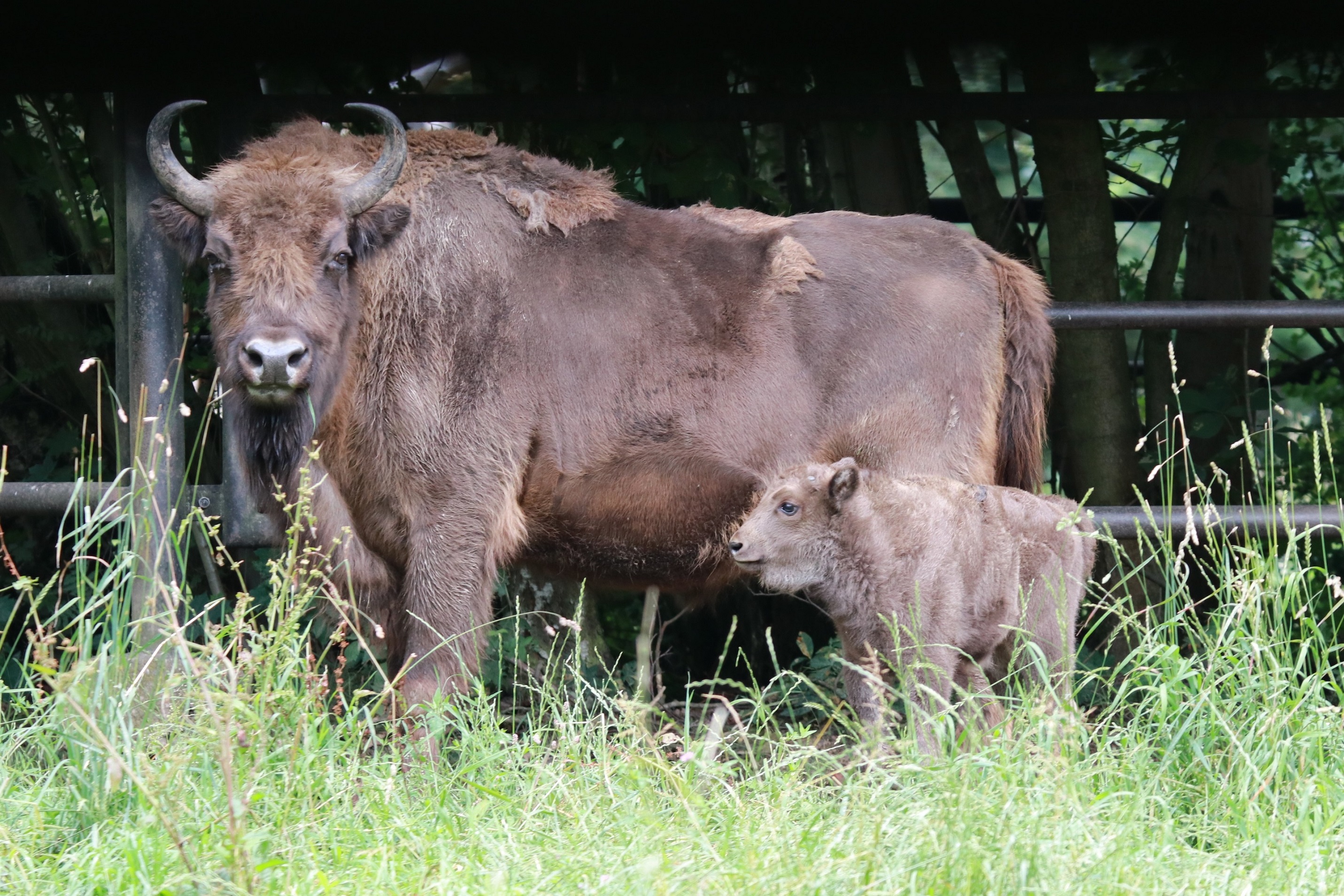
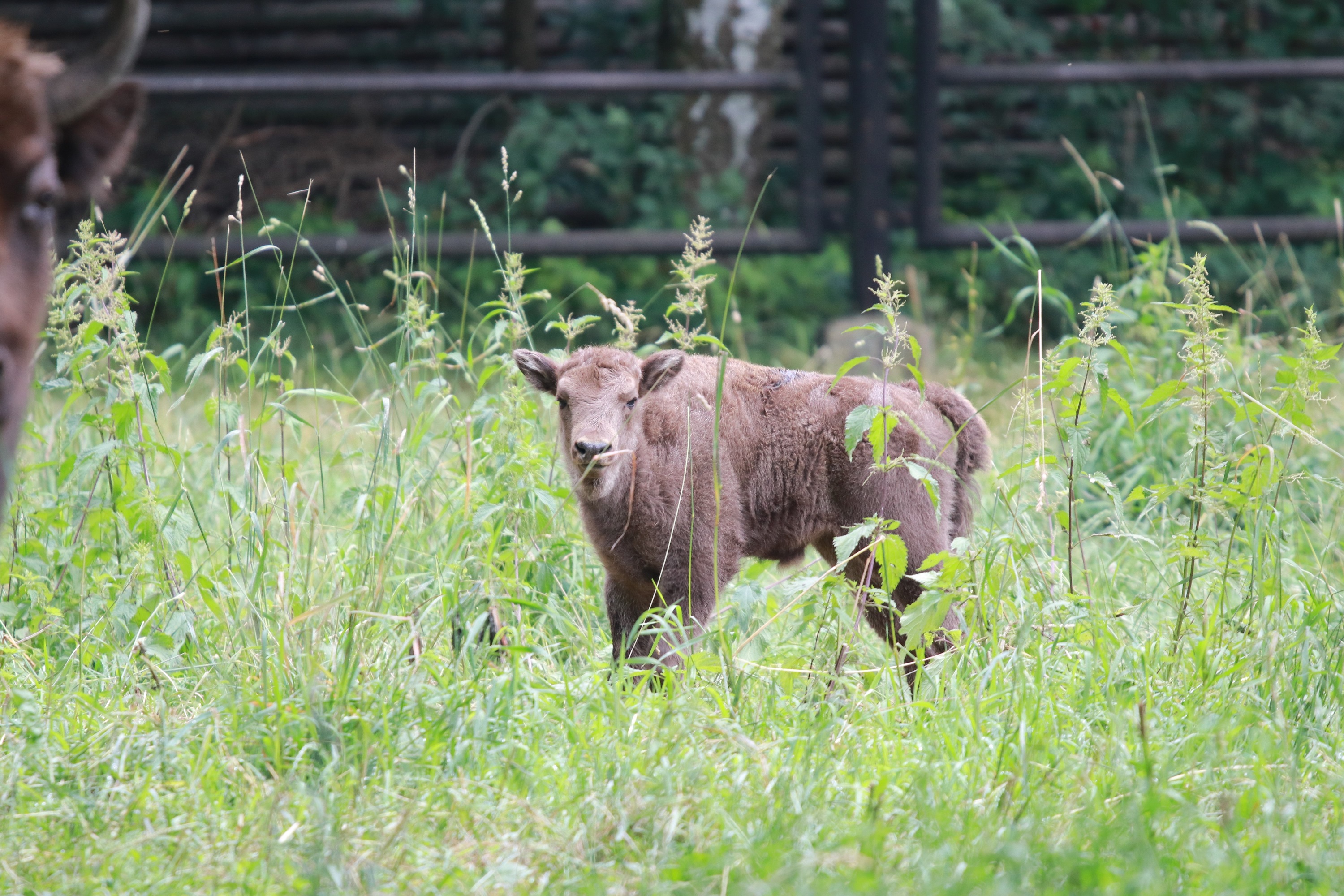
The bison at the Oberrabenstein game reserve are currently showing offspring again. One calf was born on 19 June and one on 5 July. The mothers are nine-year-old "Onia" and eight-year-old "Pronka", and the father in both cases is five-year-old "Spakko". The mating season for bison usually takes place from August to October and a calf is born after around nine months.
The two young animals are males, which are now named "Orin" and "Orthello". All the bison born in the Oberrabenstein wildlife park have the initial letters "Or" for Oberrabenstein in their names. Each institution that keeps bison and supports the European Endangered Species Programme (EEP) has its own initials.
Bison are the largest European land mammals. Bulls can weigh up to 1000 kilograms and cows can reach a weight of 600 kilograms. After the extinction of the aurochs, they are the only surviving wild cattle in Europe. However, bison are not closely related to domestic cattle, whose ancestor was the aurochs. They are closest to the American bison. For this reason, bison are also referred to as European bison.
In the first half of the 20th century, bison were on the brink of extinction. However, thanks to the joint efforts of zoological institutions and a few private owners, they were saved and later even reintroduced in various countries.
Today, there are more than 8000 animals again, a third of which live in zoos and wildlife parks. The Oberrabenstein Wildlife Park has also given animals to a reintroduction project in the Caucasus.
Opening hours in summer:
Zoo: 9 am to 7 pm, last admission 6 pm
Wildlife park: 9 am to 6 pm, last admission 5 pm