Chemnitz Zoo: Offspring of critically endangered primate species
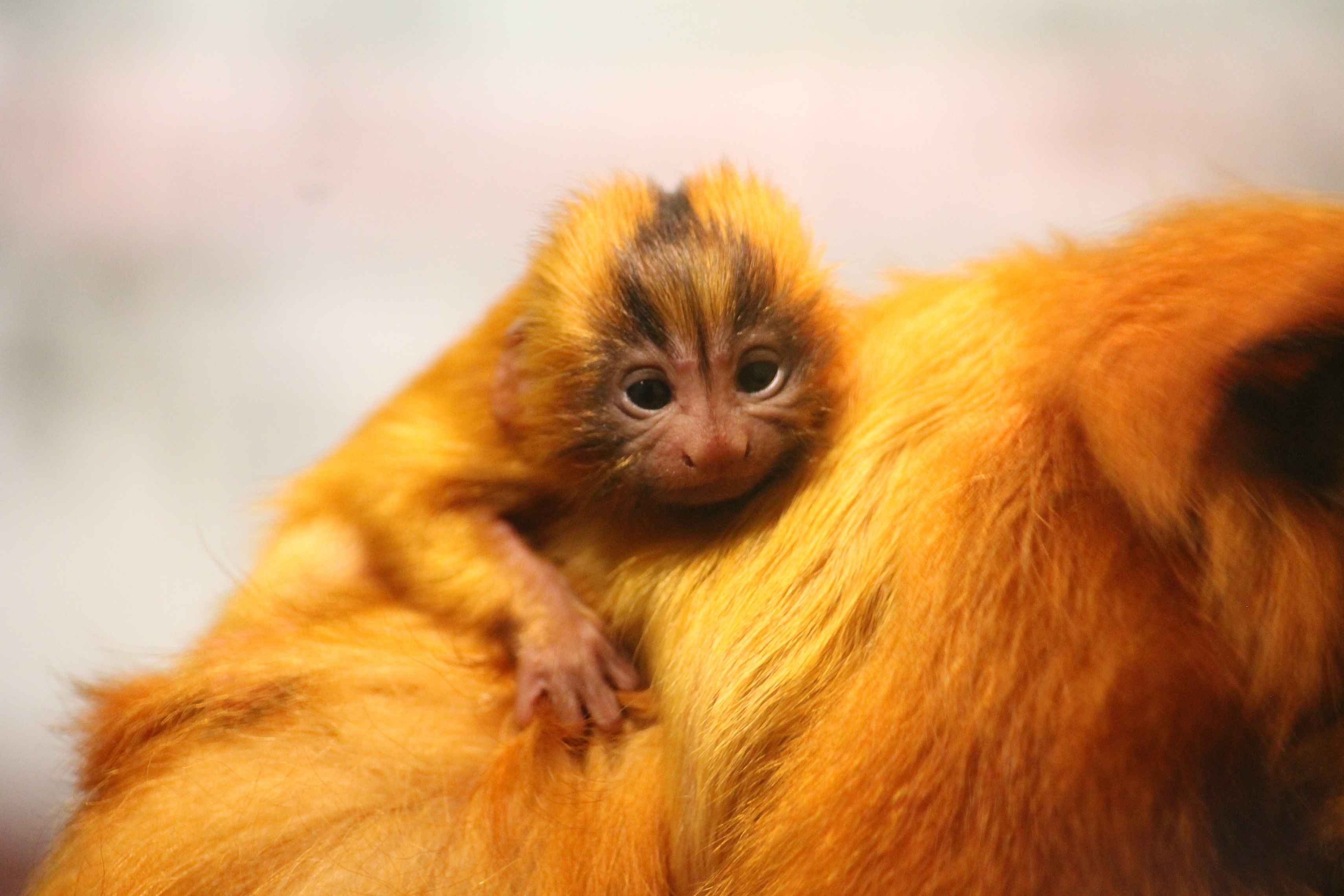
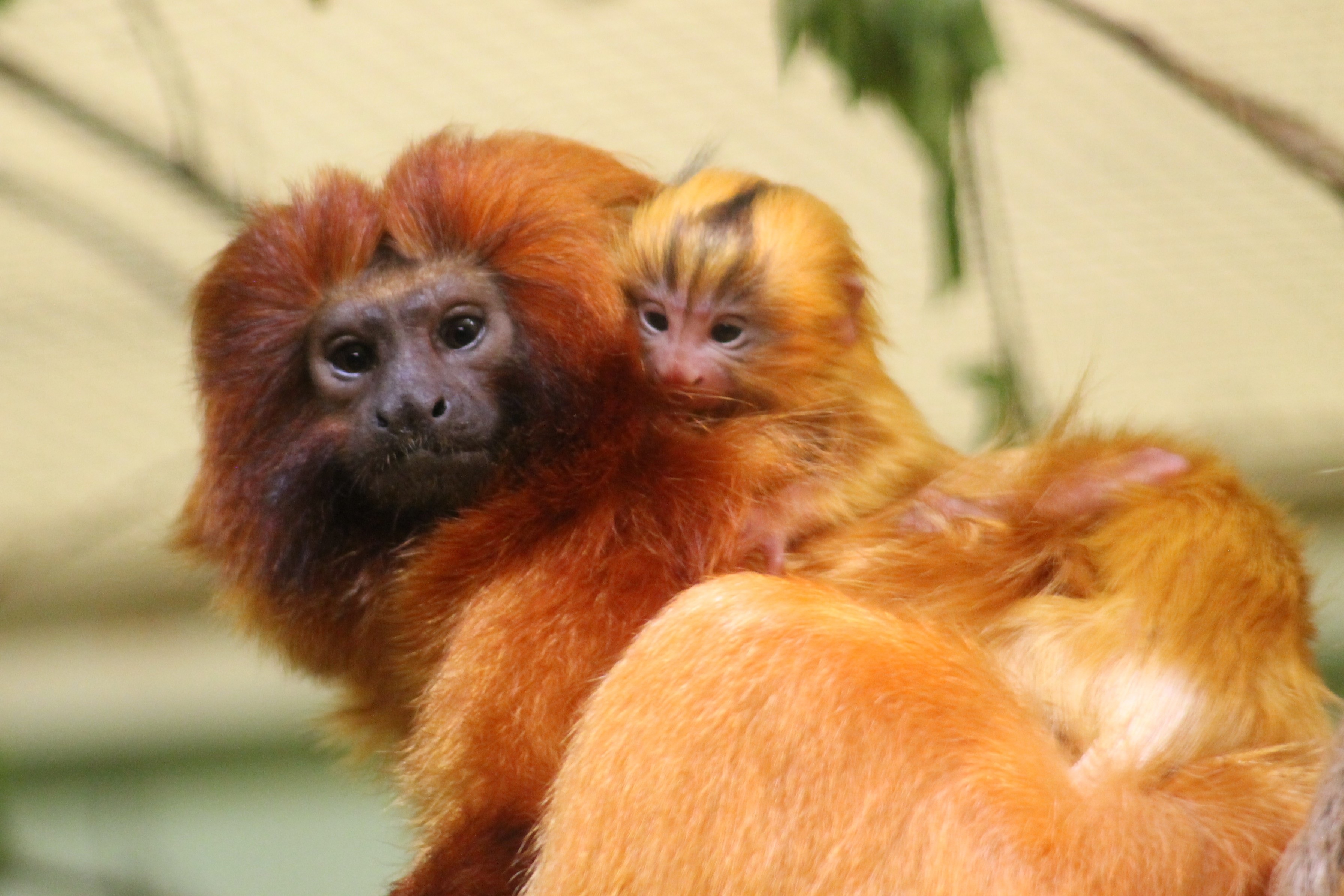
The golden lion tamarins in the marmoset house at Chemnitz Zoo have had two offspring since the end of May. However, twin births are not a rarity in this primate species, but the rule.
After birth, the offspring immediately cling to their parents' fur and can be carried safely through the branches. Mum Anja and dad Stitch look after the offspring together and take turns carrying them.
Golden lion tamarins can live together in groups of more than ten animals. They are led by a female, who usually tolerates an adult male at her side. The remaining members are the young animals from previous years. The dominant female is the only one who reproduces. The other animals in the group of reproductive age are either actively prevented from mating or are kept infertile by scents (so-called pheromones).
The population of golden lion tamarins in the wild is declining significantly as a result of habitat loss. They now only live in a small distribution area in the tropical rainforest on the Brazilian Atlantic coast. They are therefore currently classified as critically endangered on the IUCN Red List of Threatened Species - the third of four endangerment categories.
From 1996 to 2003, the species was even categorised as "threatened with extinction". However, thanks to the commitment of zoological institutions to species conservation, the endangered status was downgraded again.
Thanks to the successful and coordinated breeding of this endangered species, even zoo-born animals have been released back into the wild. As a result, the number of animals living in the wild has more than tripled, but is still very low at around 2000 animals. This makes it all the more important to breed such endangered species in zoological facilities.
The two new family members are the first offspring of this species for several years, after the male Stitch came to Chemnitz Zoo from Paris in 2023 via the European Endangered Species Programme (EEP). Chemnitz Zoo is thus also contributing to the conservation of the species.
The golden lion tamarins in the marmoset house at Chemnitz Zoo have had two offspring since the end of May. However, twin births are not a rarity in this primate species, but the rule.
After birth, the offspring immediately cling to their parents' fur and can be carried safely through the branches. Mum Anja and dad Stitch look after the offspring together and take turns carrying them.
Golden lion tamarins can live together in groups of more than ten animals. They are led by a female, who usually tolerates an adult male at her side. The remaining members are the young animals from previous years. The dominant female is the only one who reproduces. The other animals in the group of reproductive age are either actively prevented from mating or are kept infertile by scents (so-called pheromones).
The population of golden lion tamarins in the wild is declining significantly as a result of habitat loss. They now only live in a small distribution area in the tropical rainforest on the Brazilian Atlantic coast. They are therefore currently classified as critically endangered on the IUCN Red List of Threatened Species - the third of four endangerment categories.
From 1996 to 2003, the species was even categorised as "threatened with extinction". However, thanks to the commitment of zoological institutions to species conservation, the endangered status was downgraded again.
Thanks to the successful and coordinated breeding of this endangered species, even zoo-born animals have been released back into the wild. As a result, the number of animals living in the wild has more than tripled, but is still very low at around 2000 animals. This makes it all the more important to breed such endangered species in zoological facilities.
The two new family members are the first offspring of this species for several years, after the male Stitch came to Chemnitz Zoo from Paris in 2023 via the European Endangered Species Programme (EEP). Chemnitz Zoo is thus also contributing to the conservation of the species.