

Successful offspring for the flamingos
Tierpark Chemnitz: Animal park festival on 29 June - short guided tours during the summer holidays
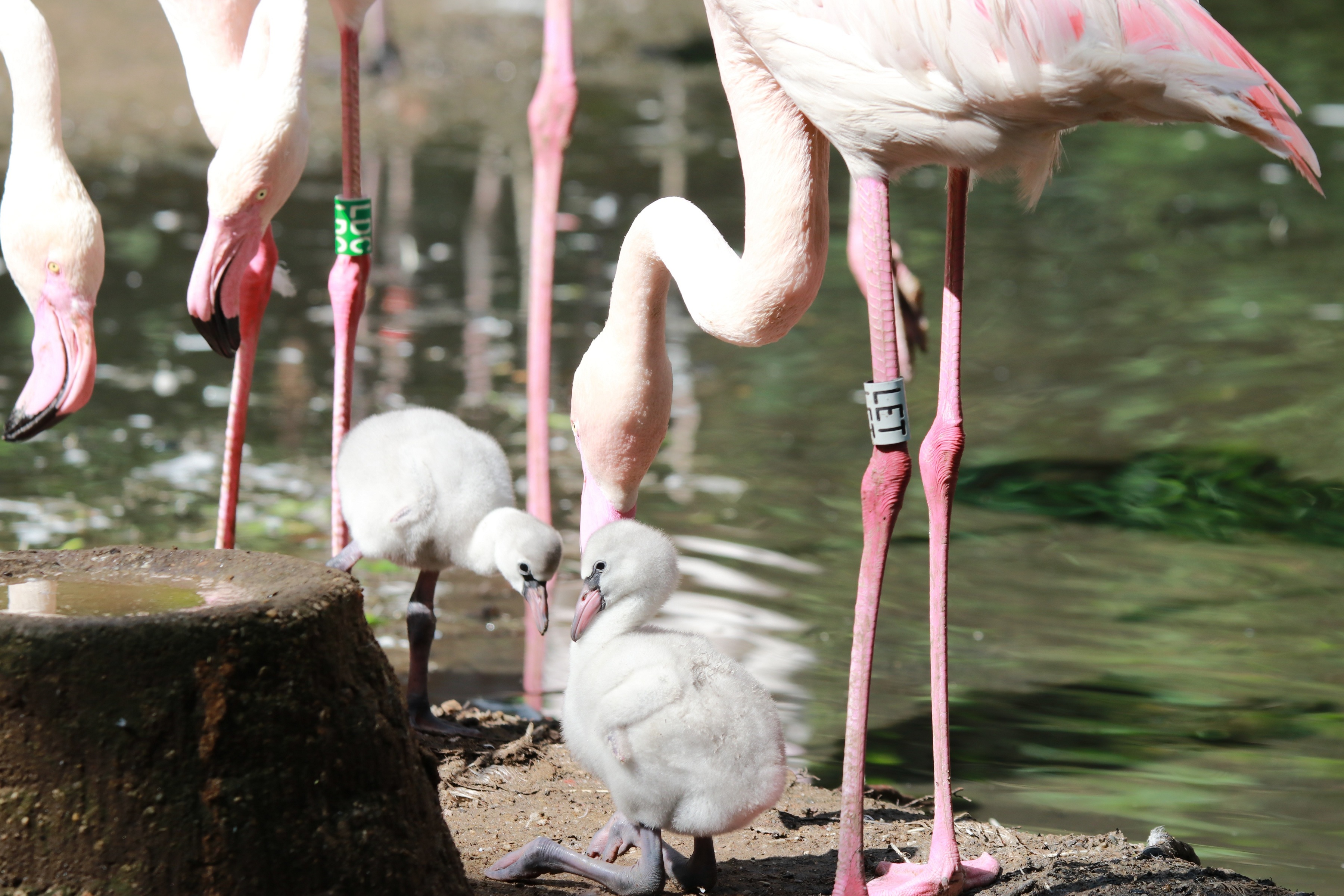
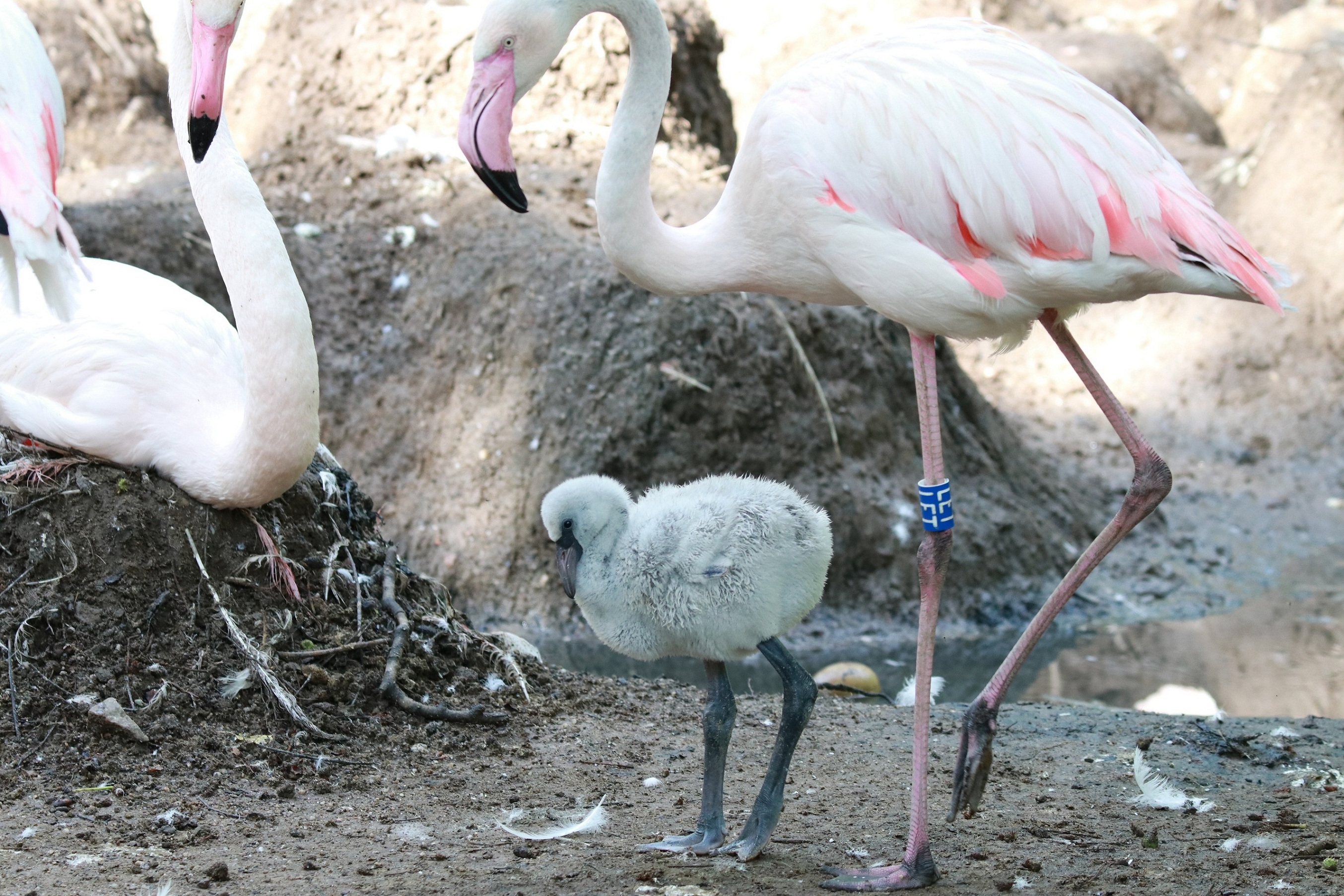
The pink flamingos at Chemnitz Zoo have had some offspring. The first two chicks hatched at the beginning of June. Six more chicks followed, the last for the time being on 14 June.
Some eggs are still being incubated, so further hatching successes may follow.
For the zoo, this is the fourth successful breeding in a row since 2022.
Even though flamingos are one of the most popular and relatively frequently kept bird species in zoological institutions, they were long considered impossible to breed. Although they have been kept for well over 100 years, the first isolated breeding successes with the various species only occurred in the 1940s, 50s and 60s.
Intensive research discovered that flamingos need a certain group size to get into the mating mood. In addition, the ratio of males to females should be relatively balanced. Some flamingo species are also known to react strongly to changes in their environment. All of these factors also apply to animals living in the wild, which means that reproduction is not only difficult in zoological institutions.
For a long time, breeding was also unsuccessful at Chemnitz Zoo. Pink flamingos have been kept here since the mid-1990s. The group was enlarged in 2015, after which the first mating activities could be observed. But it was only after the animals were helped by the zookeepers to build their cone nests that the proverbial knot burst.
In fact, the breeding works so well that the young are both hatched naturally and raised by the parents themselves. Visitors can experience the interesting rearing process, in which both parents are involved, and watch the young animals grow up. The pink flamingos at Chemnitz Zoo are resistant to possible disturbances due to their proximity to the visitor path.
The young can be recognised not only by their smaller size, but also by the colour of their plumage. In contrast to the adult animals, it is not pink, but white-greyish in colour. This is because the pink colouring of the plumage is due to the intake of carotenoids with the food. After transformation in the organism, these are deposited as pigments in the skin and feathers of adult animals. Pink flamingos are not fully coloured until they are more than three years old. This means that some of the juveniles from previous years can still be recognised by their colouring.
Invitation to the zoo festival
On Sunday, 29 June, from 10 a.m. to 6 p.m., interested parties are invited to a zoo festival. The zoo is celebrating its birthday and the focus will be on animals, the zoo, species conservation and, of course, the zoo itself.
The zoo staff will be offering guided tours, a look behind the scenes, face painting for children and making insect hotels.
Other cultural institutions, clubs and organisations as well as the Siegmar volunteer fire brigade will also be celebrating with information stands and hands-on activities.
Summer holidays at the zoo and wildlife park
From Monday, 30 June, Chemnitz Zoo will once again be organising short guided tours for young and old every day at 11 am. The emus will kick things off, followed by the pink flamingos on 1 July. The other tours can be enquired about at the ticket office or found at www.tierpark-chemnitz.de.
The Oberrabenstein Wildlife Park will also be hosting its popular show feedings again on weekdays at 11 a.m., with the wolves on Mondays, the mouflons on Tuesdays and Fridays, the bison on Wednesdays and Saturdays and the wildcats and badgers on Thursdays and Sundays.
Opening hours in summer:
| Animal park: | 9 a.m. to 7 p.m., last admission 6 p.m. |
| Game enclosure: | 9am to 6pm, last admission 5pm |