

Stork nest in Wittgensdorf has been renovated
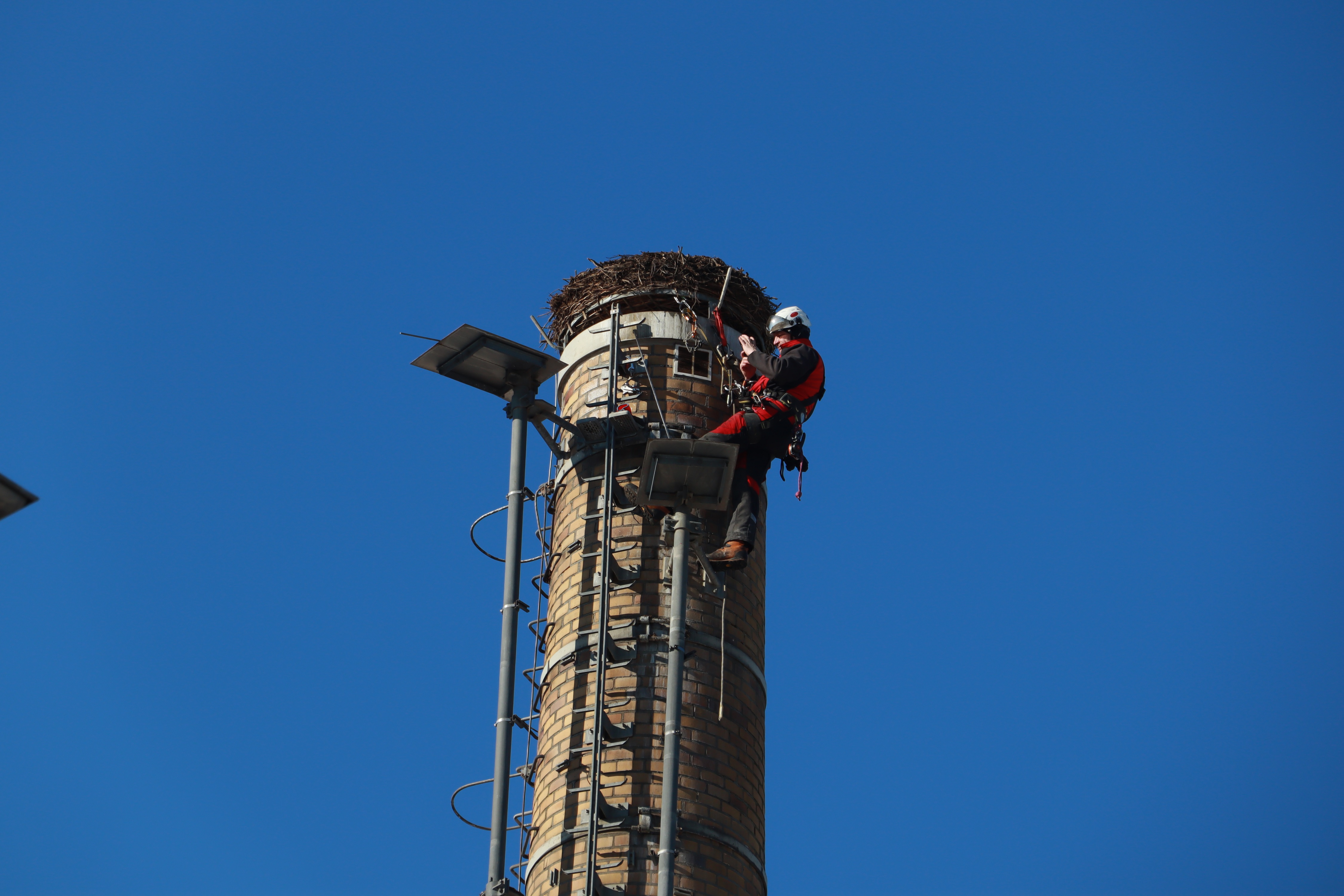
Last week, the white stork nest in Wittgensdorf was renovated. The Lower Nature Conservation Authority organised the project in cooperation with the Saxon Ornithologists' Association.
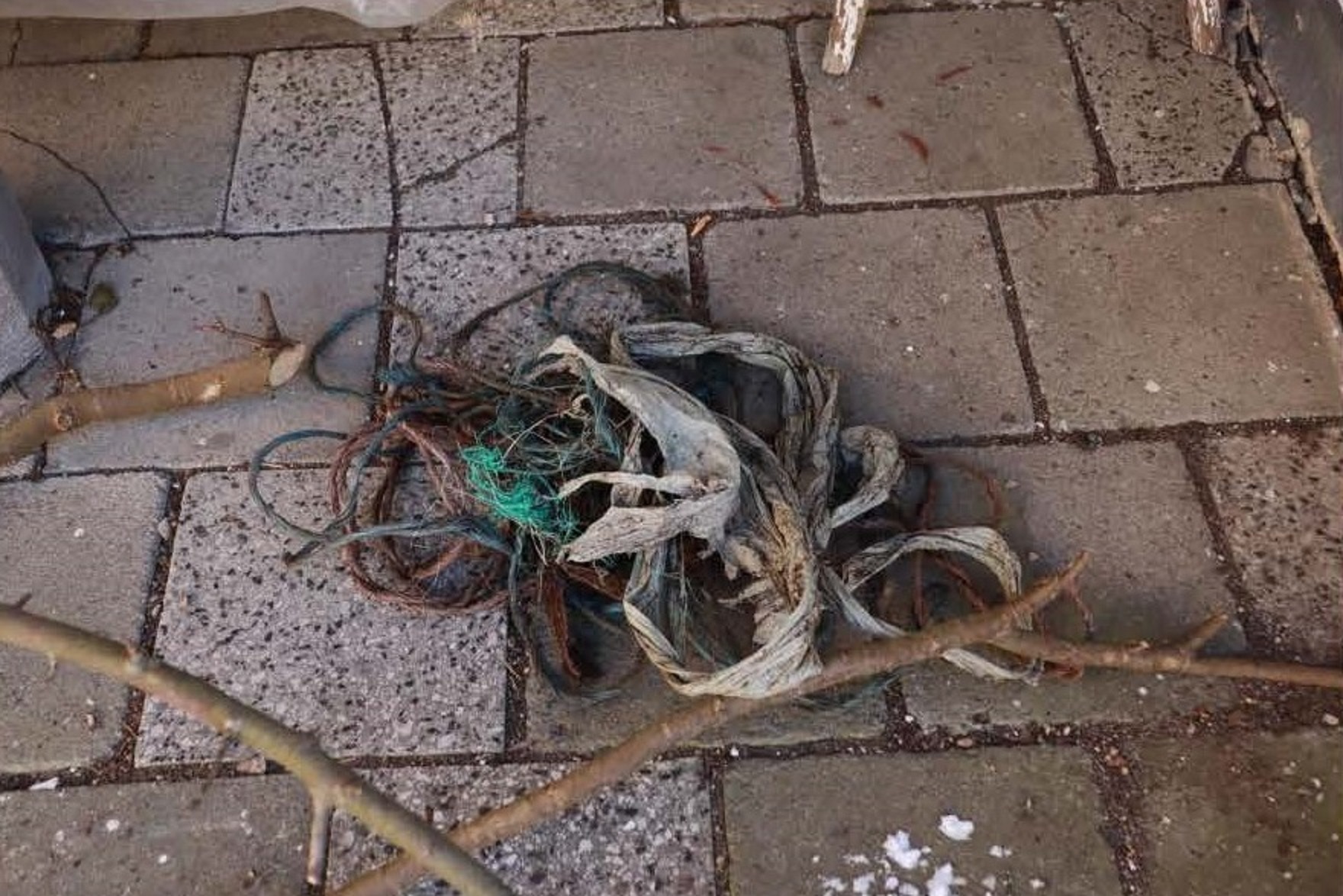
Industrial climbers removed around two thirds of the branches from the 20 metre high disused chimney in Wittgensdorf. They also removed rubbish and rubbish that the storks had brought with them. The remaining nest was neatly organised for the new breeding season and prepared for the arrival of the storks.
White storks have been breeding regularly on the unused chimney at lofty heights for more than 15 years and raise two to three young each year. Over the course of time, the storks have extended the nest over half a metre in height and width with branch material.
Old nesting material rots over time and forms an impermeable layer. This can be dangerous for the young storks if they become hypothermic in the damp branches or the eggs cannot be incubated at all. To prevent the eyrie from tipping over and endangering the young storks, the eyrie had to be renovated.
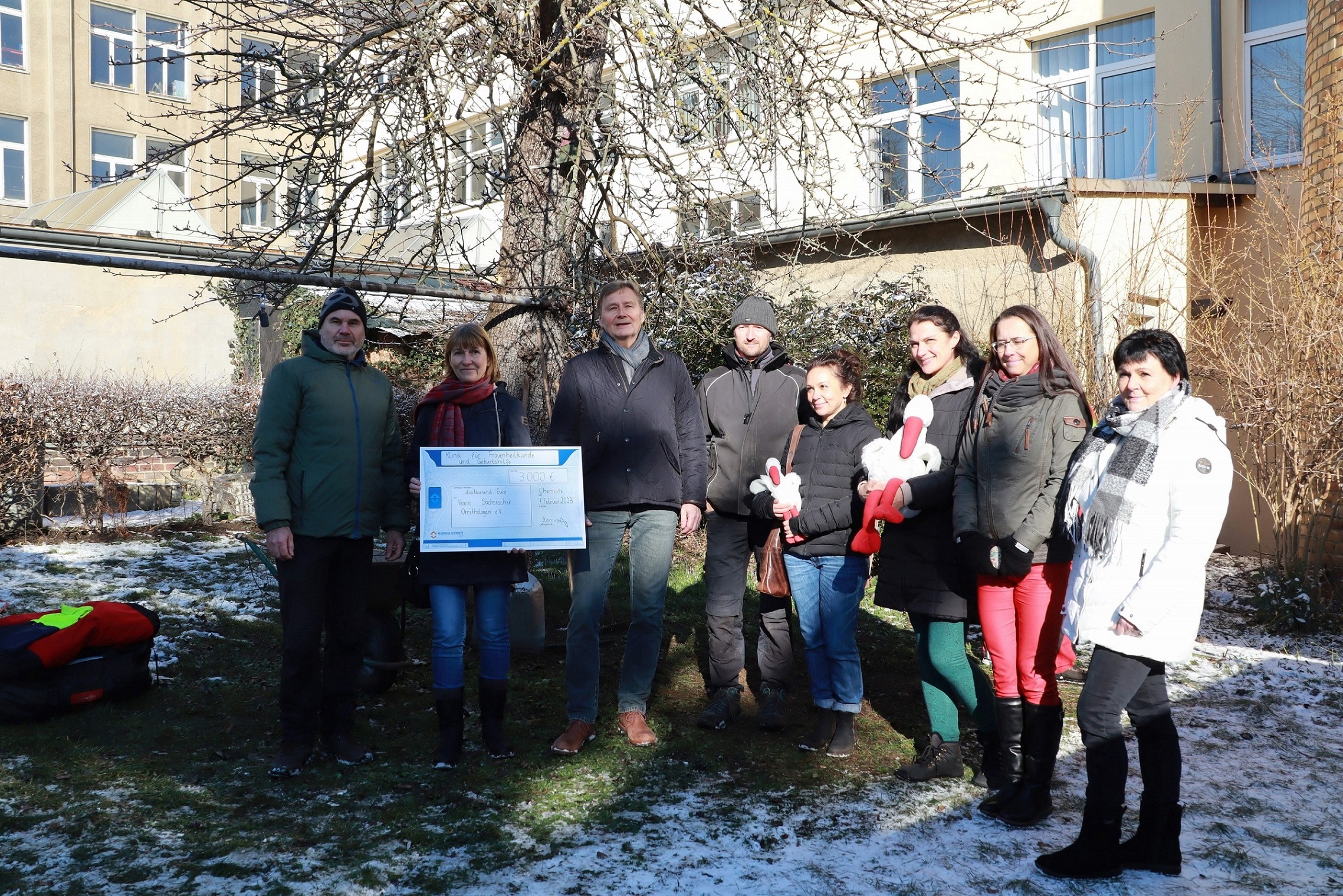
The campaign was supported with a donation of 3,000 euros from the Chemnitz Clinic for Gynaecology and Obstetrics, as the stork is a symbol of obstetrics.
The white storks are now expected to return from their winter quarters in Spain or Africa. After several young storks died from rubber rings last year, the Lower Nature Conservation Authority is hoping for a successful stork year in 2023.