

Offspring of Europe's largest wild cattle
A male bison calf was born at the Oberrabenstein game reserve
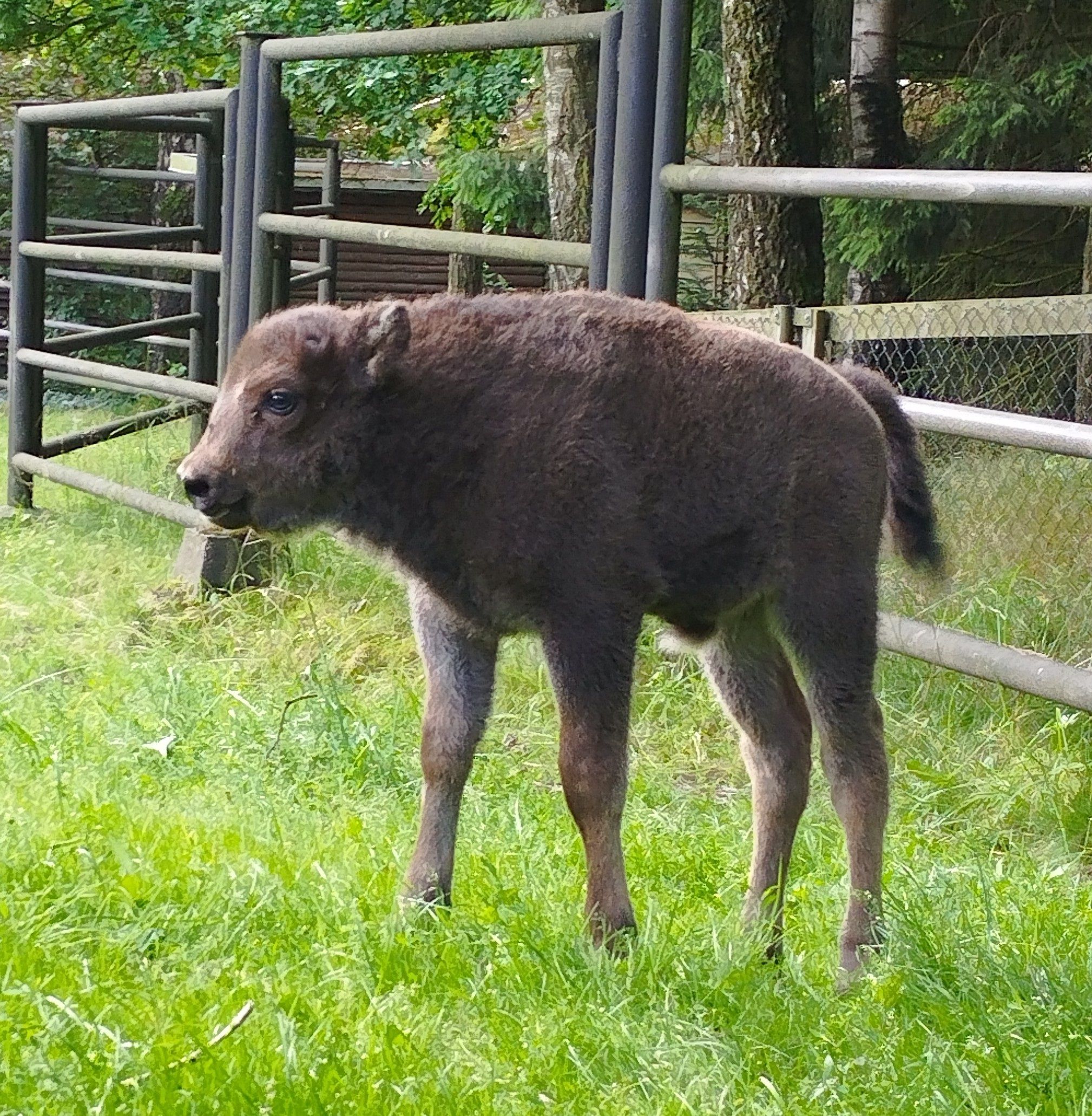
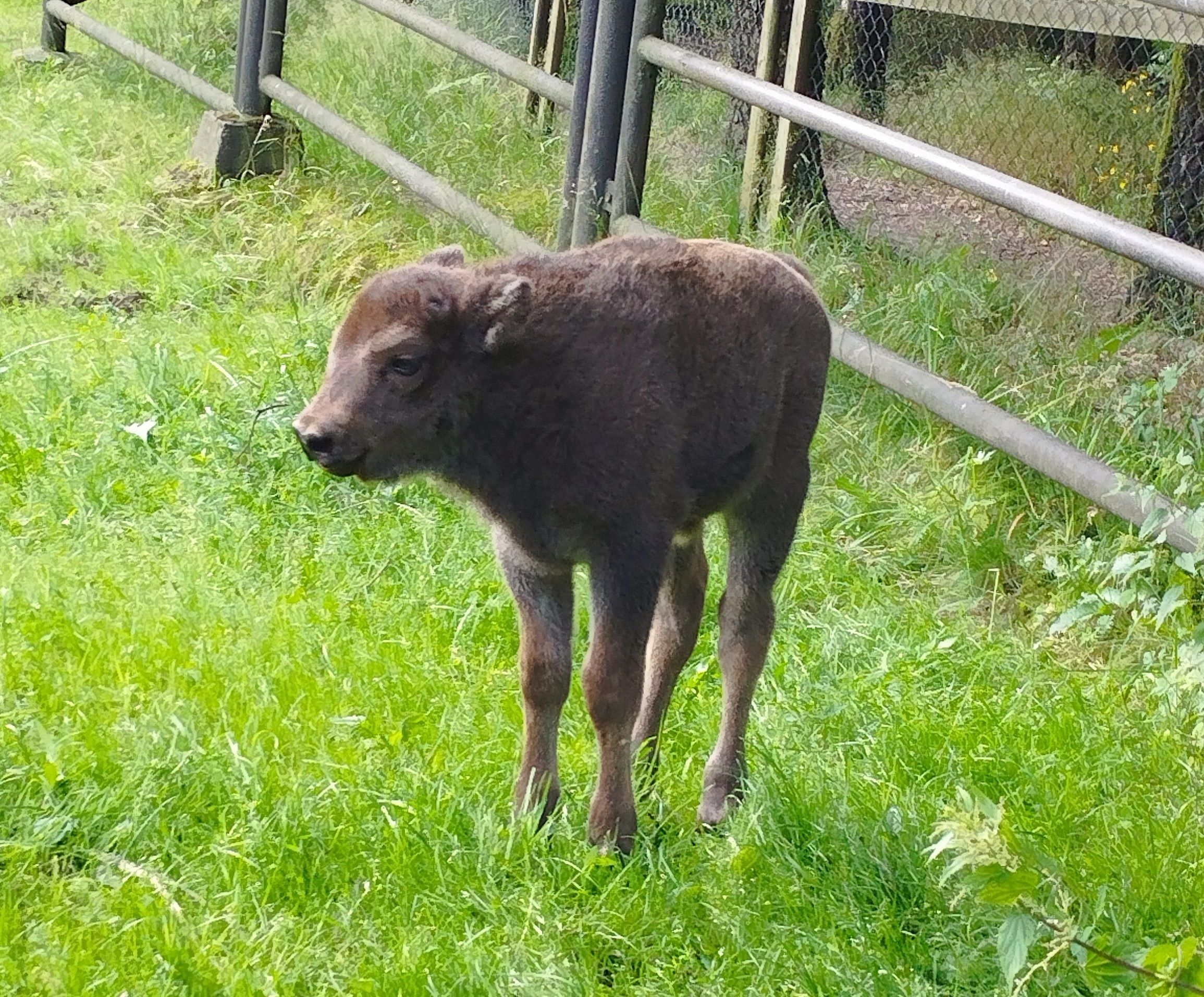
After the bison at the Oberrabenstein wildlife enclosure gave birth at the beginning of May, another calf was born on 22 June. The mother is the lead cow "Onia" and the father is the four-year-old "Spakko", who has only been living in the wildlife park since last summer. The bison rut usually takes place from August to October and a calf is born after around nine months.
Bison have been kept and bred at Chemnitz Zoo and Oberrabenstein Wildlife Park since the 1980s. All bison born in the wildlife park have the initial letters "Or" for Oberrabenstein in their names. The youngest offspring in the wildlife park is a male animal, which has now been named "Orkan" as its birth took place on a stormy evening.
Bison are the largest land mammals in Europe. Bulls can weigh up to 1000 kilograms and cows can reach a weight of 600 kilograms. After the extinction of the aurochs, they are the only surviving wild cattle in Europe. However, bison are not closely related to domestic cattle, whose ancestor was the aurochs. They are closest to the American bison. For this reason, bison are also referred to as European bison.
In the first half of the 20th century, bison were on the brink of extinction. Thanks to the joint efforts of zoological institutions and a few private owners, they were saved and reintroduced in various countries.
Today there are more than 8000 animals again, a third of which live in zoos and wildlife parks. Chemnitz Zoo has already transferred three bison cows from the wild enclosure to a reintroduction project in the Caucasus.
Opening hours in summer
Zoo: 9 am to 7 pm, last admission 6 pm
Wildlife park: 8 a.m. to 6 p.m., last admission 5 p.m.