

Offspring of a highly endangered goat species
Tierpark Chemnitz: Young animals also among the Asian half donkeys
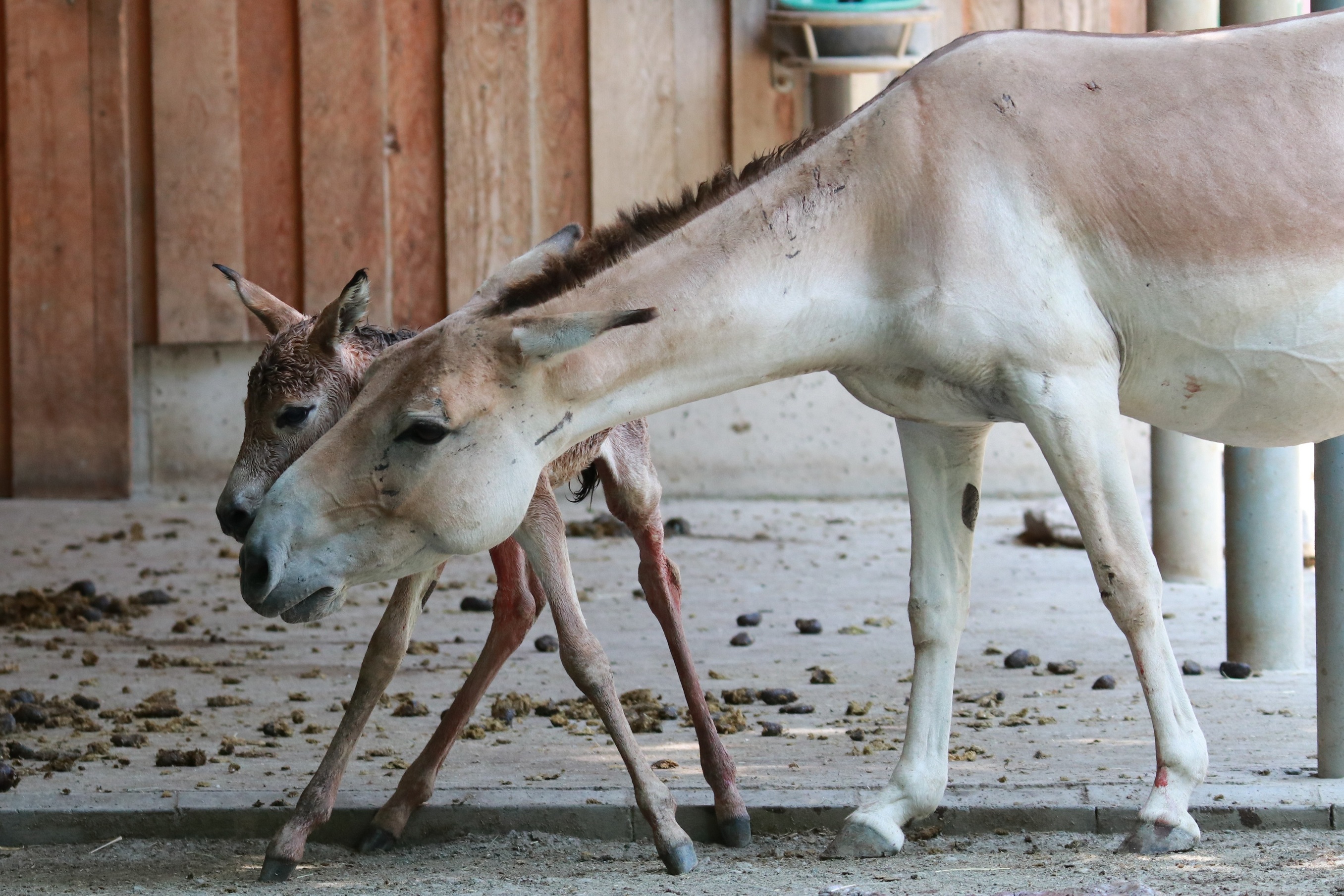
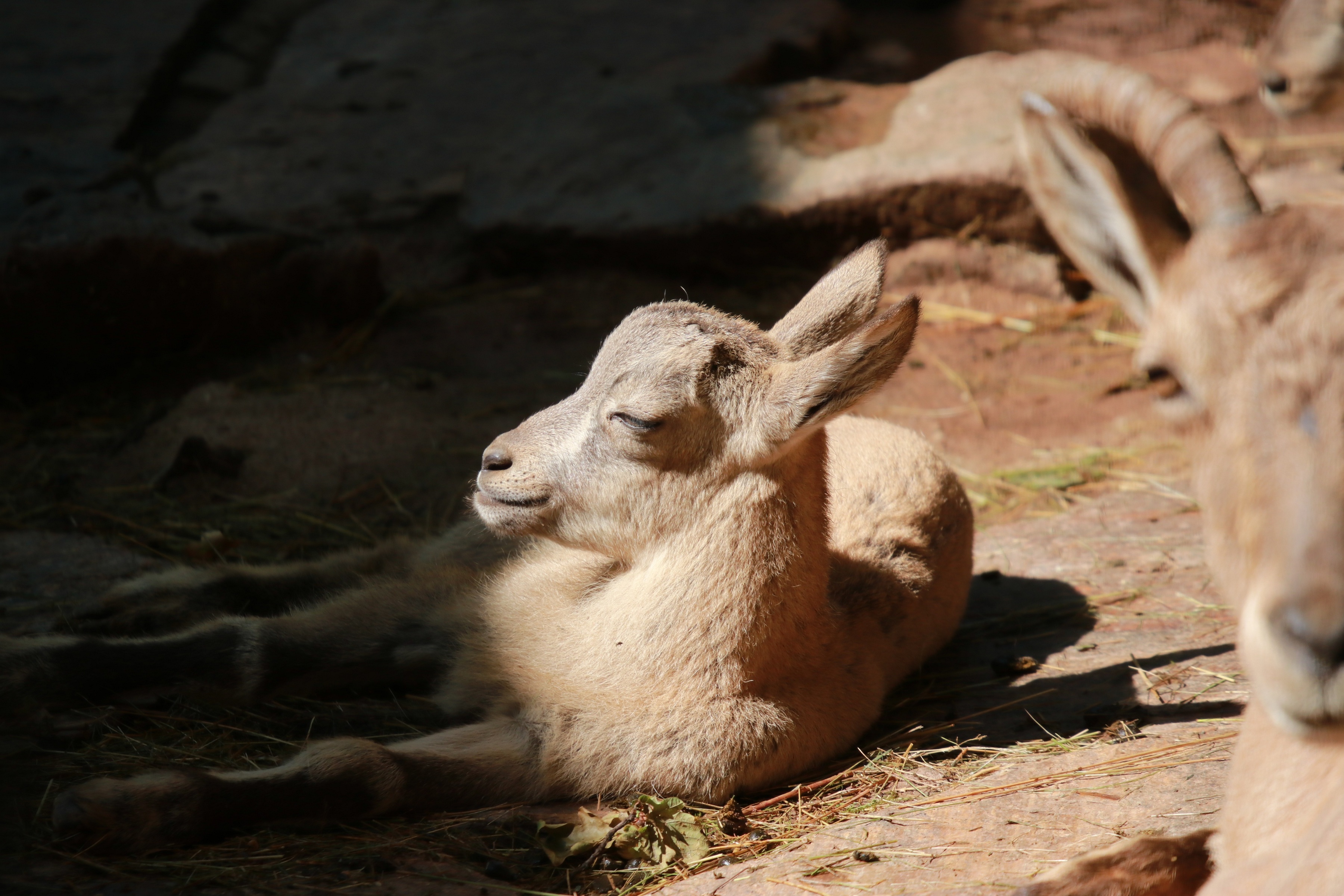
There are more offspring to report from Chemnitz Zoo. Two young Western Caucasian ibexes were born on 30 and 31 May. The group at the zoo now consists of 10 animals. In addition, a foal was born on 12 June to the Asian half-aspen, or more precisely the kulans.
The ibex mating season falls in the winter months of November and December. After a gestation period of just under six months, a single foal is usually born in May and June. Twin births are rather rare here.
The Western Caucasian ibex has the smallest range of all wild ibex species. This covers an area of around 15,000 square kilometres in the western Caucasus, which mainly extends over the countries of Georgia and Russia. This makes the distribution area smaller than the federal state of Saxony with more than 18,000 square kilometres.
With this small distribution area in the western Caucasus and a rapidly declining population of only around 5,000 individuals, the Western Caucasian ibex is considered a critically endangered species. Despite a conservation breeding programme, these imposing horned animals are rarely exhibited in European zoos. In Germany, this species can only be found in four other zoological institutions. The team at Chemnitz Zoo is therefore all the more delighted to be able to report another successful participation in a conservation breeding programme.
Offspring of Asian half donkeys
On 12 June, a foal was born to the Asian half donkeys, the Kulans. It is now also known that it is a stallion. The dam is the six-year-old mare "Sansa" and the sire is the eight-year-old "Nikolaj". The special thing was that both visitors and employees of the zoo were able to watch the birth live. Visitors gave the little stallion the name "Euron".
After the new breeding stallion came to Chemnitz from Kosice Zoo in Slovakia in April 2023 as part of the European Conservation Breeding Programme, this is now the second offspring in a row at the zoo. It harmonises very well with the new stallion in the group. The gestation period for kulans is around 11 months.
Kulans belong to the half-donkey family. However, they are not a cross between a horse and a donkey, but an independent species with mixed characteristics. For example, the ears are more horse-like, while the tail is donkey-like.
Half-donkeys were once widespread across large parts of Asia, but today only small, dwindling populations remain. As a subspecies, the kulans are considered highly endangered. Mainly hunting, but also the heavy agricultural utilisation of their habitat, threaten the populations.
Breeding successes in zoological institutions can save endangered species such as the kulan from extinction. Chemnitz Zoo is actively involved in conservation breeding. This species has been kept in Chemnitz for over 50 years and there have been several offspring.
Opening hours in summer:
Zoo: 9 am to 7 pm, last admission 6 pm
Game enclosure: 9 am to 6 pm, last admission 5 pm