

Nursery of the sharks - Chemnitz at the equator
Museum für Naturkunde Chemnitz: Exhibition opening on 28 May, 5 pm
On Wednesday 28 May at 5 pm, the exhibition on the Lower Carboniferous of Chemnitz will be opened at the Museum of Natural History by Prof. Dr Ronny Rößler, Director of the Museum of Natural History Chemnitz, and Katja Margarethe Mieth, Director of the Saxon State Office for Museums. Prof Jörg W. Schneider from the TU Bergakademie Freiberg will give a popular scientific lecture to introduce the geology and living world of the Chemnitz Lower Carboniferous, a unique fossil site in Europe. Anyone interested is cordially invited to attend. Admission is free.
Representatives of the media are also invited.
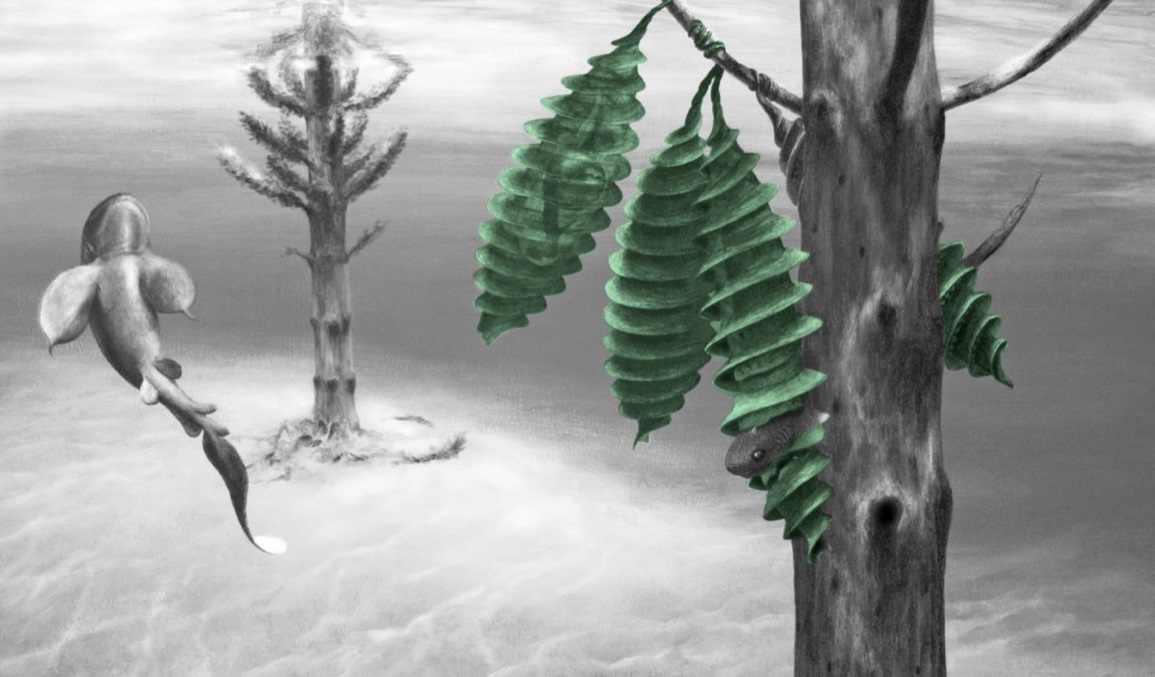
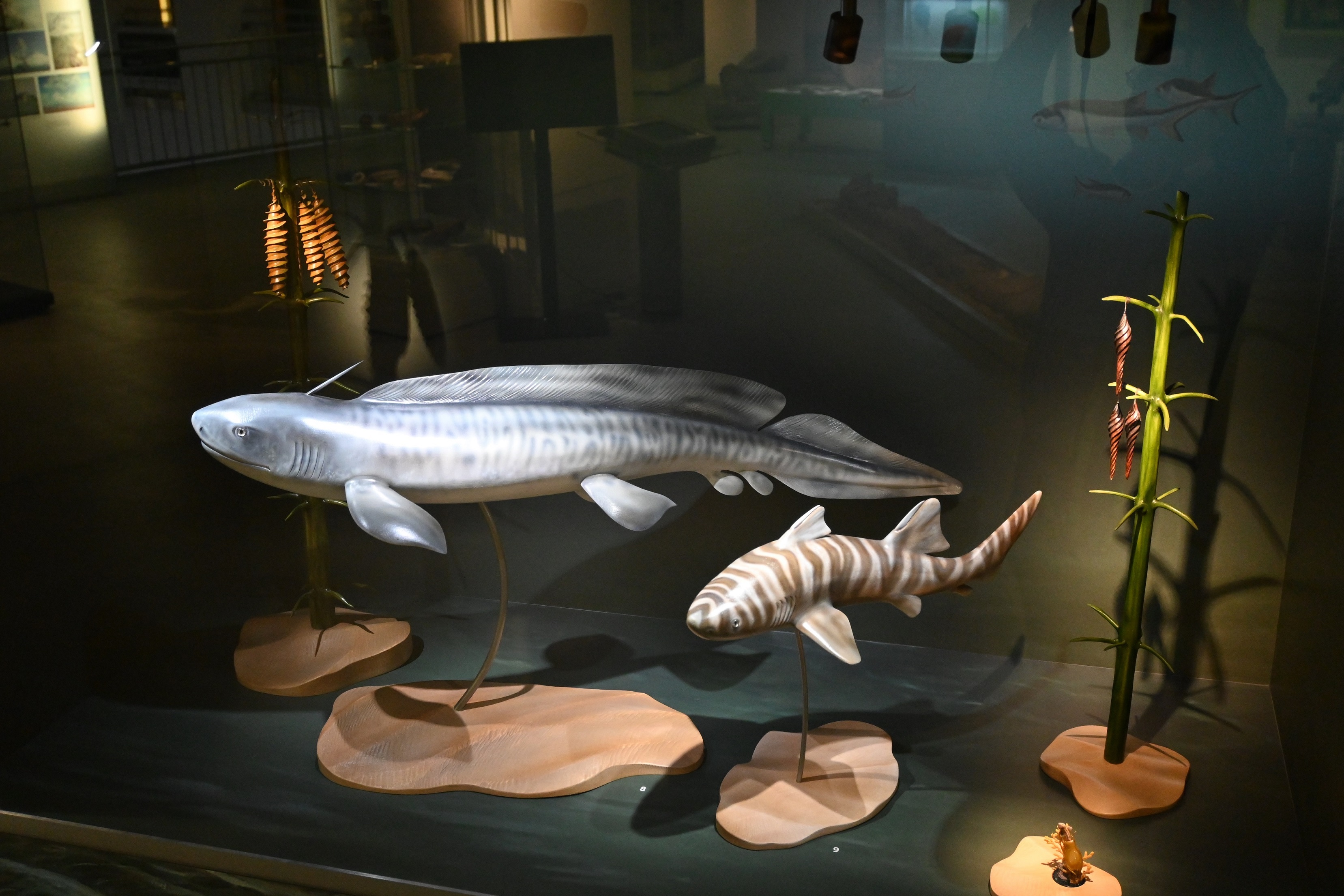
Today's Chemnitz was close to the equator 330 million years ago - in the age of the Lower Carboniferous. In a landscape characterised by rivers, lakes and moors, tall trees grew that would seem strange to us. The reedbeds on riverbanks were formed by ancient horsetails. In between, two species of freshwater sharks laid their eggs. On land lived arachnids and giant centipedes; in the water, crustaceans, fish and amphibians romped about. A new exhibition ensemble at the Museum für Naturkunde Chemnitz provides the first coherent insight into a living world that is around 40 million years older than the Petrified Forest.
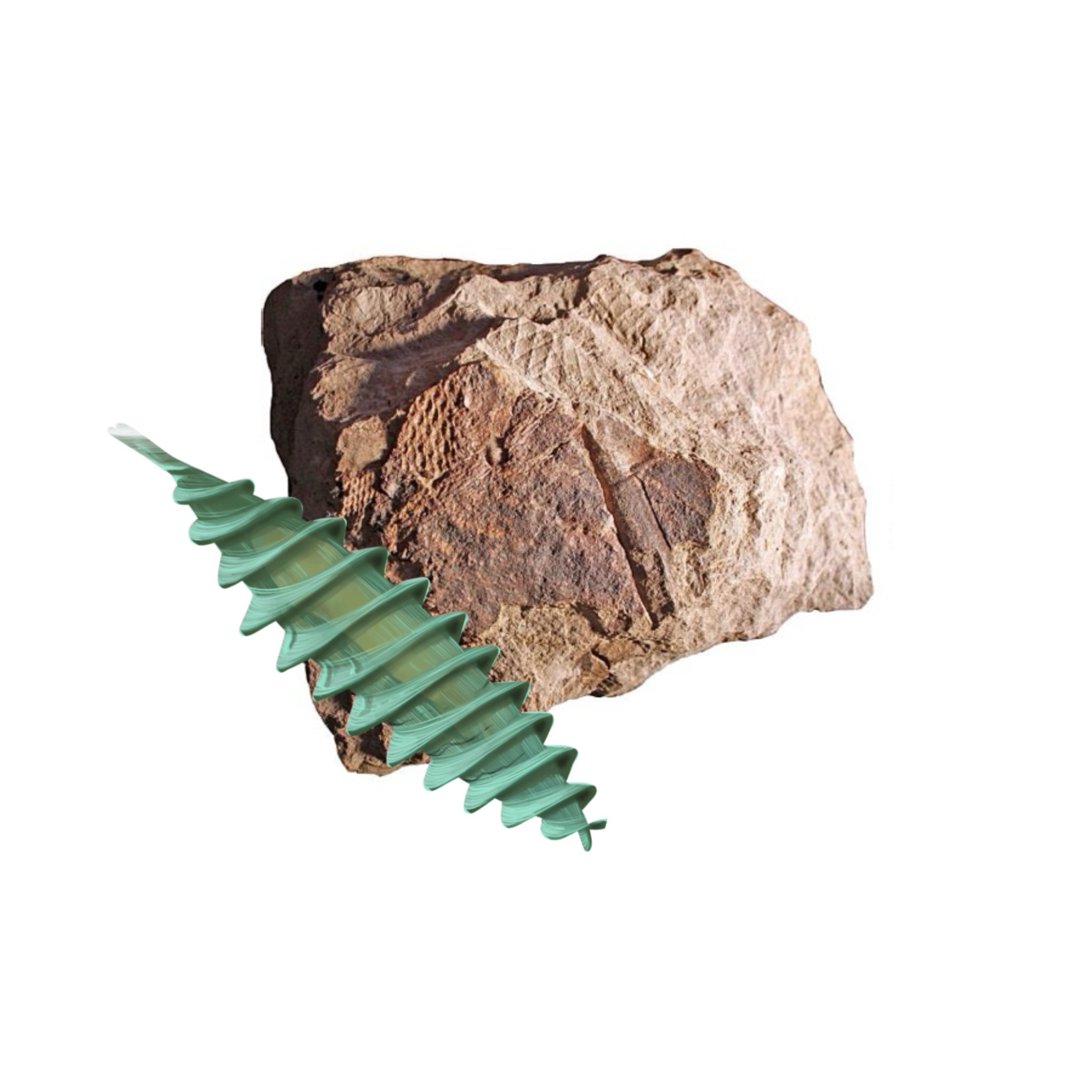
At the centre of the exhibition is the fossil of the year 2025 - the shark egg capsule Fayolia sterzeliana. Johann Traugott Sterzel, the founding director of the Municipal Natural Science Collections, found the first enigmatic remains, which would later be named after him, in 1879 in sand pits in Chemnitz-Borna. Similar finds, which were initially interpreted as plant fossils, were only described by French scientists five years later.
After a further four years, they came to the conclusion through comparisons with modern cartilaginous fish eggs that Fayolia must be egg capsules of fossilised sharks. This makes the Chemnitz Fayolia one of the first scientifically described species of the genus; geologically, it is the oldest evidence of fossil sharks ever. Until the middle of the 20th century, further finds were made in sand pits in Chemnitz-Borna; further discoveries followed around 2000, when the same layers were encountered during the construction of the new Chemnitz-Glösa motorway junction.
In addition to Fayolia, there is a second type of fossilised shark egg capsule - a previously undescribed species of the genus Palaeoxyris. Both types of capsule occur several times next to each other on one layer surface. This proves that two different species of sharks used the same spawning area at the same time. Shark eggs, which are surrounded by a leathery membrane, attach themselves to aquatic plants with special adhesive threads. The embryos, which also feed on the yolk sac in the egg, grow into hatchlings over a period of months. When the food supply in the egg has been used up, they cut through the collagen membrane and go in search of food on their own. However, they only venture close to adult animals once they have reached a certain body size, which protects them from cannibalism.
While shark remains, apart from egg capsules, are limited to a single head spine, a diverse fauna has survived on land and in the water. In addition to scorpions and other fossil arachnids, remains of the centipede Arthropleura, up to 2.5 metres long, have been found here, representing the world's oldest evidence of this largest arthropod ever to have lived on earth. In addition to the remains of various fish, a fragment of an amphibian skull was unearthed, which is considered to be the oldest remnant of a tetrapod (quadruped) in Germany.
The flora also shows a remarkable diversity for the Lower Carboniferous and allows the reconstruction of several distinct landscape areas. The Lower Carboniferous of Chemnitz-Borna and -Glösa, similar to the Petrified Forest, thus provides a valuable insight into the evolution of organisms and their environment in a distant time window.