

New primate species at Chemnitz Zoo
Dschelada facility at the ice age playground officially opened
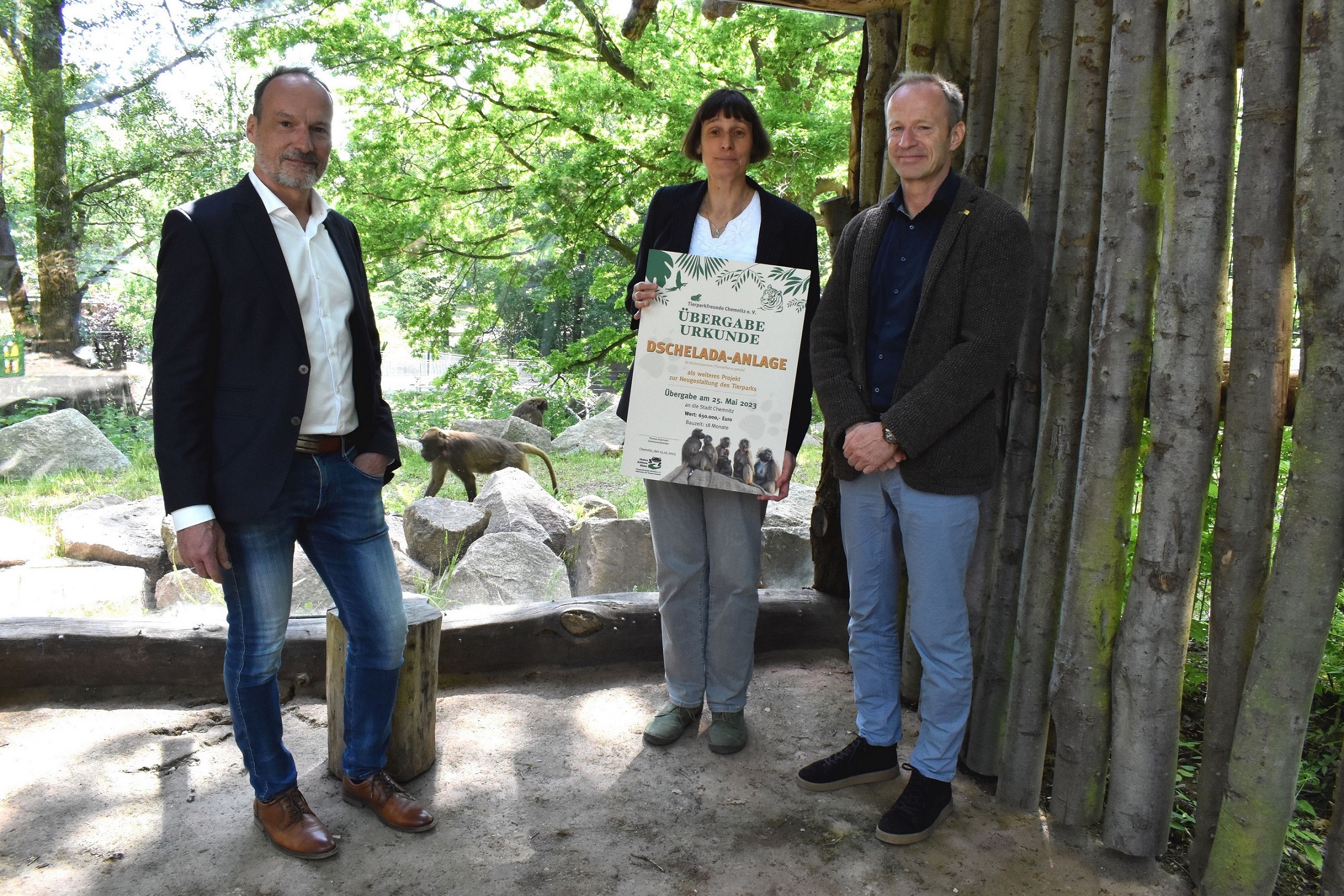
A new enclosure was officially opened today at Chemnitz Zoo. The animal-friendly and near-natural enclosure for djeladas and ibexes, worth a total of more than 650,000 euros, was designed and financed by the Friends of Chemnitz Zoo - Tierparkfreunde Chemnitz e. V. - and built with the support of the zoo's craftsmen. The chairman of the association, Thomas Paarmann, symbolically handed over the facility to the city of Chemnitz, represented by Mayor Knut Kunze and the director of Chemnitz Zoo, Dr Anja Dube.
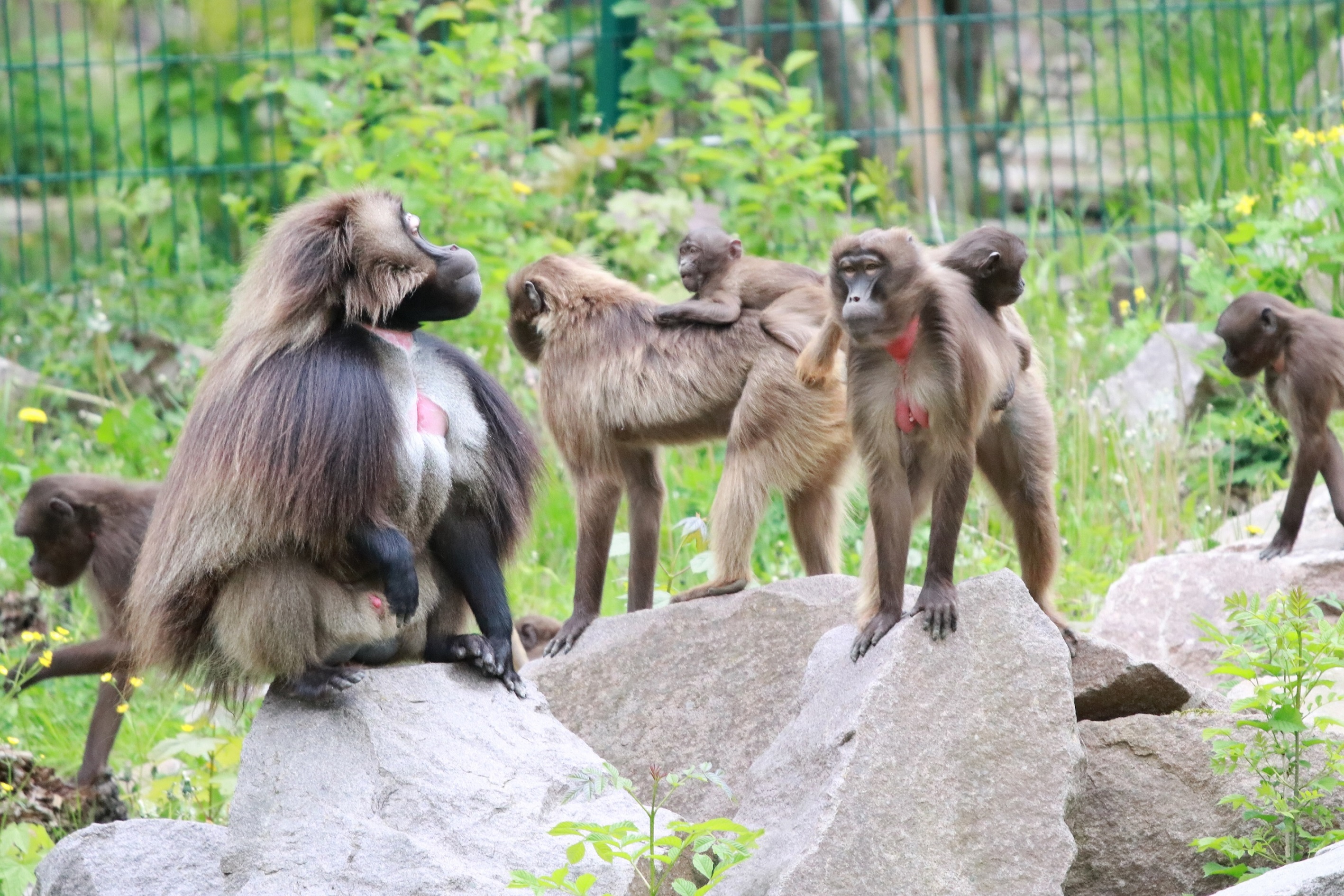
The large, near-natural enclosure opposite the Ice Age playground is now home to 18 djeladas. With this species, Chemnitz Zoo is starting a new, exciting chapter in its monkey husbandry. There are only six zoological facilities in Germany that keep this species, and Chemnitz is now the first and only facility in Saxony.
Two employees of Chemnitz Zoo brought the new primate species to their new home at the beginning of May. 18 djeladas were collected from Rheine Nature Zoo in North Rhine-Westphalia in the zoo's own transporter. The international studbook for this species is also kept there. The transport was realised with the support of Dresden Zoo and Leipzig Zoo, which provided additional transport boxes for the animals.
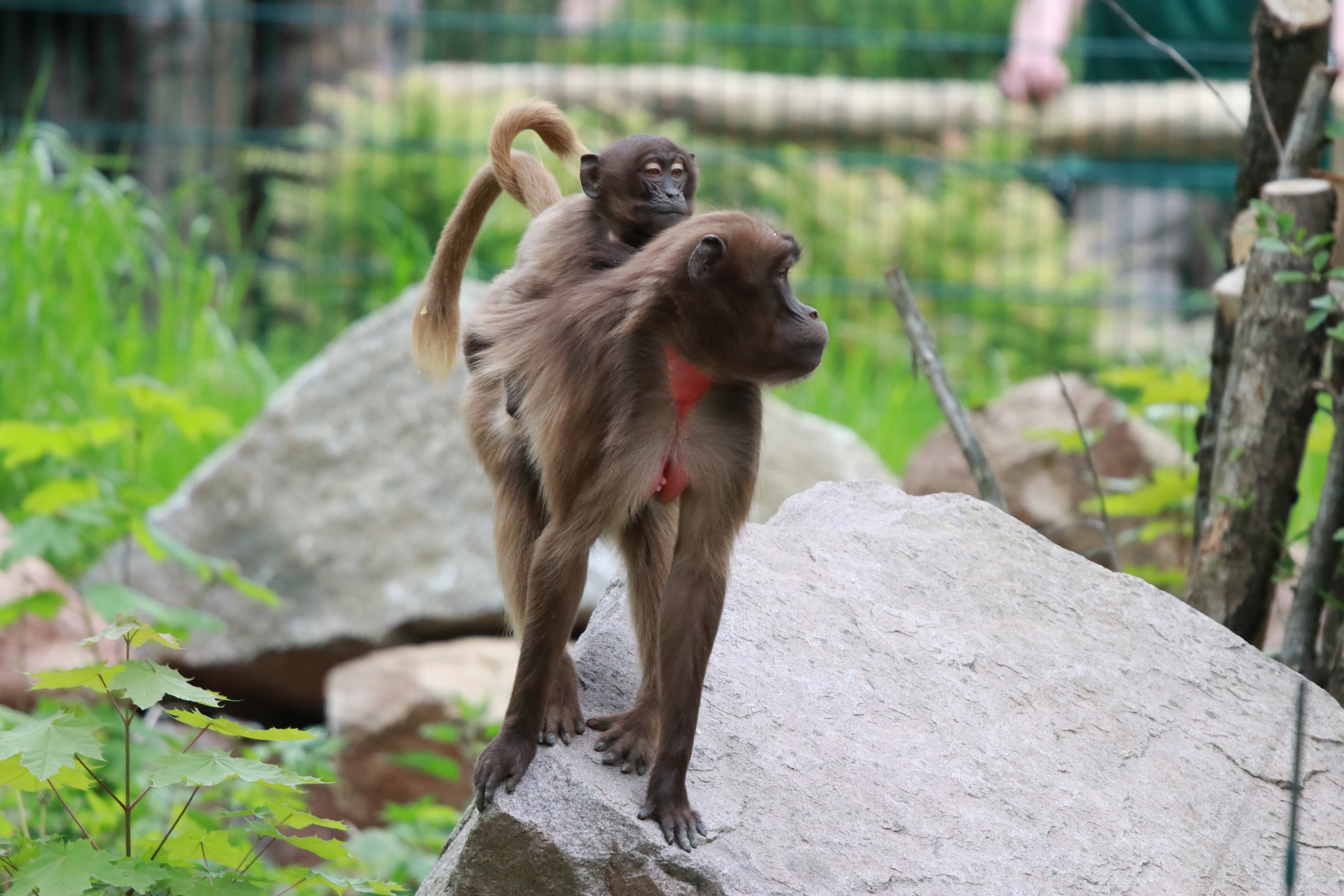
Djeladas are also known as blood-breasted baboons. They owe this name to an hourglass-shaped red spot on their chest. They are found exclusively in the highlands of Ethiopia - up to altitudes of 4400 metres. They spend most of the day searching for food. They can form large groups of several hundred animals. They are the only primates that feed mainly on grasses and their seeds. Due to this food specialisation, djeladas spend most of their time on the ground. They seek out rocks to sleep on.
The 18 animals at Chemnitz Zoo have a typical social structure for djeladas. A group consists of an adult male and several related females and their offspring. Pure bachelor groups are also possible. The Chemnitz animals came as a family group from the Rheine Nature Zoo.
There is a clear gender difference between males and females, as the females are only around 60 per cent the size of the males. In addition, the males have an impressive mane. A special feature of the females are the very closely spaced nipples, which enable the young to suck from both breasts at the same time.
The new jelada enclosure, which covers more than 3,000 square metres, is the largest single project of the Friends of the Zoo to date and the third new enclosure to be completely implemented by the Friends of the Zoo since 2021. Previously, the area housed the snow goats, whose enclosure stood empty after the death of the last animal in November 2020.
The djelada enclosure is the second part of the site, which has been redesigned in line with the masterplan to create a natural landscape zoo, with an ice age playground and gopher enclosure directly adjacent to the camel enclosure, which is also already free of bars. In addition to the 18 new arrivals, the group of ibex already living in the zoo will also find a home there.
Part of the new enclosure is a 150 square metre building with a green roof, constructed using ecological timber frame construction. Visitors will be able to gain insights into the lives of the animals on four different levels, some of which are free of bars.
Opening hours in summer:
| Chemnitz Zoo: | 9 a.m. to 7 p.m., last admission 6 p.m. |
| Game enclosure: | 8 a.m. to 6 p.m., last admission 5 p.m. |