

New arrivals at Chemnitz Zoo
Reinforcements for the kulans and lowland anoas
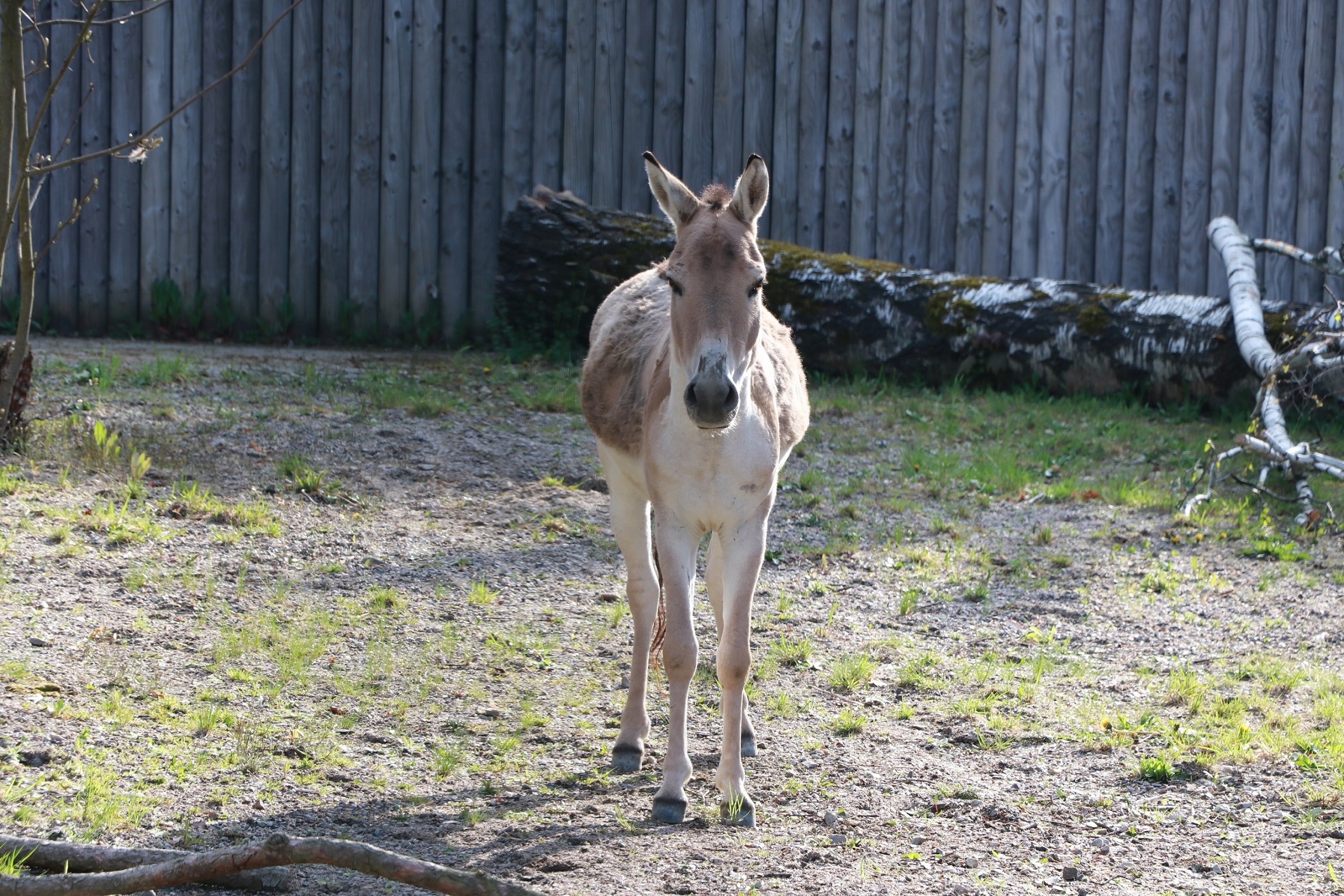
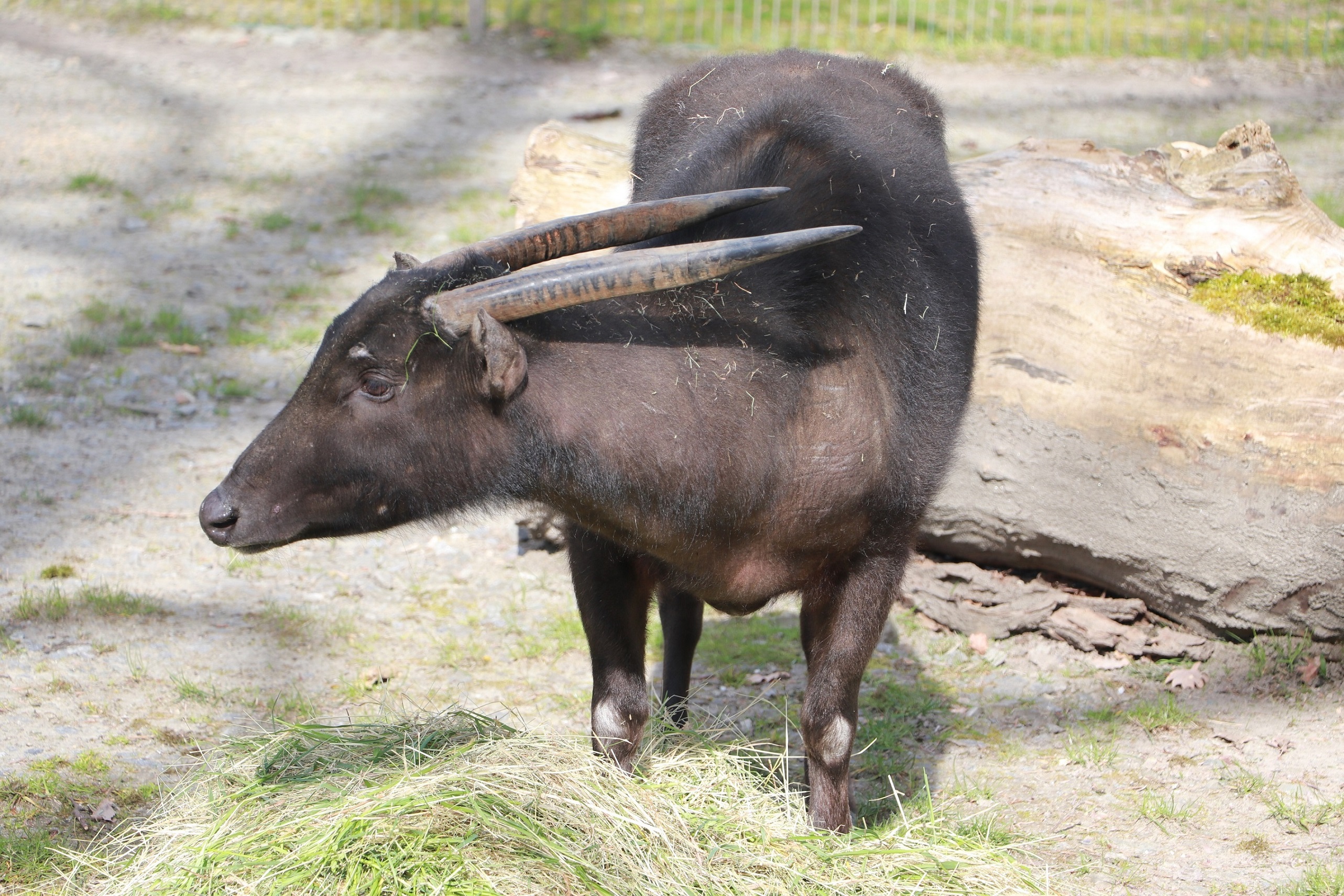
New animals of two different species have been added to Chemnitz Zoo. This will support breeding programmes.
New breeding stallion for Asian half donkeys
A new stallion arrived at Chemnitz Zoo on 25 April to join the Asiatic half donkeys - or more precisely, the Kulans. He comes from Kosice Zoo in Slovakia, where he was born on 25 May 2017. Together with the two mares "Sansa" and "Brienne", who were both born at Chemnitz Zoo, the Chemnitz Kulan herd now consists of three animals.
The Asian half-donkeys are not a cross between a horse and a donkey, but an independent species with mixed characteristics. For example, the ears are more horse-like, while the tail is donkey-like.
Half-donkeys were once widespread across large parts of Asia, but today only small, dwindling populations remain. As a subspecies, the kulan is considered highly endangered. Mainly hunting, but also the heavy agricultural utilisation of their habitat threaten the populations.
Breeding successes in zoological institutions can save endangered species such as the kulan from extinction. Chemnitz Zoo is actively involved in conservation breeding. This species has been kept and successfully bred in Chemnitz for over 50 years. As the gestation period for culans is around eleven months, offspring are not expected at the zoo until next year at the earliest.
New resident among the smallest wild cattle
On 26 April, a new lowland anoa travelled to Chemnitz Zoo. Bull "Palu" comes from Berlin Zoo and expands the population in Chemnitz to two animals. Anoa bull "Belik" has been living at the zoo since 2020.
Although the two bulls are brothers, they are kept separately as Anoas are strict loners. They are also both quite old at over 20 years old.
Anoas are the smallest of the wild cattle still in existence today. They are native to the island of Sulawesi and come in two species. In addition to the lowland anoas, there are also the mountain anoas. Both sexes of the anoas have backward-facing horns, which are mainly used for intra-species ritual fights, but can also be dangerous to other creatures.
Like all animal species with a small distribution area, anoas are particularly affected by human intervention in nature and are therefore highly endangered. Habitat loss and hunting are particularly detrimental to the species. The population in the wild is still estimated at around 2500 animals.
Chemnitz Zoo is also involved in the conservation breeding programme for the lowland anoa, but not through captive breeding. The master plan no longer provides for the keeping of anoas, but as long as no reorganisations take place in this area, the existing enclosures will be used. They are suitable for keeping two animals, but there is not enough space for breeding. Chemnitz Zoo is therefore supporting the breeding programme by keeping two older animals that can no longer or should no longer provide offspring, as this creates space for new breeding pairs and their offspring in other facilities.
Opening hours in summer:
Zoo: 9 am to 7 pm, last admission 6 pm
Game enclosure: 8 a.m. to 6 p.m., last admission 5 p.m.