

Mini pigs, mouflon lambs and lovebirds
New additions to the zoo and wildlife park await visitors
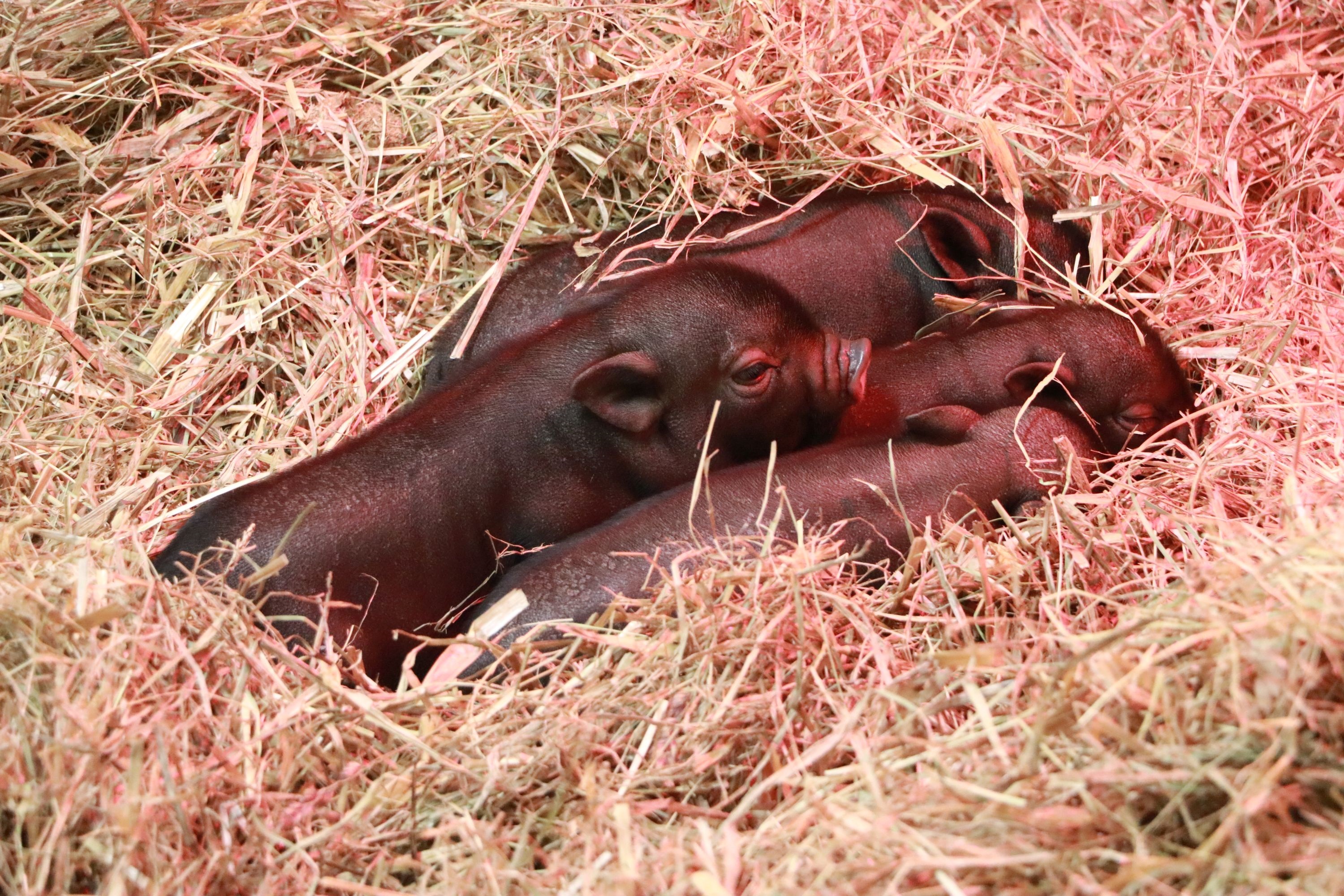
On 15 April, the petting zoo at Chemnitz Zoo welcomed a new addition to the family. The Göttingen mini pig Bärbel gave birth to four piglets. This is Bärbel's third offspring. The father is Eber Ehrmann, who is currently housed separately from the sow and piglets in the neighbouring enclosure.
Domestic pigs are three months, three weeks and three days pregnant, i.e. between 112 and 114 days in total. As with their wild relatives - the wild boar - birth is preceded by the construction of a nest-like lair in which the piglets spend the first few weeks. They are suckled for three to four months. Due to the unstable temperatures, the piglets often remain in the barn, but can also be seen there by visitors.
The domestic pig breed "Göttinger Minischwein" was bred in the early 1960s through targeted crossbreeding at the University of Göttingen. The aim was to create a particularly small breed of pig especially for experimental purposes, as humans and pigs are physiologically very similar. In the meantime, the mini pigs have also become very popular as pets, which is why there is a greater variety of colours.
Offspring in the wildlife park
The Oberrabenstein wildlife enclosure, which is part of the zoo, has also seen some new additions in recent weeks. Some of the exclusively European animal species have had multiple offspring.
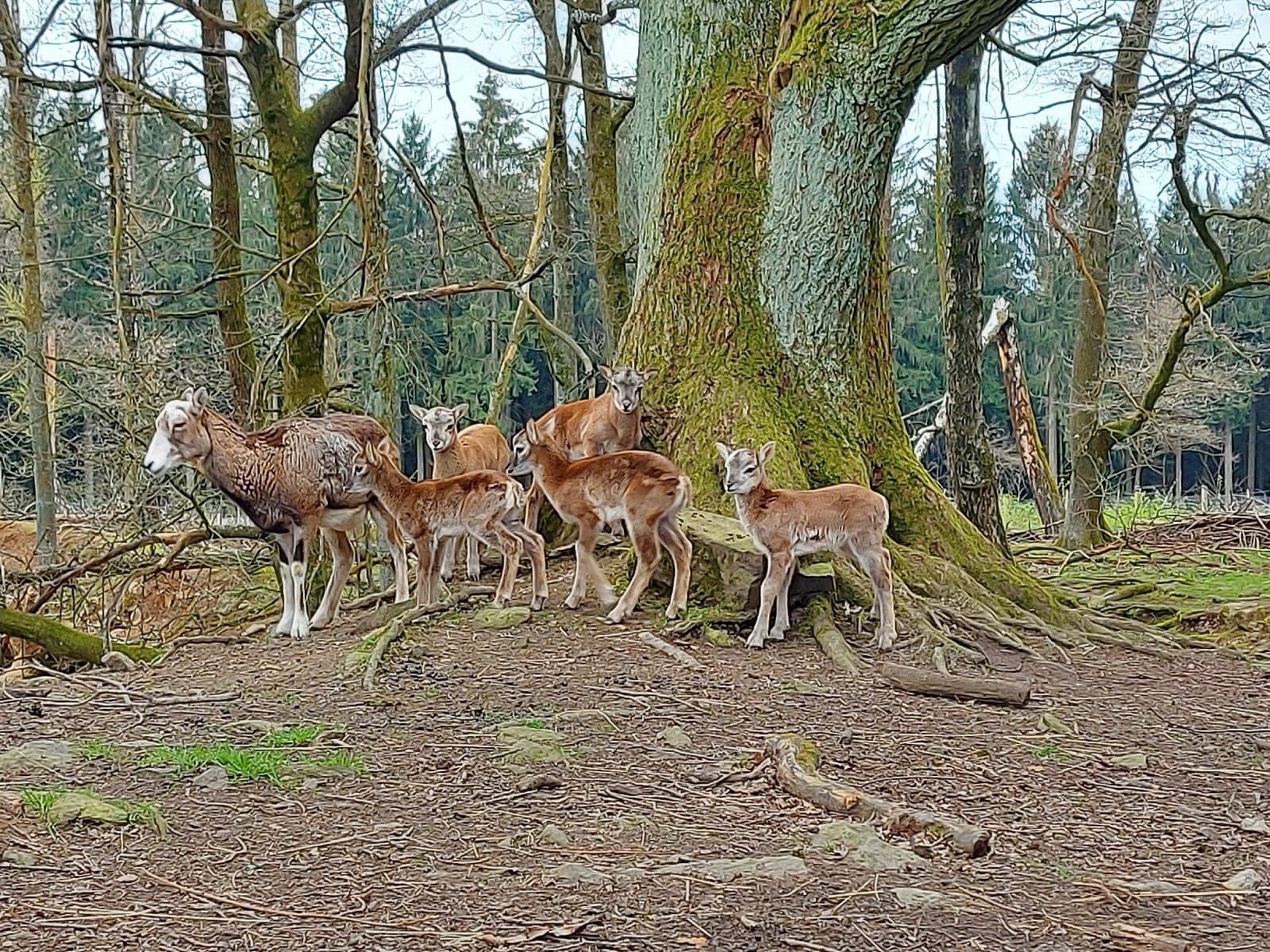
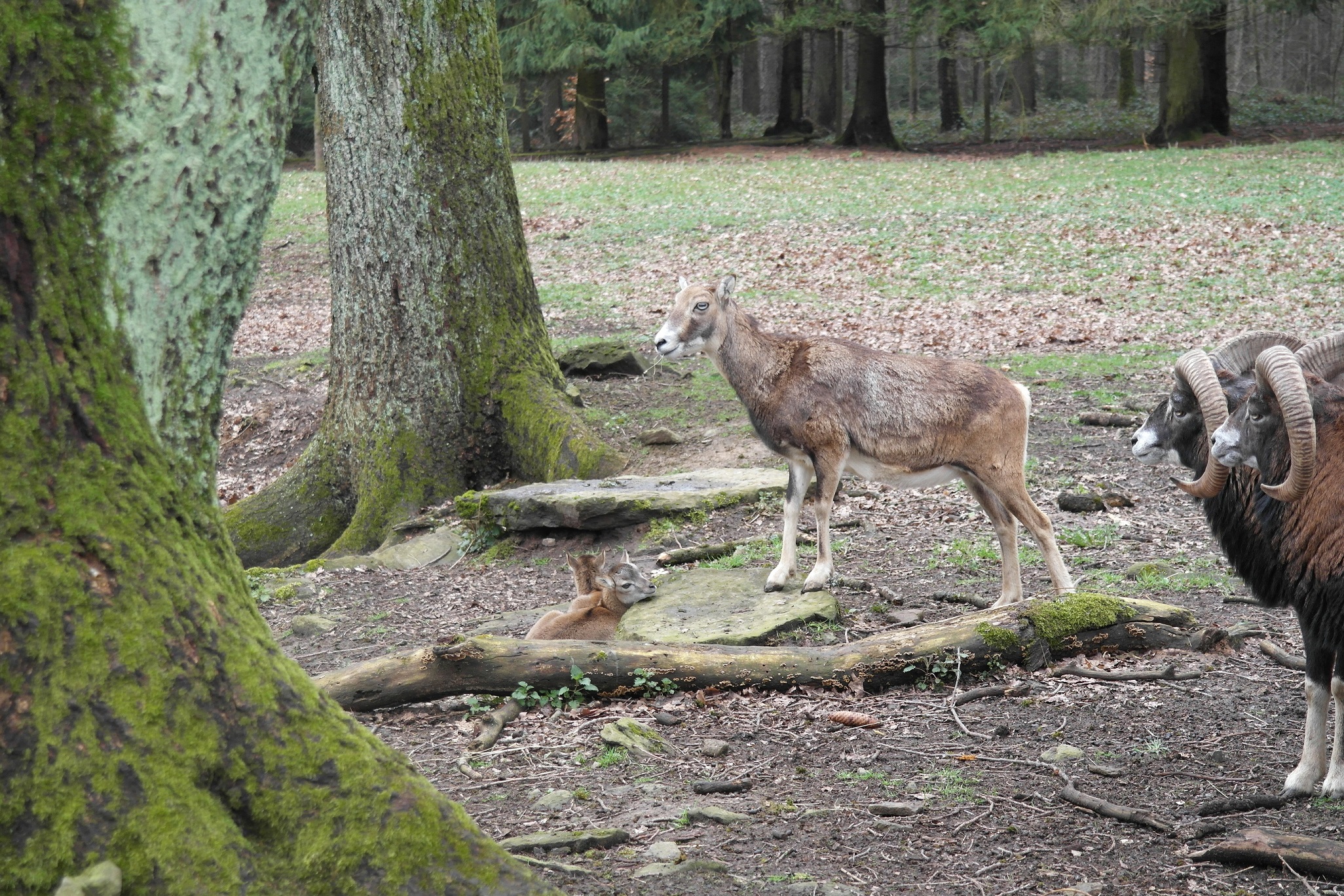
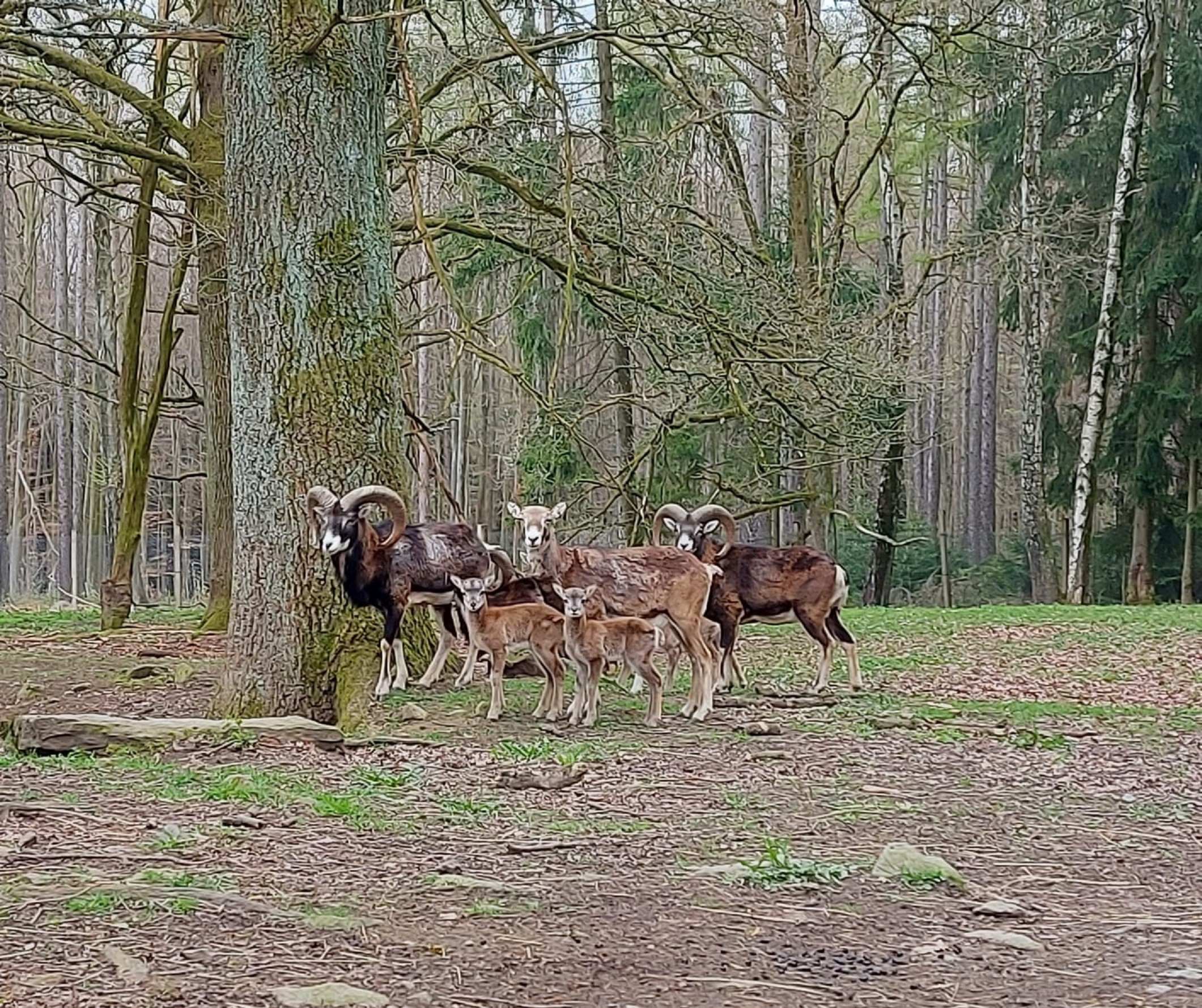
Five mouflon lambs were born in the week before and after Easter. These included a pair of twins that saw the light of day on Easter Sunday. The last time twins were born in the wildlife enclosure was in April 2013.
For the mouflon, the only wild sheep in Europe, the typical breeding season is from the end of April to the beginning of May, with one sheep usually giving birth to one or two lambs. Twelve animals are currently kept.
Two young turtle doves also hatched on 15 April. As the smallest of the four wild pigeons found in Germany, the turtle dove stands out with its brown-scaled back and a black and white banded patch on the side of its neck. Turtle doves are the only long-distance migratory birds among the native pigeon species. They spend the winter in tropical Africa.
Breeding successes in zoological facilities can save endangered species from extinction. The Oberrabenstein Wildlife Park has been successfully involved in the conservation breeding of the turtle dove since 2022.
Opening hours in summer
Animal park: 9 am to 7 pm, last admission 6 pm
Game enclosure: 8 am to 6 pm, last admission 5 pm