

Offspring at the Oberrabenstein game reserve
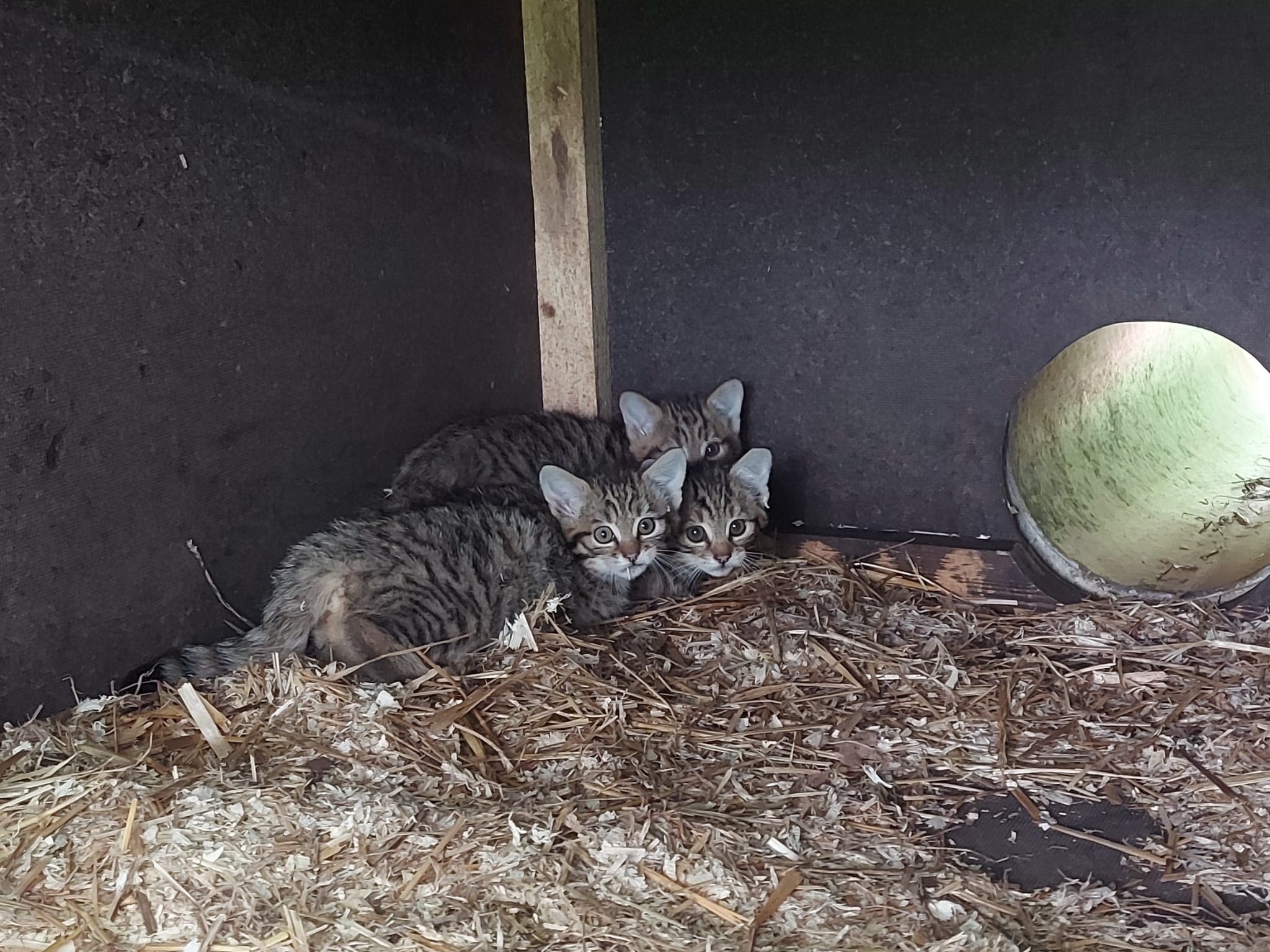
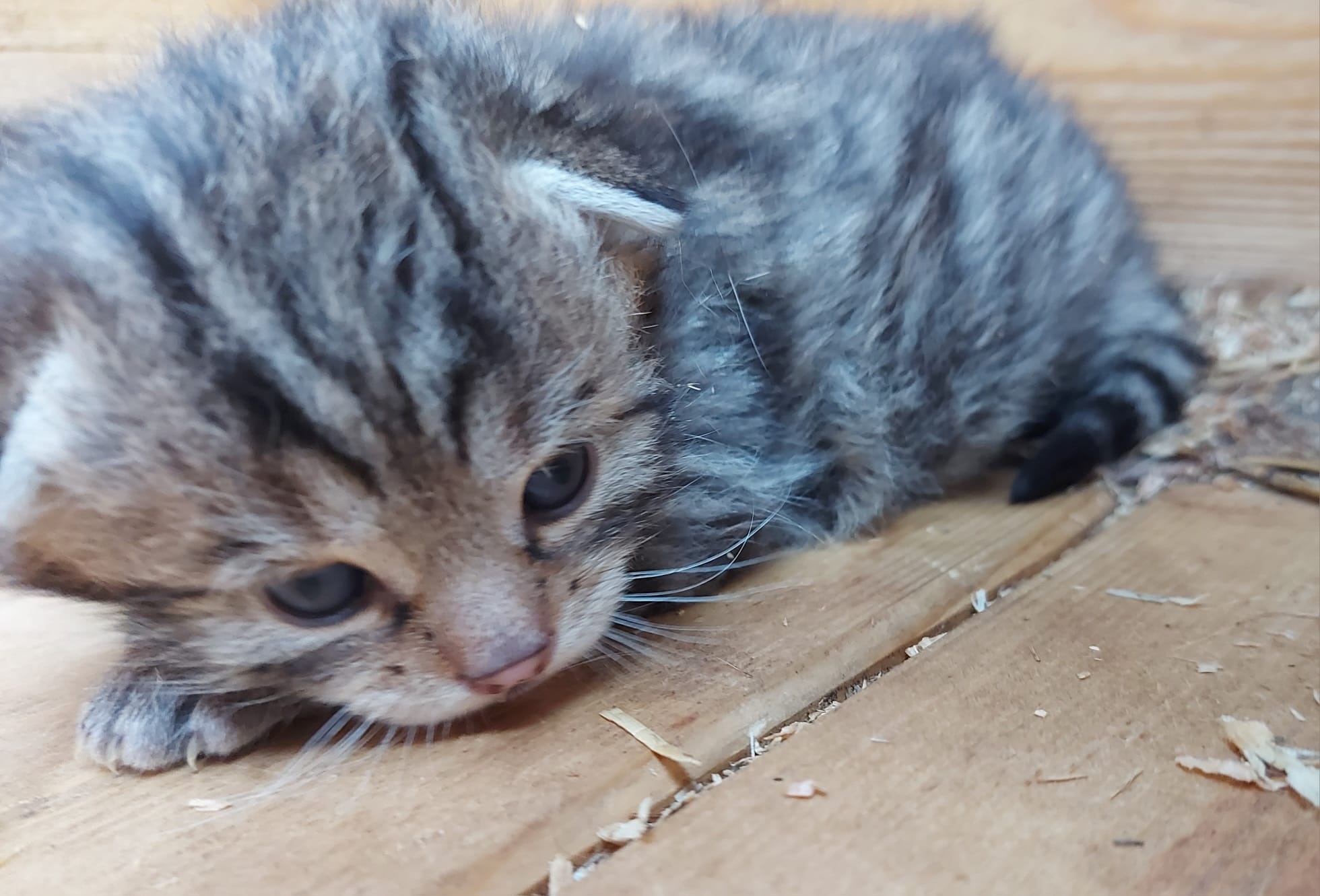
In mid-April, the European wildcats at the Oberrabenstein wildlife enclosure gave birth again. On 15 April, three kittens were spotted next to their mother in the enclosure's litter box. This is the sixth time that the breeding pair, who have been living together since the end of 2019, have had offspring.
After nine weeks of gestation, the cat can give birth to three to five kittens. This takes place in a safe hiding place, as the kittens are blind for around nine days as nestlings. In the first few weeks, the chance of discovering the kittens outside the whelping box is rather small.
The main activity period of wildcats only begins after sunset. In the meantime, with a bit of luck, the kittens can also be seen outside during the day.
The European wildcat is not the ancestral form of the domestic cat. These are originally descended from the African wildcat (hawkcat). European wildcats are larger than domestic cats. A wild cat (male) can weigh up to 8 kilograms. Another distinguishing feature is the bushy tail, about 30 centimetres long, which has three distinct black rings and ends in a blunt black tip.
In the wild cat's area of distribution, however, crossbreeding with domestic cats - known as "dazzlers" - can occur. However, these have little chance of survival under the conditions in the wild.
Opening hours in summer:
| Zoo: | 9 a.m. to 7 p.m., last admission 6 p.m. |
| Game enclosure | 9 am to 6 pm, last admission 5 pm |