

Golden pheasants and Amur thrushes new at Chemnitz Zoo
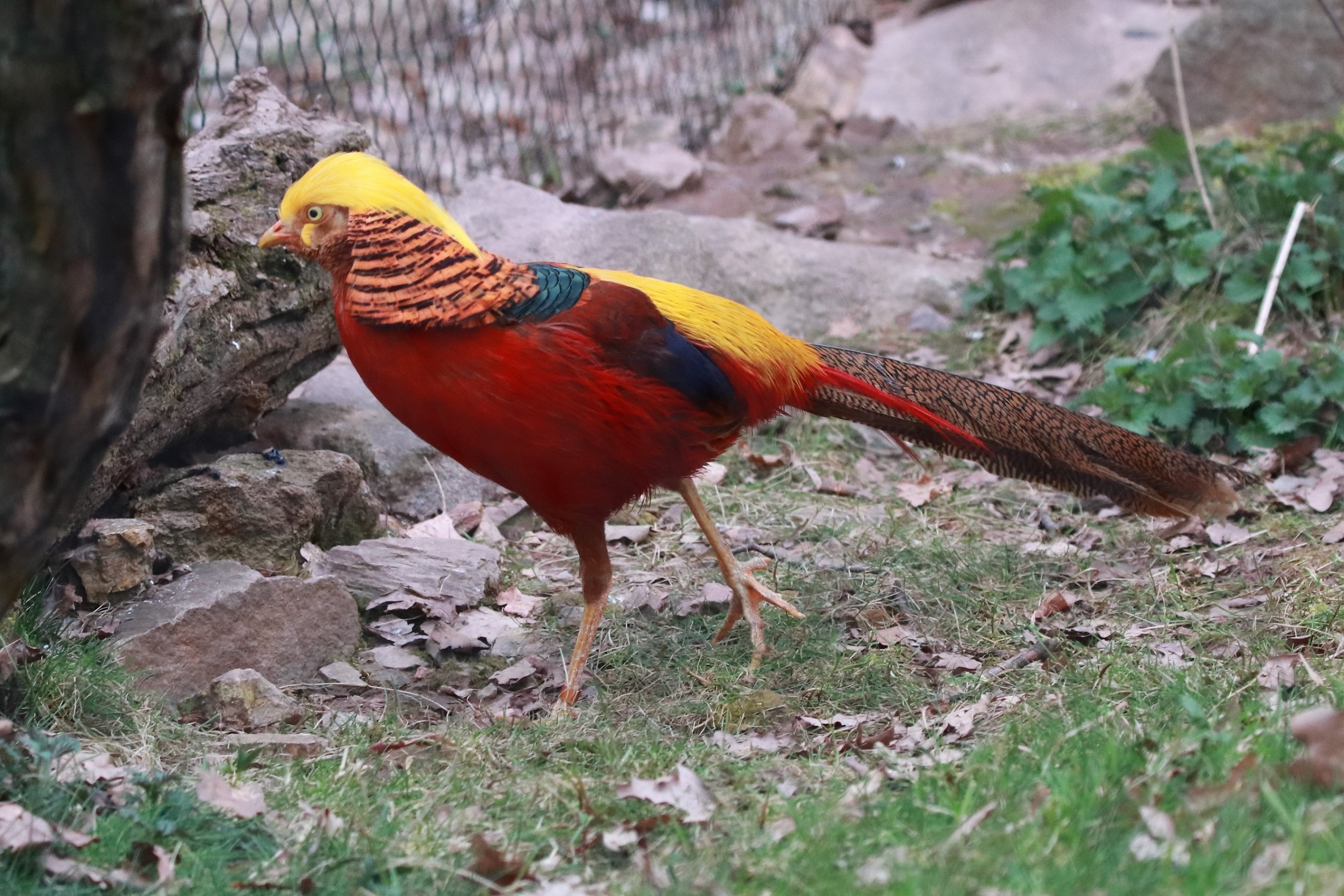
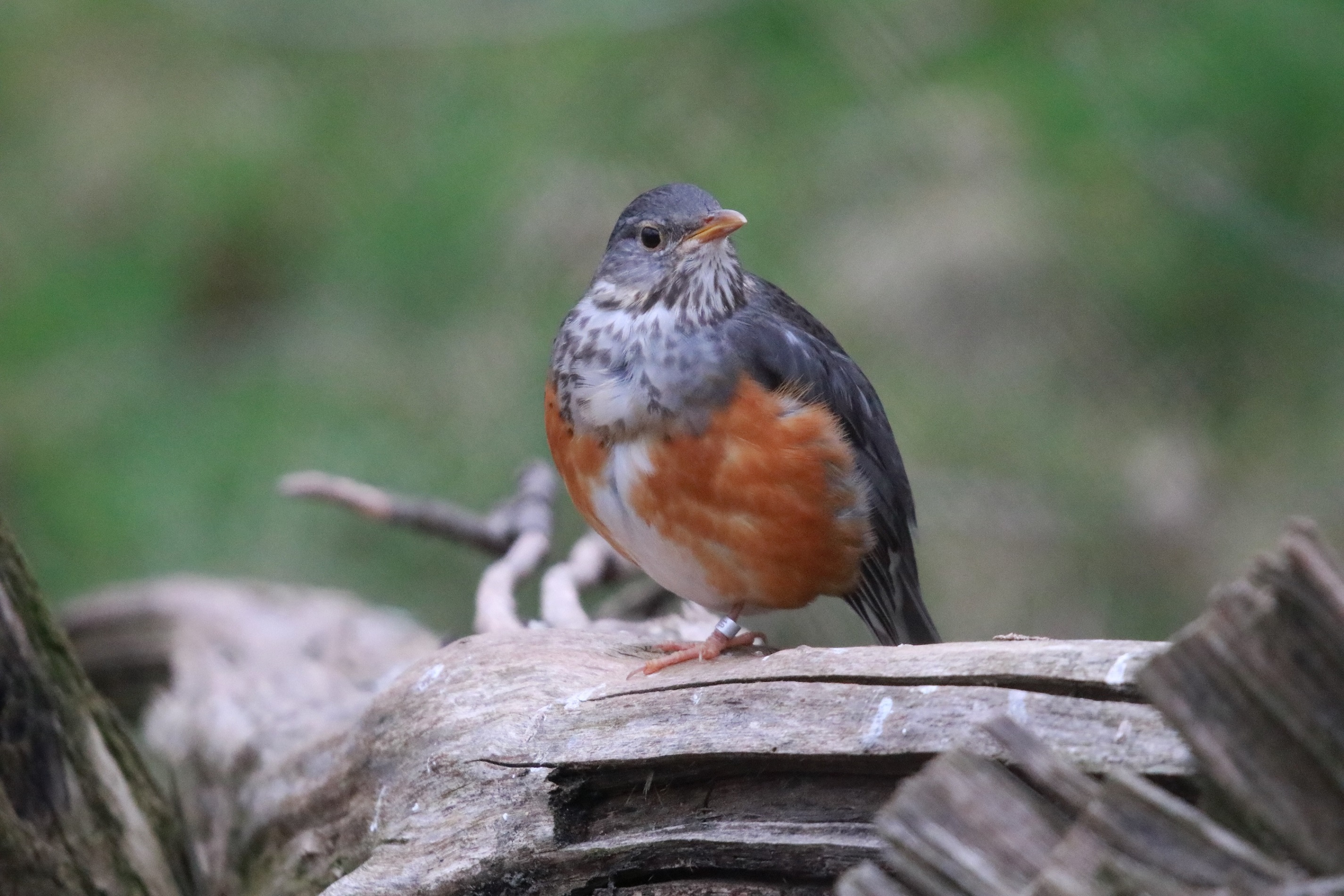
Two new bird species have moved into the large aviary at the Ice Age Playground at Chemnitz Zoo: a pair of golden pheasants since the beginning of March and a pair of Amur thrushes since mid-January.
The golden pheasant has its natural habitat in central China, primarily in forested mountain regions. The species can be found there in pairs during the breeding season; outside of this time, several birds can also come together in smaller flocks.
As is typical of most pheasant species, there is a clear difference between the sexes. While the hen is predominantly plain brown in colour, the cock stands out with its brightly coloured plumage. The young initially wear their mother's plain plumage as camouflage, but change colour to match their sex at around one year of age.
The clutch consists of 6 to 16 eggs, which are incubated by the hen for around 24 days. The chicks are led and fed by the hen and initially hide under the mother's wings for protection. After 12 to 14 days, the young birds can spend the night on trees together with the hen.
Due to its colourfulness and the associated popularity in private keeping, the species has now become naturalised in England and Scotland. It is estimated that between 1000 and 2000 birds live there.
The Amur thrush is also known as the grey-backed thrush due to its plumage colouring. There is little difference between the sexes.
During the breeding season between May and mid-August, the hen incubates three to five eggs. During this time, the males in particular are very territorial and defend their territory against conspecifics. The young leave the nest after twelve days, although they are not yet fully able to fly. Outside of the breeding season, the species can also be observed in flocks, but only as long as there is enough food. Their diet includes fruit, insects and snails.
Amur thrushes are migratory birds. Their breeding grounds are in Russia, China, North Korea and Mongolia. In winter, they migrate to warmer areas further south, e.g. to Vietnam. Due to its distribution area, the species is considered to be very robust.
With the Amur dossel, Chemnitz Zoo has added another rarity to its population. The species is only kept in seven zoological institutions across Europe.
Alongside the vivarium, the bird population is one of the special features of Chemnitz Zoo. Most of the more than 70 different bird species can be seen in the pheasantry and the tropical house.
www.tierpark-chemnitz.de
Opening hours in April:
Zoo: 9 am to 7 pm, last admission 6 pm
Game enclosure: 9 am to 6 pm, last admission 5 pm