

Chemnitz Zoo: Offspring among the pygmy marmosets
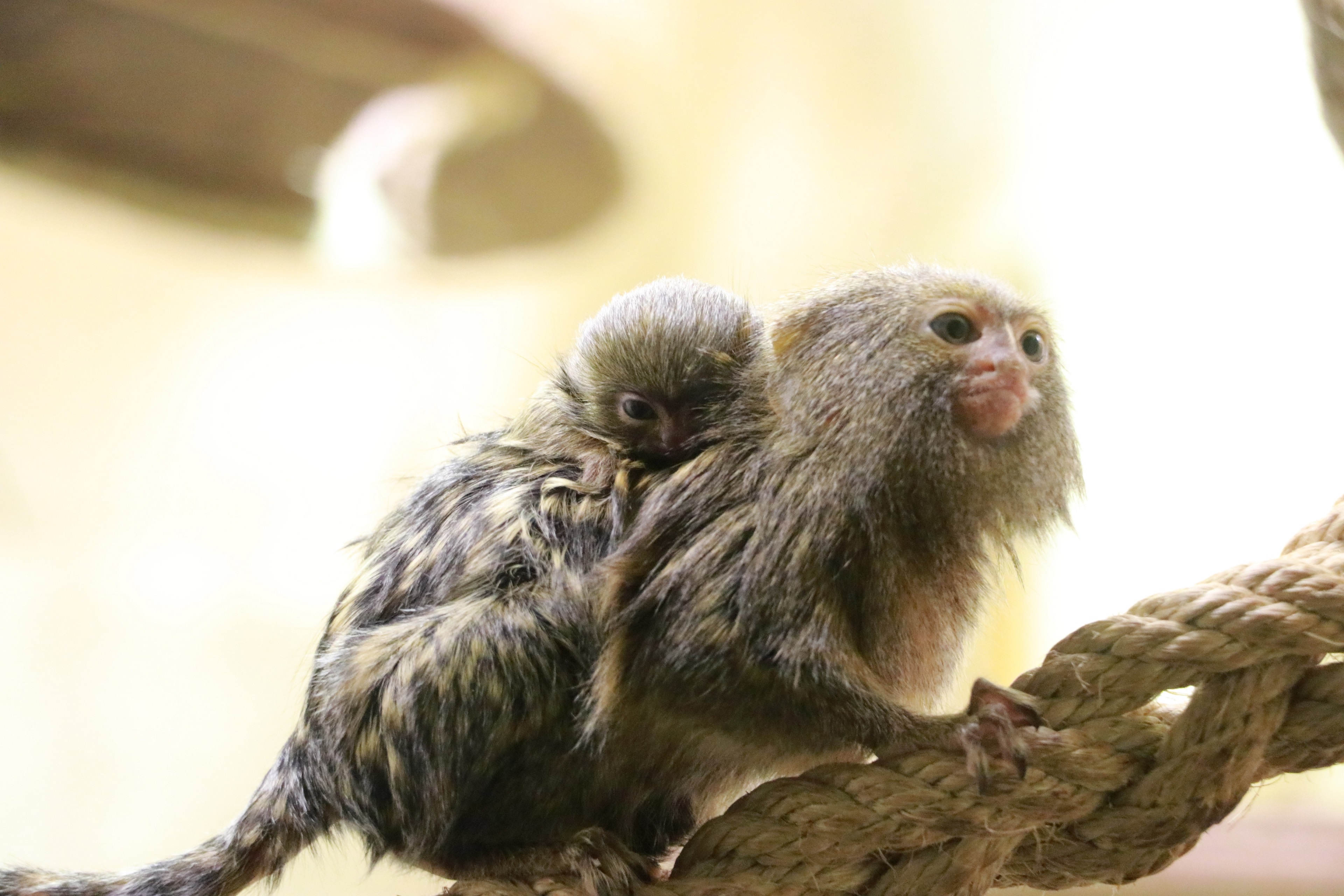
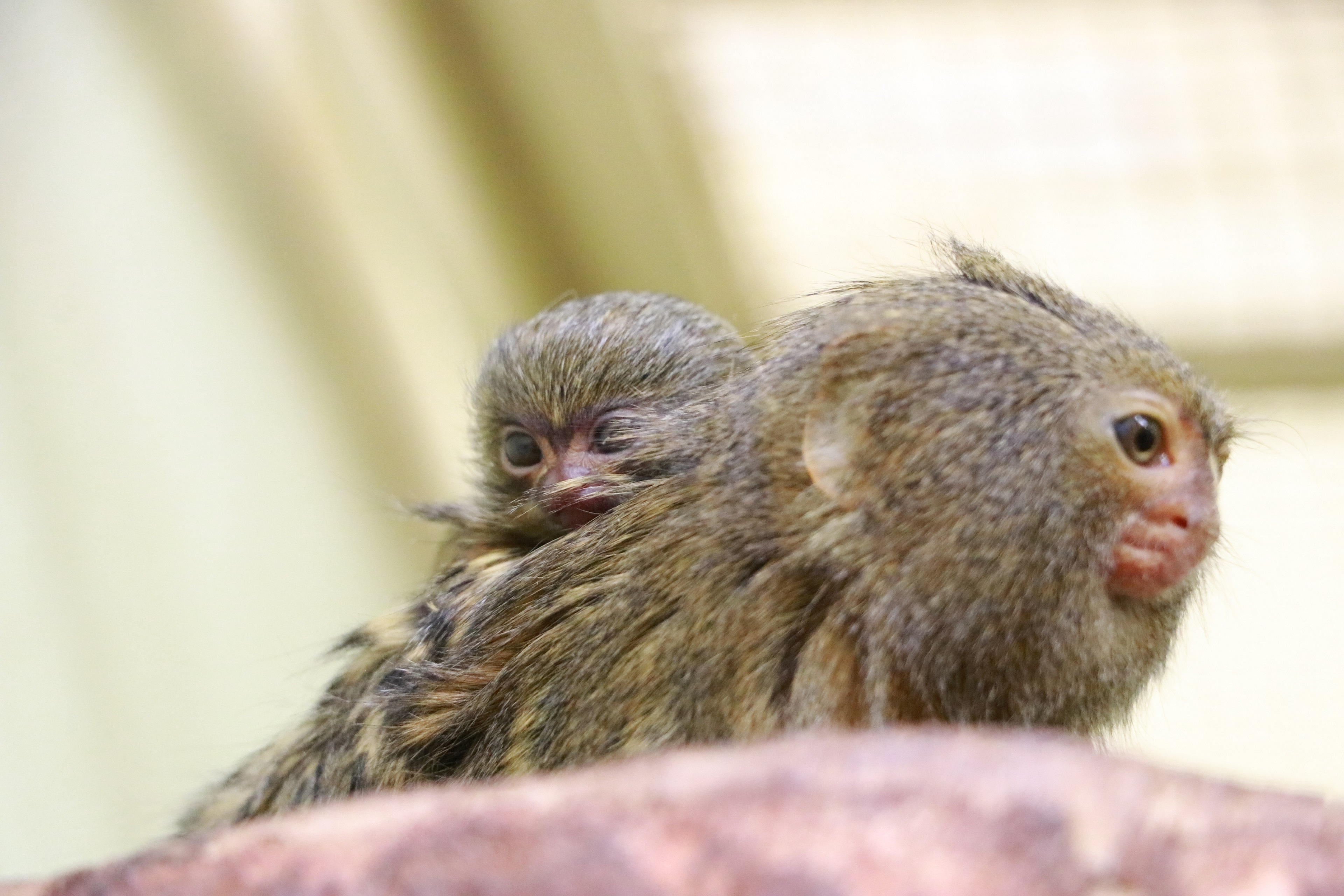
There are several new additions to the marmoset house at Chemnitz Zoo. At the beginning of November, the group of pygmy marmosets grew by another member and now consists of a total of 14 animals.
The young animals are born weighing around 15 grams, while adult pygmy marmosets weigh around 100 grams. This makes them the smallest representatives of the monkeys. In the order of primates, they are only undercut by the mouse lemurs, which, however, are classified as prosimians.
Pygmy marmosets are very social animals that can live together in groups of more than ten animals. They are led by a female, who often even tolerates two adult males at her side. The remaining members are usually young animals from previous years. The dominant female is the only one who reproduces. The other members of reproductive age are either actively prevented from mating or kept infertile by scents (pheromones).
After birth, the offspring immediately cling to their parents' fur and can be carried safely through the branches. Family groups inhabit fixed areas in the lower and middle tree layers of the tropical rainforest of South America. The mother and father, and often other family members, take turns caring for the young. This is also the case at Chemnitz Zoo. Mother "Bonnie" also gives the young animal to father "Fernando" and the older siblings, who also live in the group. "Bonnie" and "Fernando" have already produced several offspring.
The population of pygmy marmosets is declining significantly as a result of habitat loss and hunting. Since 2020, they have therefore been classified as endangered on the IUCN Red List of Threatened Species - the middle of three endangerment categories.
This makes the successful and coordinated breeding of such endangered species all the more important. This species has been successfully kept and bred at Chemnitz Zoo for many years.
www.tierpark-chemnitz.de
Zoo and wildlife park - opening hours from November to February:
9 a.m. to 4 p.m., last admission 3 p.m.
24 and 31 December: 9 am to 2 pm, last admission 1 pm